Most homes here run on gas
Utility gas heats close to 6 in 10 homes in Steuben County. Bottled or LP gas heats another large share. A mini split isn't replacing that setup. It's adding cooling, or heating for a room the furnace doesn't reach well.
Takes about a minute. No obligation.
Utility gas heats close to 6 in 10 homes in Steuben County. Bottled or LP gas heats another large share. A mini split isn't replacing that setup. It's adding cooling, or heating for a room the furnace doesn't reach well.
If your home heats with gas or propane, the mini split's job is usually to cover a room, a garage, or an addition rather than carry the whole house. That changes what size unit and how many heads this install actually needs.
NOAA nClimDiv, 1991–2020 normals
Mobile homes make up 13.5% of the housing stock in Steuben County.
A standard mini split lineup covers that mix fine, whether it's going into a mobile home or a site built house.



Indiana electricity ran 14.77 cents a kilowatt-hour in 2024, cheaper than most of the country. That changes the math on which mini split to buy. The top efficiency models cost more up front and take years of lower bills to make that back. With power this cheap, a mid-range unit can be the better buy, since it won't run long enough at high enough cost to justify chasing the highest SEER2 number on the shelf. What matters more is whether the unit is sized right for the room it's heating or cooling, and whether it holds up. A contractor can walk through which models fit the room without pushing the most expensive one.
Steuben County falls under zone 5A, a cool, humid climate where heating carries the bigger load. Federal rules already set the floor for what can go in. A split-system heat pump has to hit 14.3 SEER2 for cooling and 7.5 HSPF2 for heating. There's a federal tax credit available on top of that. Worth asking a contractor which models clear the standard and qualify.
Find a contractorCooling runs about three months here, June through August, with afternoon highs averaging 81. That's the job a mini split does in summer, and it's not a hard one. The bigger load year round is heating, and most homes hand that to a gas or propane furnace already. So whatever unit goes in isn't working long hours against extreme heat. It's covering a mild season and maybe helping out in a room the furnace misses. A mid-grade system holds up fine under that kind of use. What matters more than squeezing out the highest efficiency number is picking a unit sized right for the space, since a mini split running well within its limits for years is the one that's worth the money spent on it.
A mini split sized by square footage alone is a guess. A contractor should ask about ceiling height, window area, and what's on the other side of the walls before naming a unit. Too big and it cools the room fast then shuts off before it pulls the moisture out, leaving the air cold and damp. Too small and it runs constantly without ever catching up.
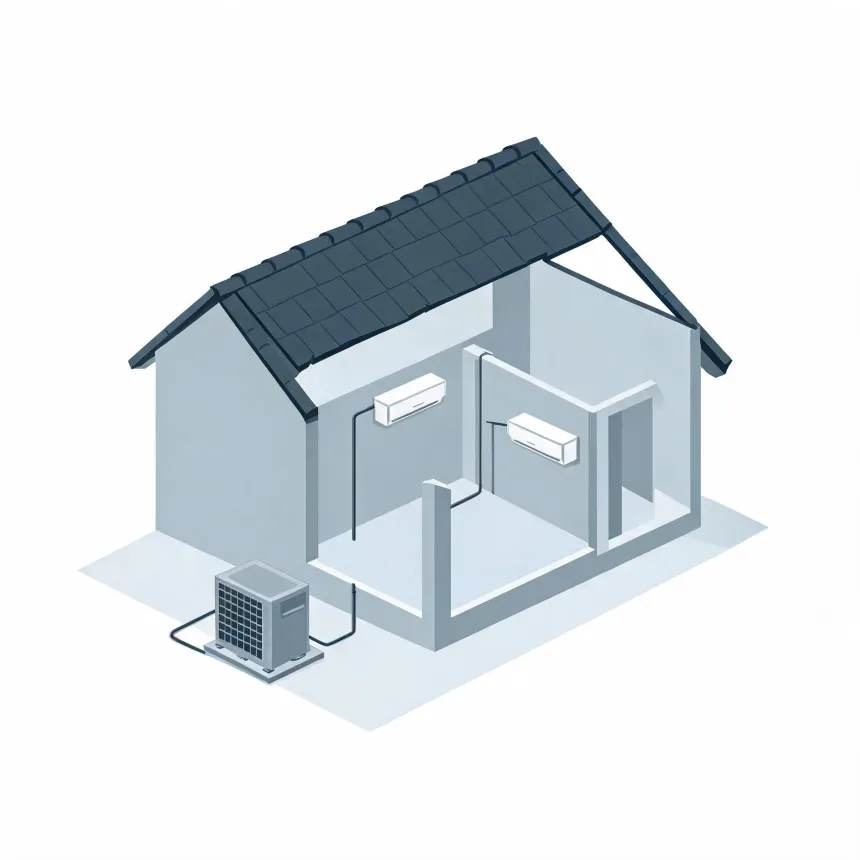
The indoor and outdoor units connect through a hole drilled for the refrigerant lines, drain, and power wire. Where that hole goes, how the line set is routed outside, and how it's sealed matters as much as the equipment itself. A clean installation hides the line set or runs it somewhere it won't get knocked around, and seals the wall penetration tight enough that it won't leak air or let moisture in behind it.
If this is a first mini split going into a house, there's no old system to deal with, just a wall or a utility space to route the line set through. If it's replacing an old window unit or a through-wall AC, that unit usually just comes out and the opening gets patched or trimmed to fit the new line set. Mini splits don't typically replace a furnace, so the gas or propane system stays put and keeps doing the job it's always done. The only real removal work is on the electrical side, if the old setup ran on a dedicated circuit or outlet that doesn't suit the new unit, that gets swapped during the install. None of this is demolition work. It's disconnecting something small and putting the new equipment in its place.
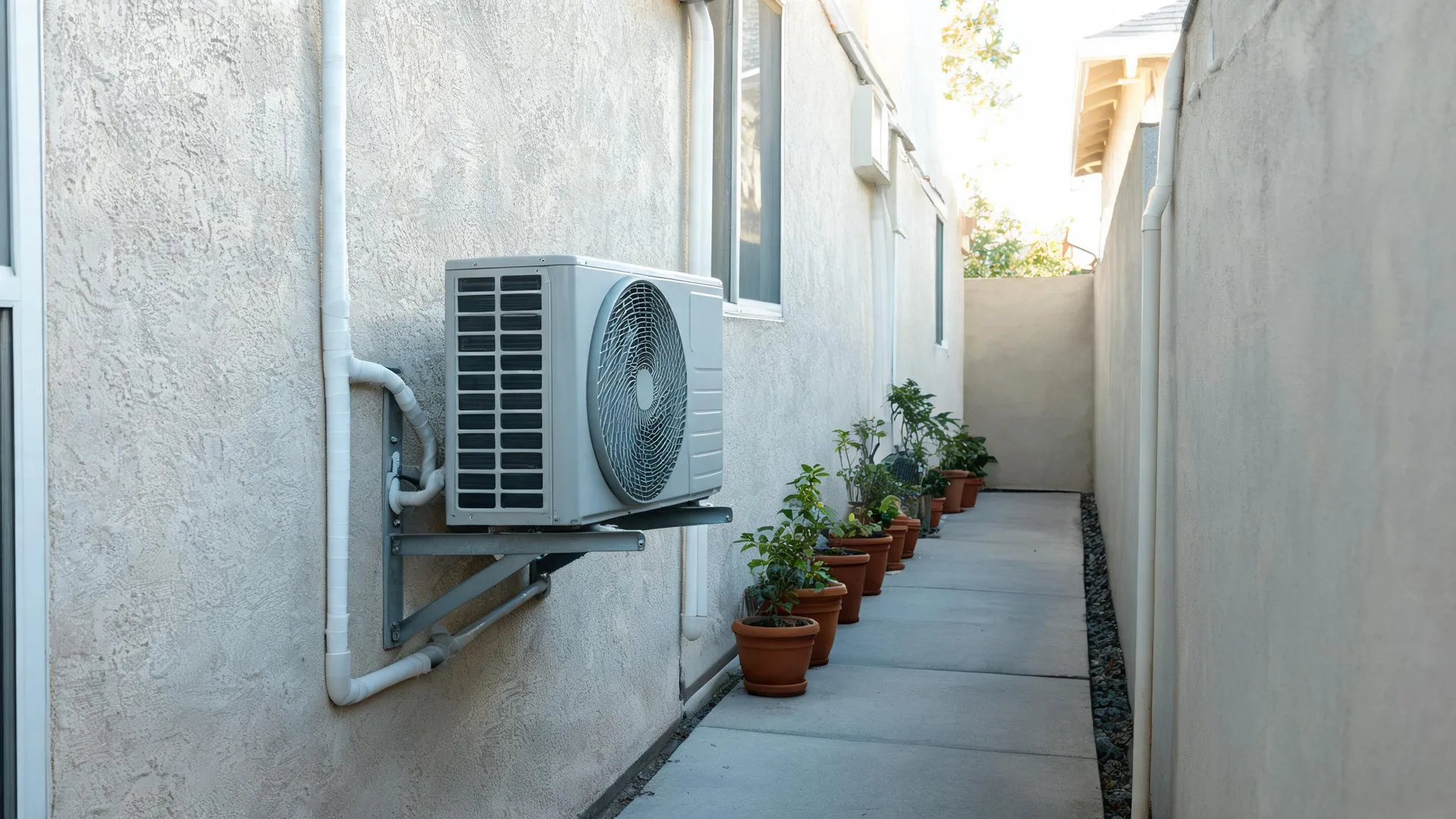
The outdoor unit gets mounted on brackets against the wall or set on a pad at ground level, and the indoor head gets hung on the wall where the line set comes through. A vacuum pump pulls the air and moisture out of the line set before the refrigerant ever flows, and that step gets skipped more than it should. A line set that's still got air or moisture in it is how a brand new system ends up with a refrigerant leak or a compressor that fails early. Once that's done, the unit gets charged, the thermostat or remote gets synced, and the whole thing gets run for a while to check it's pulling the right temperature drop at the vent. The outdoor unit also needs a clear line of sight to the indoor head on most models, and enough space around it to pull air through the coil without anything blocking it.