A gray outdoor heat pump unit on a concrete pad beside a dark horizontal-siding wall, with a small electrical box on the wall, shrubs and a concrete walkway to the right at dusk.

Get matched with a heat pump pro in Tippecanoe County

How long a heat pump lasts in Lafayette, IN

A heat pump in Tippecanoe County works harder than most. It's heating your house through a cold winter and cooling it through a sticky summer, with no break in between. That kind of year round use affects how long it holds up, and how well it keeps running depends a lot on how it was installed. If yours is on its way out, the next step is getting matched with a contractor who installs them for homes around Lafayette.

Get a local pro

A heat pump in Lafayette typically lasts about 12 to 15 years. That range runs a little shorter here than in milder climates because your system never really stops working. It pulls heat out of cold winter air to keep the house warm, then reverses in the sticky summer months to cool it, and it does both jobs on the same compressor and the same coils all year. There's no off season to rest the equipment. The cold snaps push it hardest, since a heat pump has to work harder to pull heat from air that's already cold, and that strain adds up over the years. Where your system falls in that 12 to 15 year range depends on how well it was installed and maintained, and whether it was sized right for your house in the first place. If yours is getting up toward that age, it's worth having someone look at it before a cold morning makes the decision for you.

A gray outdoor condenser unit on a concrete pad beside a house with horizontal lap siding, a conduit and disconnect box on the wall, a shrub with white flowers at right and evergreen foliage at left.

Running the way it should

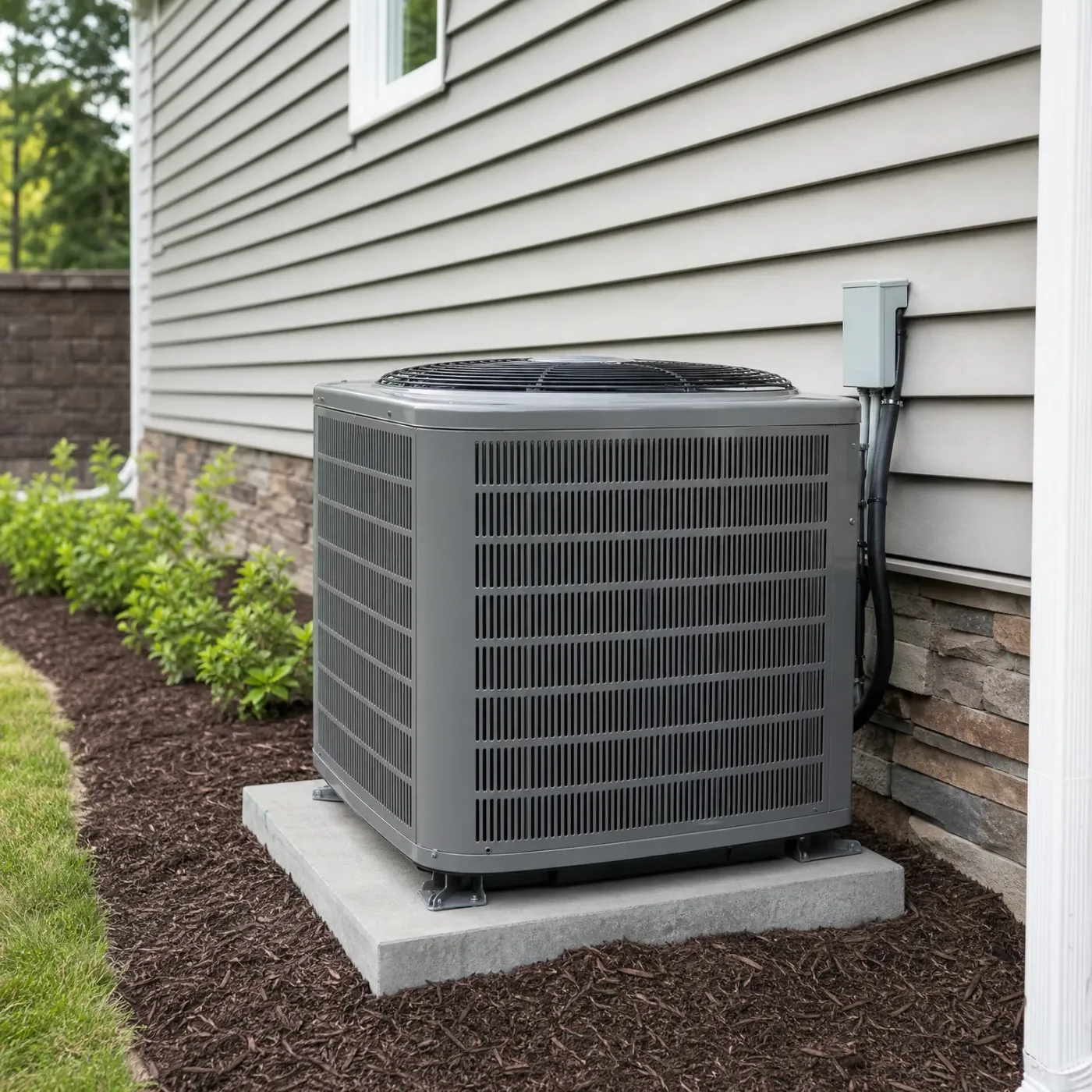
A heat pump like this is doing its job. The pad is clear, the lines run clean to the wall, and the disconnect box sits ready beside it. Nothing is blocking airflow around the grille, which is what lets it keep up on the coldest and muggiest days here.


A weathered outdoor condenser unit on a concrete pad beside a house with white horizontal vinyl siding, with refrigerant lines and conduit running to a wall-mounted electrical box.

Showing its age

Grime built up on the grilles like this cuts down the airflow the unit needs to move heat in or out. A heat pump running this dirty for years is working harder than it should, and that wear adds up faster the longer it goes unaddressed.

Why does a heat pump here wear faster than one somewhere milder?

  • Winter nights average 21°F

    Winter nights average 21°F, so the unit is pulling heat from cold air on most December and January nights, which takes more out of it than mild cold does.

  • Heat runs October through May

    Heat runs October through May here, eight months out of the year. That leaves the system only a few months where it isn't carrying the house.

  • Cooling runs June through August

    Cooling runs June through August, so once heating season ends, the same unit switches over and keeps working through summer with barely a pause.

NOAA nClimDiv 1991-2020

What cuts a system short

The compressor is what usually ends a heat pump's run. It's the part doing the work on both ends, pulling heat out of winter air and pushing it back out in summer, and it's sealed shut, so a contractor can't rebuild it or swap a worn part inside it. When a compressor fails, the common advice is to replace the whole outdoor unit rather than repair it. Refrigerant charge matters too. A system low on charge runs longer to hit the same temperature, and that extra runtime adds up over a winter of nights near 21°F. A system that's stayed at the charge it shipped with has an easier time of it than one that's been low for a year or two without anyone noticing.

What a yearly check catches early

A heat pump's outdoor coil collects leaves, grass clippings and ice over a year of running nonstop, and a dirty coil forces the compressor to work harder to move the same amount of heat. A yearly check lets a contractor clean the coil, check the refrigerant charge, and look at the electrical connections before any of that turns into a bigger repair. Catching a low charge or a failing capacitor early keeps the compressor from carrying extra strain it wasn't built for. None of that changes what the system is up against in Tippecanoe County, but it does mean the system gets the full stretch of its expected run instead of losing years to problems that went unnoticed.

Power here costs 15.37 cents per kilowatt-hour

At 15.37 cents per kilowatt-hour, your heat pump costs more to run the harder it works, and a weak or aging system pulls more power to do the same job. Keeping it running efficiently matters more here than somewhere with cheaper power.

EIA-861 2025

What you'd notice first

Your heat pump starts running longer to hit the same temperature. In July it cycles more through the afternoon, and in January it runs well past dark trying to keep up. The thermostat might read correctly, but the house still feels a few degrees off from where you set it. Rooms farthest from the unit cool and heat slower than they used to. You might notice the outdoor unit running during mild weather when it used to shut off. None of this means it's failed. It means the compressor is working harder to move the same amount of heat it moved easily a few years back.

What it costs you in the meantime

A heat pump losing ground doesn't fail outright, it costs more every month before it quits. At 15.37 cents per kilowatt-hour, a system pulling extra power to make up for wear shows up directly on the bill, month after month, long before anyone replaces it. You end up paying twice: once for the energy it wastes working harder, and again whenever the compressor finally gives out and the whole unit needs replacing. Catching the slowdown early, instead of running it until it stops, is usually the cheaper path through a Lafayette winter or summer.

A gray-haired woman in a dark sweater sits with a blanket on her lap near a window, looking out at autumn-colored trees, in a living room with a sofa, built-in shelves, and a potted plant on a side table.
A woman with long gray hair in a knit sweater sits on a sofa with cushions and a blanket, looking out a large window toward yellow autumn foliage.
A gray-haired woman in a cream knit sweater sits on a light sofa with a blanket, looking out a window toward yellow autumn trees, with a framed picture and potted plant in the background.
An older woman in a cream knit turtleneck sweater sits on a sofa with a blanket, looking out a window with autumn-colored trees outside, in a dimly lit living room with a lamp, framed art, and a patterned rug.
A beige outdoor air conditioning condenser unit on a concrete pad beside a house with horizontal vinyl siding, with refrigerant lines and a disconnect box on the wall, surrounded by dark mulch and a green shrub at left.

Clear and unobstructed

This outdoor unit sits open on its pad, with nothing crowding the grille or blocking airflow to the fins. Air moves through it freely, which is what lets it pull heat from cold air in January and dump heat outside in July without straining.

An outdoor air conditioning condenser unit on a concrete pad beside a house with light horizontal siding and a concrete block foundation, with bare soil and small green plants around it.

Dirty and clogged

Dust and grime cake the fins and wire grille on this one, so air has to fight its way through. The compressor behind that buildup works harder to move the same amount of heat, and over a few winters that extra strain is what wears it down early.

A weathered gray outdoor condenser unit on a concrete pad beside a house with horizontal vinyl siding, with conduit, refrigerant lines, and an electrical disconnect box on the wall behind it.
Before you get your heat pump installation
An outdoor condenser unit on a concrete pad beside a gray lap-sided house, with an electrical disconnect box and conduit on the wall and shrubs with mulch to the right.
After you get your heat pump installation
A gray outdoor condenser unit on a concrete pad beside a house with horizontal siding and stone veneer, with a disconnect box and refrigerant lines on the wall, surrounded by mulch, shrubs, and lawn.

Find a heat pump installation pro in Tippecanoe County

Send the form and stop researching installers for the new heat pump.

Your new heat pump project goes to an installer who works in Tippecanoe County.

Match me with a pro

You're not committing to anything by asking.

Why does your heat pump seem to be struggling lately?

You might notice the air coming from the vents feels cooler than it used to on a January afternoon, or the outdoor unit runs almost nonstop once the temperature drops into the 20s. In summer it may cycle on and off more often without really catching up on a humid afternoon. Some homeowners hear a new sound from the outdoor unit, a clicking or a hum that wasn't there before, or notice frost building up on the coil and staying longer than it should. None of this means the system is finished, but a heat pump working this hard to keep up usually means something inside it has worn down, and ignoring it tends to mean higher bills now and a harder failure later, often on the coldest night of the year.

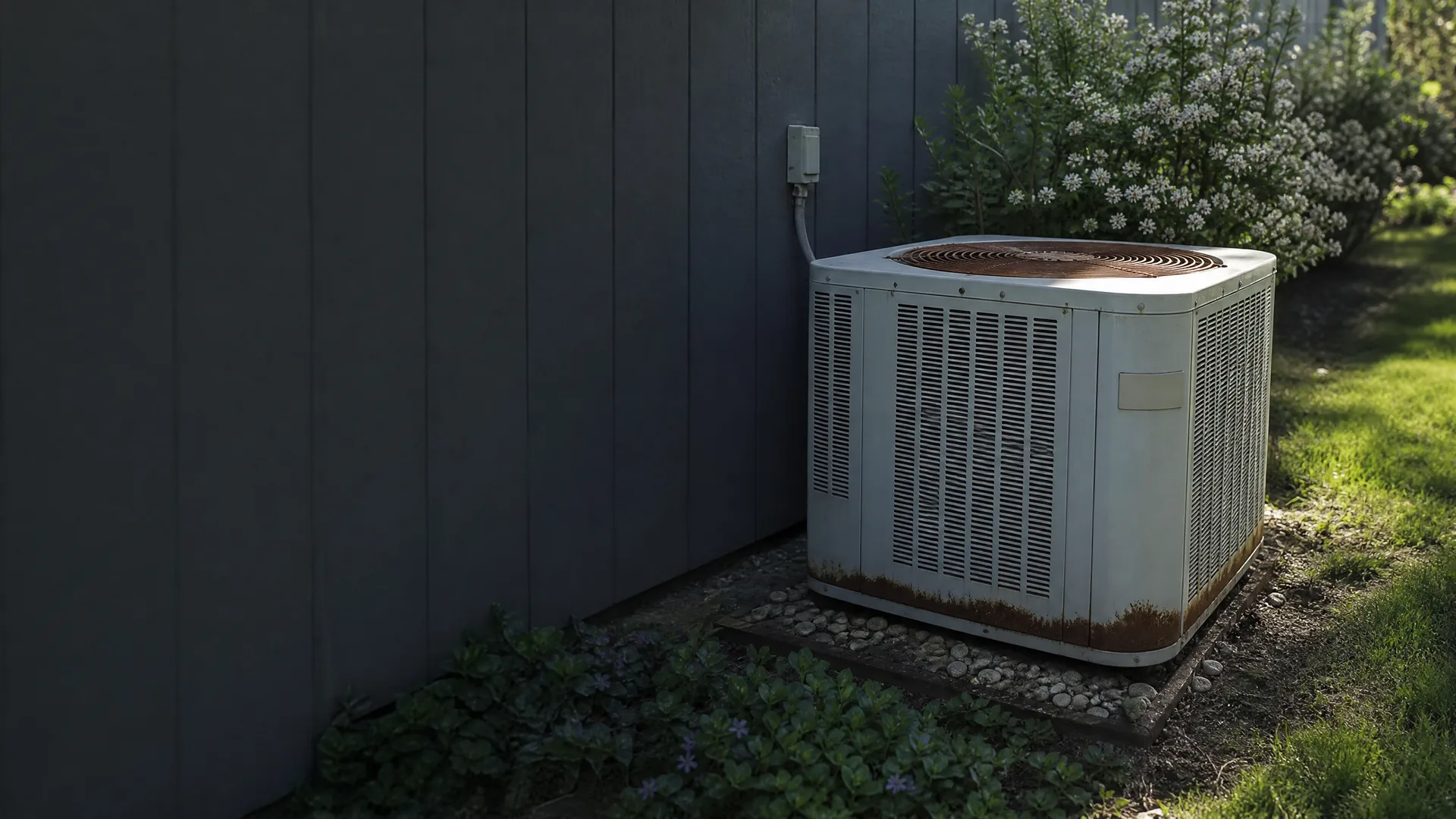
An outdoor air conditioning condenser unit with rust stains sits on a concrete pad beside a dark gray vertical-board house wall, surrounded by gravel, groundcover plants, a flowering shrub, and grass.

You're out in the side yard in April, coiling up the garden hose, and you pass the outdoor unit on your way to the shed. It's been sitting there through another winter and you notice it now the way you don't in January. Rust has worked its way along the base, a thin orange line where the metal meets the pad. The fins look fine, the fan looks fine, but that rust along the bottom wasn't there a couple springs back. You crouch down to look closer, then straighten up and head on to the shed, the thought already filed away for later.

A gray outdoor condenser unit on a concrete pad beside a light-green sided house, surrounded by mulch, ornamental grasses and a shrub, with mowed lawn in the foreground.
The fins are clean and the grille is clear, so the unit can still pull in enough air to carry it through a 21°F night.
An outdoor air conditioning condenser unit with a top fan grille sits on a concrete pad beside a house with horizontal siding and a concrete step.
Dust and debris have packed into the coil fins, and a unit that can't breathe has to work harder to hit the same temperature.
  1. Refrigerant inside the coils absorbs heat from the outdoor air

  2. A compressor squeezes that refrigerant to raise its temperature

  3. The hot refrigerant moves inside and heats air for the ducts

  4. A reversing valve flips the cycle to cool the house instead

A woman stands in the open doorway of a white stucco house holding the dark door, facing a man in a black cap and shirt seen from behind in the blurred foreground, with a potted flowering plant beside the entry.

Twelve to fifteen years is what to expect

A heat pump pulling double duty in Tippecanoe County winters and summers holds up for about 12 to 15 years. Clean fins, clear airflow around the outdoor unit, and a compressor that isn't straining through every cold January night all push toward the long end of that range. A unit that's been fighting for air or running nonstop to hit the thermostat setting is already showing you it won't make it that far.

If yours is getting old or acting like it, you don't have to figure out on your own whether it needs a repair or a replacement. Answer a few questions about your system and your house, and a contractor who works on heat pumps in this area will reach out to look at what you've actually got. That's one less thing to sort out before the next cold snap.

Interior corner of a living room with a beige upholstered armchair holding a textured pillow and throw, a eucalyptus arrangement in a ceramic vase on a wooden table in the foreground, a blurred glass-front cabinet behind, and a potted plant on a sunlit window sill.
A dark-shingled two-story house photographed at dusk, with a lit gabled front porch, wooden front door, two potted plants flanking white steps, illuminated windows, and a concrete walkway leading to the entry.

Heat Pump Installation

A local pro for your heat pump installation

New system or replacementHeat PumpTippecanoe County, IN
Step 1 of 2

What ZIP code is the job in?

  • Interior corner with a beige upholstered armchair holding a textured cushion and knit throw, beside a window showing snow-covered branches, a wooden side table with a book and speckled mug, and a lit ceramic lamp on a wooden cabinet.
    • Your request goes to a Tippecanoe County pro who takes heat pump jobs.
    • Get matched with someone who does this kind of work in Tippecanoe County.
  • Sunlit living room corner with a linen sofa draped in a chunky knit throw beside a multi-pane window showing yellow foliage, and a wooden console table holding a round stone vase of dried autumn branches below a framed picture.
    • Send the form and the search for an installer is over.
    • Send the request and finding a pro stops being your problem.
  • A beige upholstered armchair with a dark green pillow and knitted throw sits in a corner beneath a framed forest and river print, next to a round wooden side table holding a plant in a dark ceramic vase and books on its lower shelf, with a window at left.
    • Describe the project once instead of to every installer.
    • Skip collecting and comparing quotes for the new heat pump.
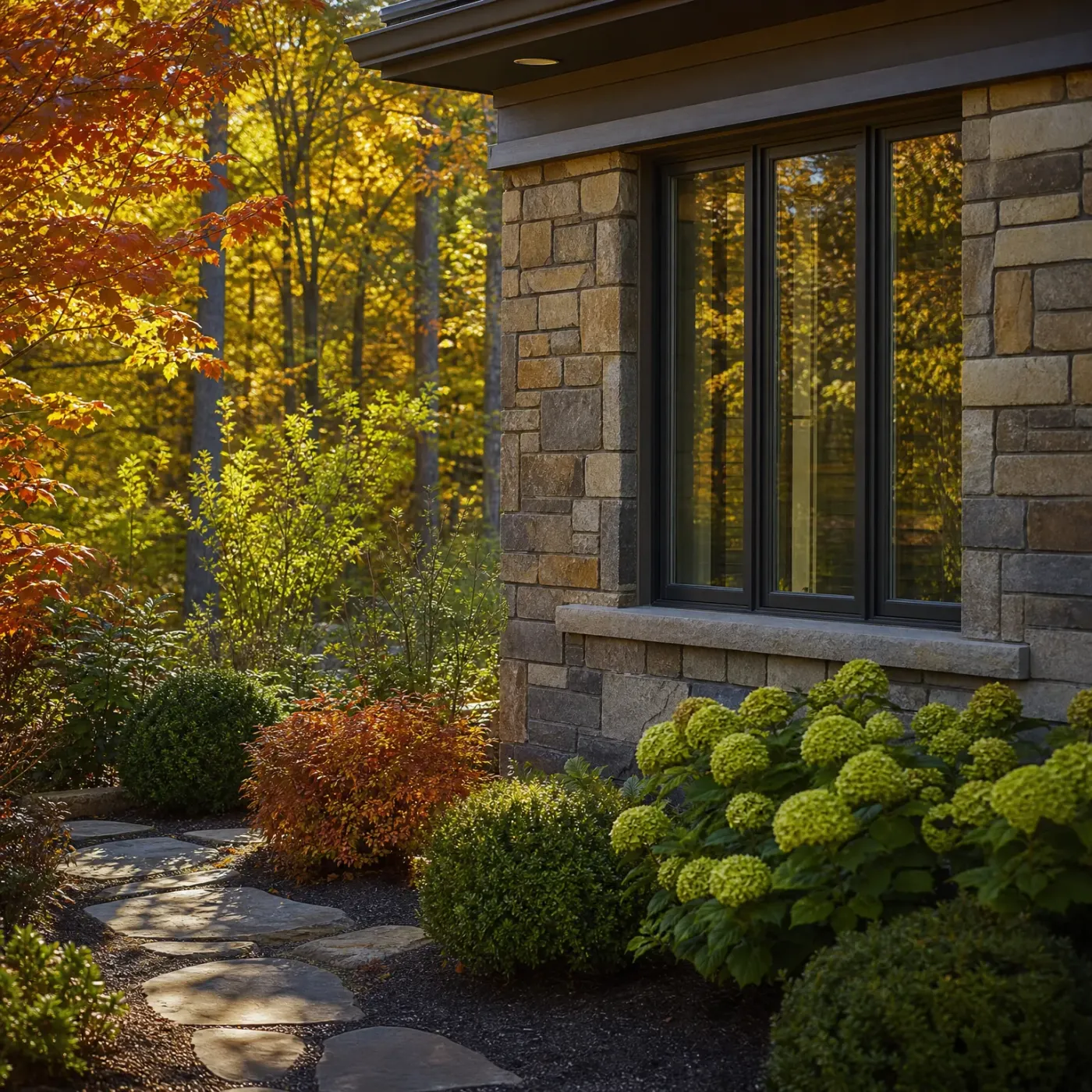
  • Corner of a stone-clad house with a dark-framed three-panel window above a stone sill, bordered by hydrangea and boxwood shrubs and a flagstone path, with autumn-colored trees behind.
    • A licensed installer who works in Tippecanoe County gets your project.
    • The pro who gets in touch is licensed in Indiana and works in Tippecanoe County.