A nighttime street view of several illuminated two-story red brick homes with front porches, flanked by a large tree.

AC Repair in Carmel, IN

Tell us about the job

Takes about a minute. No obligation.

RepairCentral ACHamilton County, IN
Step 1 of 2

What ZIP code is the job in?

A small problem asks the compressor to work harder

A low refrigerant charge or a dirty coil doesn't stop your AC from running, it just makes the compressor strain to do the same job. Heat is what wears a compressor down, and strain is what builds the heat. Keep running it this way and the wear doesn't pause just because the air is still coming out cold.


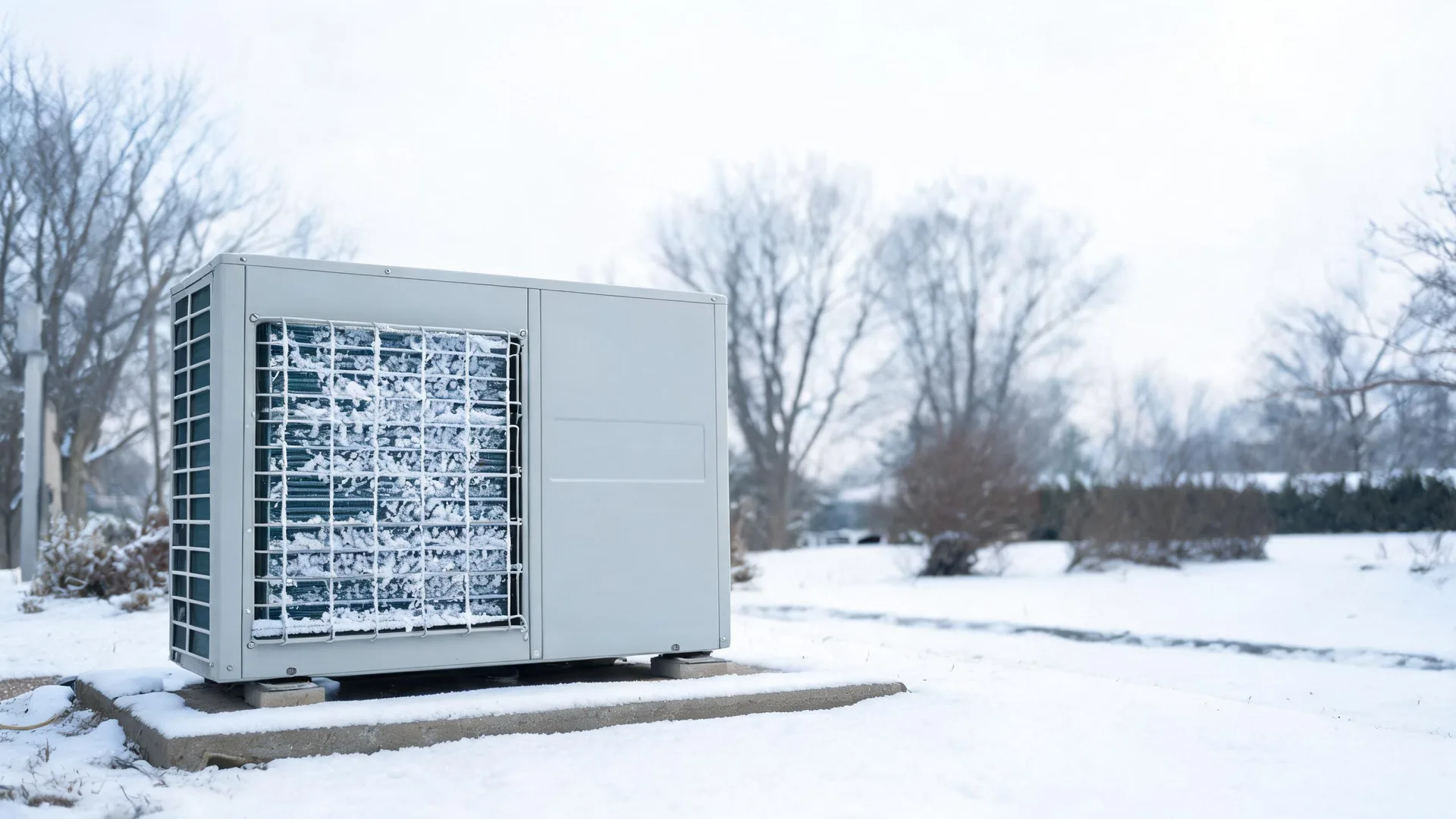
Ice on the line means stop, not keep going

If the refrigerant line or the coil is icing up, turning the thermostat down further just feeds the problem. Airflow or charge is already too low to keep the coil above freezing, and running the system more makes the ice thicker. Thick ice blocks what little airflow is left, and that's how a frozen coil turns into a cracked one.

3 months
June through August, your air conditioner is on duty
83°F
the average summer afternoon it cools against
53 hail events
in ten years, and hail bends the fins on outdoor coils
69 wind events
in ten years, and wind drives debris into outdoor units
Isometric grayscale illustration of a cutaway house showing interior rooms, ductwork, an indoor air handler, and an outdoor condenser unit on a pad connected by lines.
Your air conditioner works hardest from June through August.

NOAA nClimDiv, 1991–2020 normals

Carmel summers run three months, June through August, with afternoon highs around 83°F.

A compressor or coil problem here is the usual kind, not a sign of a harder climate wearing the system down.

Carmel sees its share of storms, but that's not what's wearing out your AC

137 severe weather events from 2015 to 2024
17% of homes statewide lost power a day or more in 2024
69 damaging wind events from 2015 to 2024
Carmel isn't hard on an AC. A failing part is.Indiana homes paid 14.77 cents per kilowatthour in 2024, and a strained compressor is what drives that number up.

Half the houses in Hamilton County were built in 2001 or later. If yours is one of them, your AC is probably still within the stretch of its life where repair makes sense. A compressor or coil problem on a system that age is usually a part failing, not the system reaching the end of the road. Mobile homes, where a lot of weather-related wear shows up, are a small slice of the housing here too. None of that tells you what's inside your walls or how old your actual unit is. It just means the odds favor fixing what's wrong over replacing the whole thing.

A newer system is worth repairing, not replacing

Get the part that's failing looked at and fixed, rather than planning around a full replacement. If your AC came with the house, there's a good chance repair gets you back to cold air without starting over.

Find a contractor
A man in a dark cap and jacket and tan work pants, seen from behind, climbs porch steps toward an orange-brown front door while carrying a worn canvas tool bag.
A gray cylindrical air conditioning condenser unit mounted on a concrete pad next to a light-colored vinyl-sided house exterior.

What actually wears a compressor out

Every time the compressor cycles on, it's the start and the load that do the damage, more than the hours in between. The windings heat up fastest in that first second, and a system that short cycles, kicking on and off every few minutes instead of running a full cycle, puts itself through that stress over and over. A dirty condenser coil outside or a low refrigerant charge makes the compressor run hotter the whole time it's on, and heat breaks down the oil that's supposed to keep it lubricated. Once that oil breaks down, metal wears on metal, and that wear doesn't reverse itself. A capacitor weakens the same way, a little more each season, until it can't give the compressor the jolt it needs to start and the system just hums or clicks instead of turning on.

Check the filter before anything else

A clogged filter starves the coil of airflow, and that alone can cause the ice and the warm air both. Pull it out and hold it up to a light. If you can't see through it, that's likely most of the problem.

A breaker that won't stay on means stop

If the outdoor unit trips a breaker more than once, don't keep resetting it. That's usually the compressor or a wire telling you something is actually wrong, and running it anyway only adds to the damage.

An outdoor air conditioning condenser unit mounted on a concrete pad next to a blue-sided residential house at sunset.

A new air conditioner would save little on running costs in Hamilton County, so the repair decision comes down to the unit's condition.

  • A new one at the federal minimum, 13.4 SEER2$230 a year
  • An older air conditioner$250 a year

Estimates for a typical Hamilton County home, compared with an older unit built to the previous federal minimum, from EIA household energy data, Indiana fuel prices and NOAA climate normals. Your home will differ.

Repair makes sense when a part like a capacitor or contactor has failed.

Replacement makes sense when the compressor has failed or the system uses R-22 refrigerant, which is no longer made.

A tech starts outside, at the condenser, before touching anything inside. Gauges go on the lines to check refrigerant pressure, because low charge or a restriction shows up there first. They'll check the capacitor with a meter rather than guess from how the compressor sounds, since a weak one can still let the unit limp along for a while before it quits for good. Inside, they'll pull the filter and look at the coil if it's reachable, because airflow problems mimic refrigerant problems and the fix for one won't touch the other. If the line was icing, they let it thaw first. Ice hides what's underneath it, and a tech working on a frozen coil is just guessing.