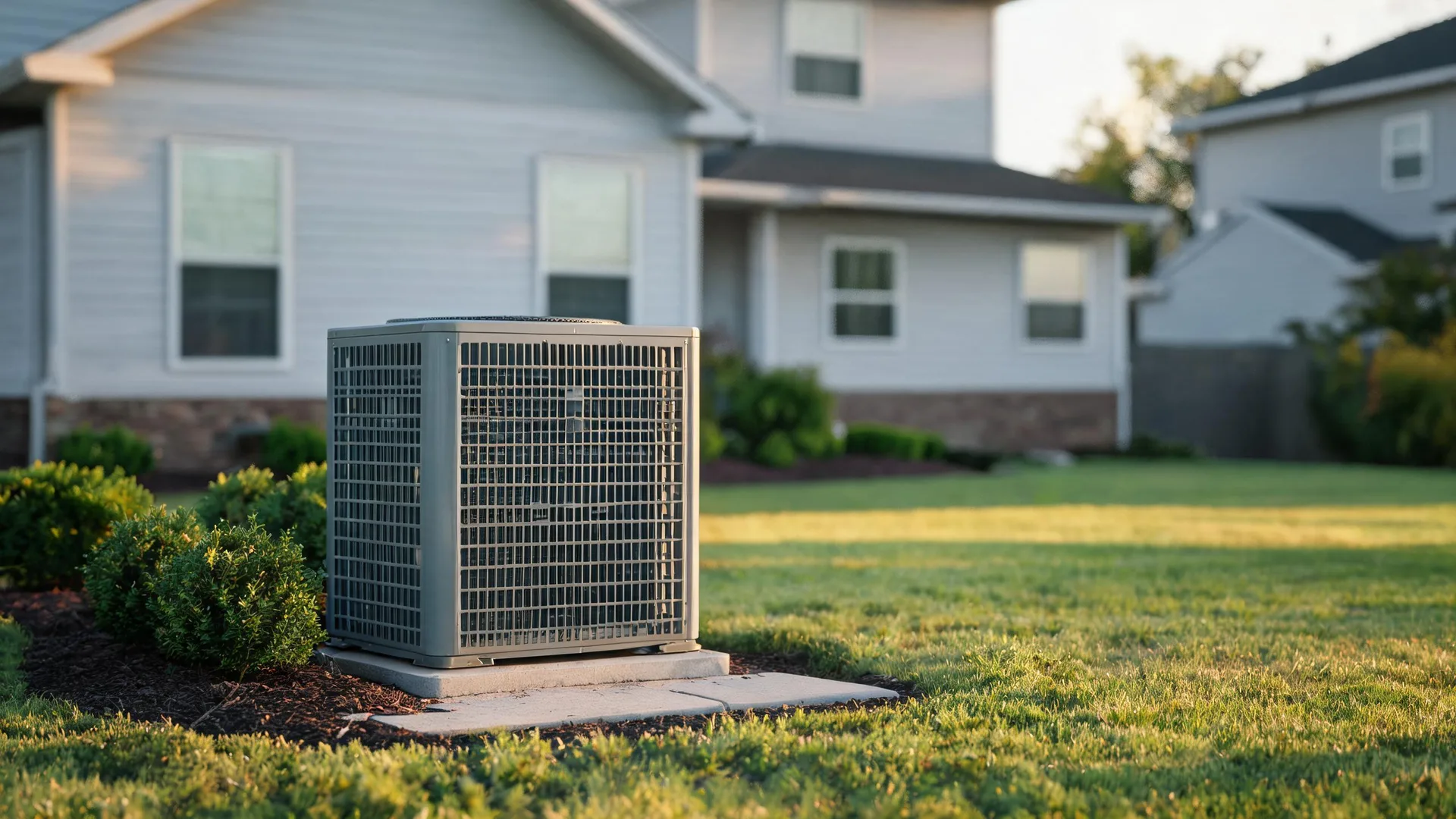
Aerial view of a residential air conditioning condenser unit mounted on a concrete pad next to a house with vinyl siding and a sliding glass door.

AC Maintenance in Richmond, IN

Tell us about the job

Takes about a minute. No obligation.

Tune-up, service, or cleaningCentral ACWayne County, IN
Step 1 of 2

What ZIP code is the job in?

Three months of real work

Richmond summers run June through August, with afternoon highs averaging around 83 degrees. That's a short season compared to what air conditioners handle further south, and the rest of the year this system mostly sits idle.


Light duty still needs a yearly look

A system that only runs three months a year still has a capacitor that ages, a coil that collects dust, and refrigerant that can slowly drop. The difference here is that when something goes wrong, it's usually age or a part wearing out on its own schedule, not the system being pushed past what it can handle.

3 months
June through August, your air conditioner is on duty
83°F
the average summer afternoon it cools against
14 hail events
in ten years, and hail bends the fins on outdoor coils
68 wind events
in ten years, and wind drives debris into outdoor units
Isometric line illustration of a cutaway single-story house showing interior rooms, ducted air handler, ceiling ductwork, and an outdoor condenser unit connected by refrigerant lines.
Your air conditioner works hardest from June through August.

NOAA nClimDiv, 1991–2020 normals

June is when cooling starts in Wayne County, and the system goes straight to work.

Have it checked in May, before that first hot stretch asks for everything it's got.

One system, one season of cooling, one checkup a year

Power costs 14.77 cents a kWh statewide
Climate zone 5A
Cooling runs June through August
Richmond is an older-home countyHalf the homes in Wayne County were built in 1960 or earlier.

A yearly check is the one thing worth doing here. A technician can test the capacitor, clean the coil, and check the refrigerant charge before the system runs its three months straight through, June to August. Catching a weak capacitor before that stretch means it gets replaced on a bench, not in your driveway in July. None of this takes long, since nothing here is under heavy strain to begin with. It's a short visit once a year, timed to land before the system has to work.

If your system is original to the house, get it looked at every year

Half the homes in Wayne County were built in 1960 or earlier, which means a lot of these systems have been around a long time too. The older a unit gets, the more a yearly check matters, since that's how a weak capacitor or a slow refrigerant leak gets caught on a bench instead of mid summer.

Find a contractor
A gray metal air conditioning condenser unit mounted on a concrete pad in a flat grassy field under a partly cloudy sky.

What a real tune-up actually touches

A quick visit checks that the system turns on and blows cold, then it's over. A thorough one opens the cabinet. The technician pulls the capacitor and tests it under load, not just by looking at it, because a capacitor can measure fine sitting still and still fail once it has to start the compressor. They check refrigerant pressure against what the system actually calls for, not just whether the lines feel cold. The condenser coil gets washed, not wiped, since dust packed between the fins blocks airflow a quick pass won't touch. Electrical connections get tightened, because a loose one generates heat all season and nobody notices until it fails. The blower wheel gets looked at for dust buildup, and the drain line gets checked so condensation has somewhere to go. None of this takes long when a system is in good shape. It takes longer when something's starting to go, and that's the point. A tune-up that's over in a few minutes without anyone opening a panel hasn't told you anything you didn't already know.

The filter is doing the coil's job for it

A dirty filter chokes airflow before it ever reaches the coil. Starve the coil of air and it can get cold enough to frost over, and once it frosts, cooling stops until it thaws. A filter changed on schedule is the cheapest thing protecting the compressor.

The drain line decides where the water goes

An AC pulls moisture out of the air all summer, and that water has to leave through the drain line. Algae and dust build up in that line the same way they do in any drain, and once it clogs, the water backs up into the pan and finds the nearest way out, usually down through the ceiling below.

Overhead view of a gray outdoor AC condenser unit on a concrete pad beside a mulched garden bed and a house with vinyl siding.

Book your AC tune-up in May, before homes here start needing cooling in June.

  1. Jan
  2. Feb
  3. Mar
  4. Apr
  5. May
  6. Jun
  7. Jul
  8. Aug
  9. Sep
  10. Oct
  11. Nov
  12. Dec

A tune-up checks the refrigerant charge, cleans the coils, tests the capacitor and tightens the electrical connections.

A tune-up only works if it happens before the system needs to perform, so timing is part of the job, not just the checklist. The technician is looking for anything that's close to failing but hasn't yet. A capacitor that's lost some of its strength, a contactor with pitted contacts, a coil with just enough dust on it to make the compressor work harder than it should. None of these show up as the system not cooling. They show up as the system cooling fine while quietly running hotter or drawing more current than it needs to. That's the part a visual check misses and a real one catches.