









AC tune-up before summer in Lafayette, IN

Skip the calls

You're thinking about this before the heat sets in, which is the right time. By July, every AC contractor in Tippecanoe County is booked out and taking calls all day from people whose units just quit on the first 90 degree afternoon. Getting ahead of that usually means a round of phone calls: one place doesn't service your brand, another can't get out for two weeks, a third wants to quote over the phone without seeing the unit. You end up explaining the same thing five times and still don't know who you'll end up with. Submit this request instead and it goes to one licensed contractor local to the Lafayette area, someone who works on air conditioners all summer and knows what tends to go wrong with them here before the heat really hits. No comparing bids, no fielding calls from companies you didn't ask to hear from. Just a straight path to someone who can get your system looked at before you need it.

When should I get my AC tuned up before summer in Lafayette?

You want your air conditioner ready before Lafayette's first real stretch of heat, but you're not sure what week or month actually makes sense to book it. Too early and it might feel pointless, too late and you're calling when everyone else already is.

March or April, before the first hot stretch

Book it in March or April, while your furnace is still running and your AC has sat idle all winter. A contractor checks the refrigerant charge, cleans the condenser coil outside, and tests the capacitor and electrical connections before the unit has to work. Any of those can fail quietly over a cold Tippecanoe County winter, and you won't know until the first 90 degree day asks the system to run for hours straight. Catching a weak part in April means a scheduled visit on your terms. Catching it in July means your AC is off during the hottest week of the year, and so is everyone else's.

A smiling woman in a cream knit sweater sits at a marble counter with a glass of red wine, with a dining table, pendant lights, and French doors in the dim background.
A smiling woman with long dark hair in a cream sweater sits in a dimly lit open-plan home interior, with a glass of red wine in the foreground and a dining table, fireplace and shelving behind her.
A woman with long dark hair in a black turtleneck laughs while seated at a light stone counter with a glass of red wine, in a dimly lit interior with a potted plant, framed pictures and a hanging lamp behind her.
A woman in a dark sweater laughs while seated at a white marble counter with a glass of red wine, in a dimly lit open-plan interior with a pendant lamp and dining table behind her.

Tune-Up Now or Wait and See

Tune-up now

  • A technician checks the refrigerant charge before the unit has to work a 95 degree afternoon, so a low charge gets caught before it costs you a compressor.
  • Coils get cleaned while they're still accessible and not caked from a full season of running, which matters since a dirty coil makes the whole system work harder to cool the same air.
  • The capacitor and contactor get tested under light load, catching a part that's starting to go before it fails outright in August heat.
  • Booking in spring means picking a day that works for you instead of waiting on whoever can fit you in during a heat wave.
  • A system that's been checked over starts the summer at its rated efficiency, instead of losing a percentage of it to a dirty filter or low charge you didn't know about.
  • If something does need a part ordered, there's time to get it before the unit is running flat out every day.

Waiting until it breaks

  • A unit that quits on the first hot day in Tippecanoe County is one of hundreds doing the same thing that week, and every contractor's schedule fills fast.
  • A problem that would have been a cheap fix in May, like a weak capacitor, can take the compressor down with it if it's left to run through June and July.
  • No cooling in a 90 degree stretch means living with the heat for however many days it takes to get a technician out and the part in hand.
  • A system that's been neglected over winter runs with whatever dust and buildup collected, so it's already working harder before summer even starts.
  • Emergency calls in peak summer often cost more than a spring visit, since demand is highest right when every unit in the county is under the same strain.
  • There's no slack in the schedule once summer hits, so a breakdown in July means waiting in line behind everyone else whose AC picked the same week to fail.
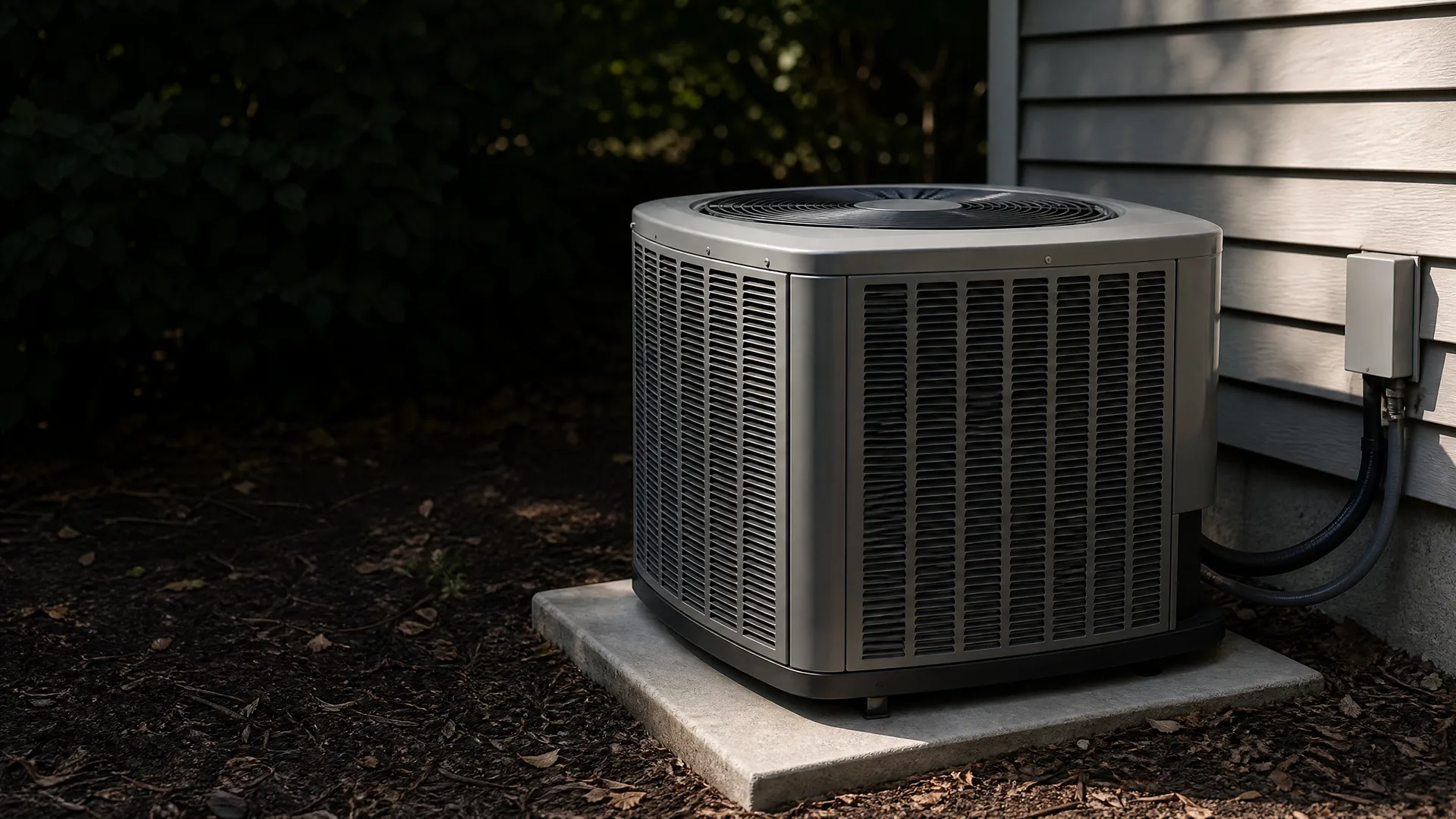
An outdoor air conditioner condenser unit on a concrete pad beside a house with horizontal lap siding, with an electrical disconnect box and conduit on the wall behind it.

What a tune-up actually checks

A technician measures refrigerant pressure against what the manufacturer specifies for your unit, not a guess. Low charge shows up as a number on a gauge, not a feeling in the air. The same visit checks the capacitor, the part that gets a compressor or fan motor started. A weak capacitor can still run the system in April and fail outright the first week it has to carry a long afternoon in the 90s.

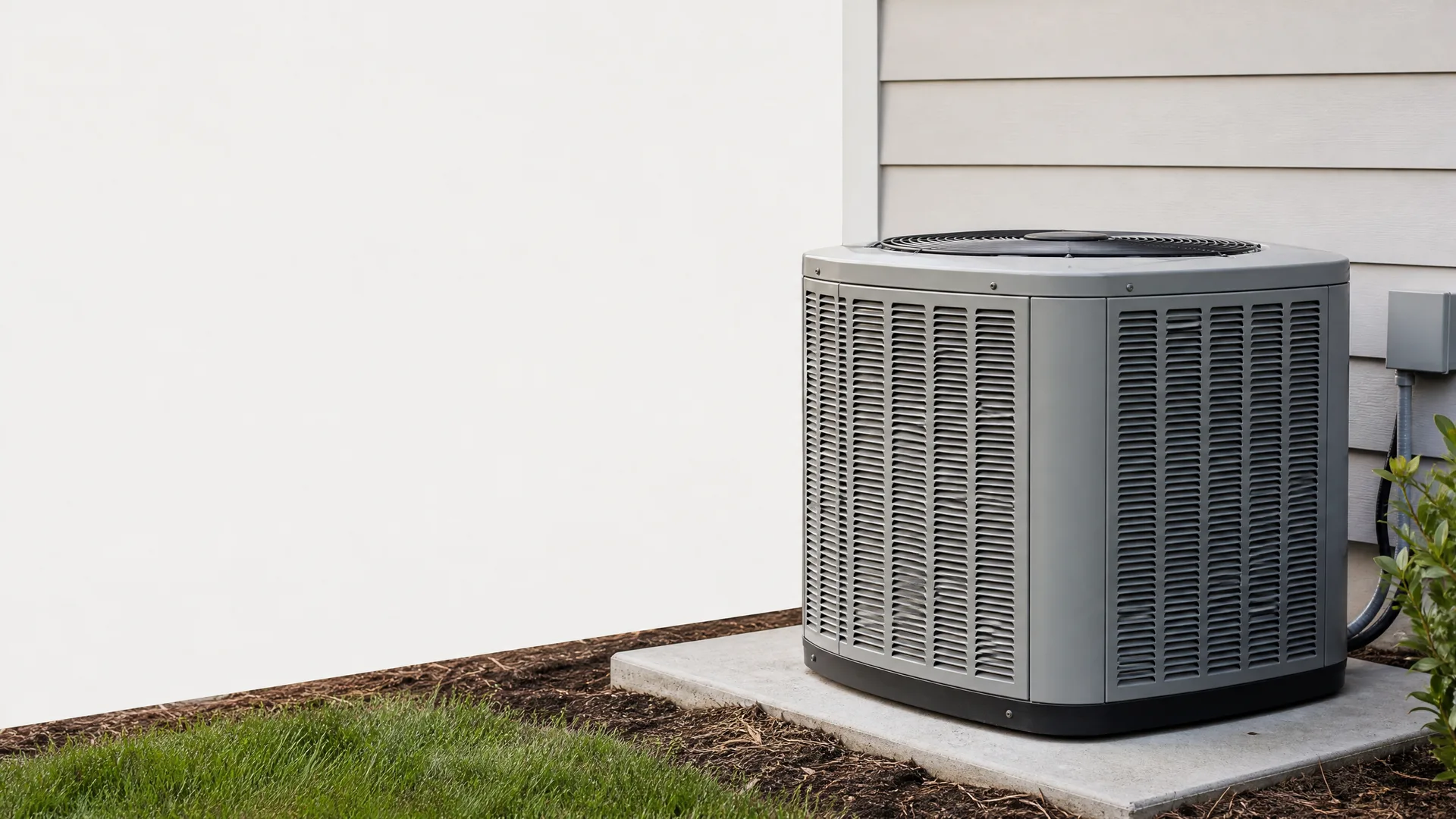
A gray outdoor air conditioner condenser unit sits on a concrete pad beside a house with light horizontal siding and a plain white wall, with mulch, grass, and a small shrub in the foreground.

Why the condenser coil matters

The outdoor coil gives up the heat your house doesn't want. Over a winter it collects cottonwood, grass clippings, and dust that block airflow through the fins. A dirty coil makes the compressor run longer and hotter to move the same amount of heat. Cleaning it before the unit runs daily is easier than cleaning it in August, when a season of debris has baked onto the fins.

Is your AC already telling you something's off

Turn it on and listen before you need it. A unit that's been sitting since last September might run a few minutes then stop, blow air that's not quite cold, or make a rattle it didn't make before. Ice on the line outside, a musty smell from the vents, water pooling near the indoor unit, these are the unit telling you something before the heat does. None of that is rare after months off. The part that matters is whether anyone looks at it before the first 90 degree day forces the question. A unit that struggles in May and gets ignored is usually the one that quits outright in July, and by then you're not scheduling a tune-up, you're waiting on an emergency repair.

  1. Technician checks the capacitor's output against its rated microfarads.

  2. Coils get cleaned where dirt blocks heat from transferring outside.

  3. Refrigerant charge is measured against the manufacturer's specified pressure.

  4. Condensate drain line is cleared so water doesn't back up indoors.

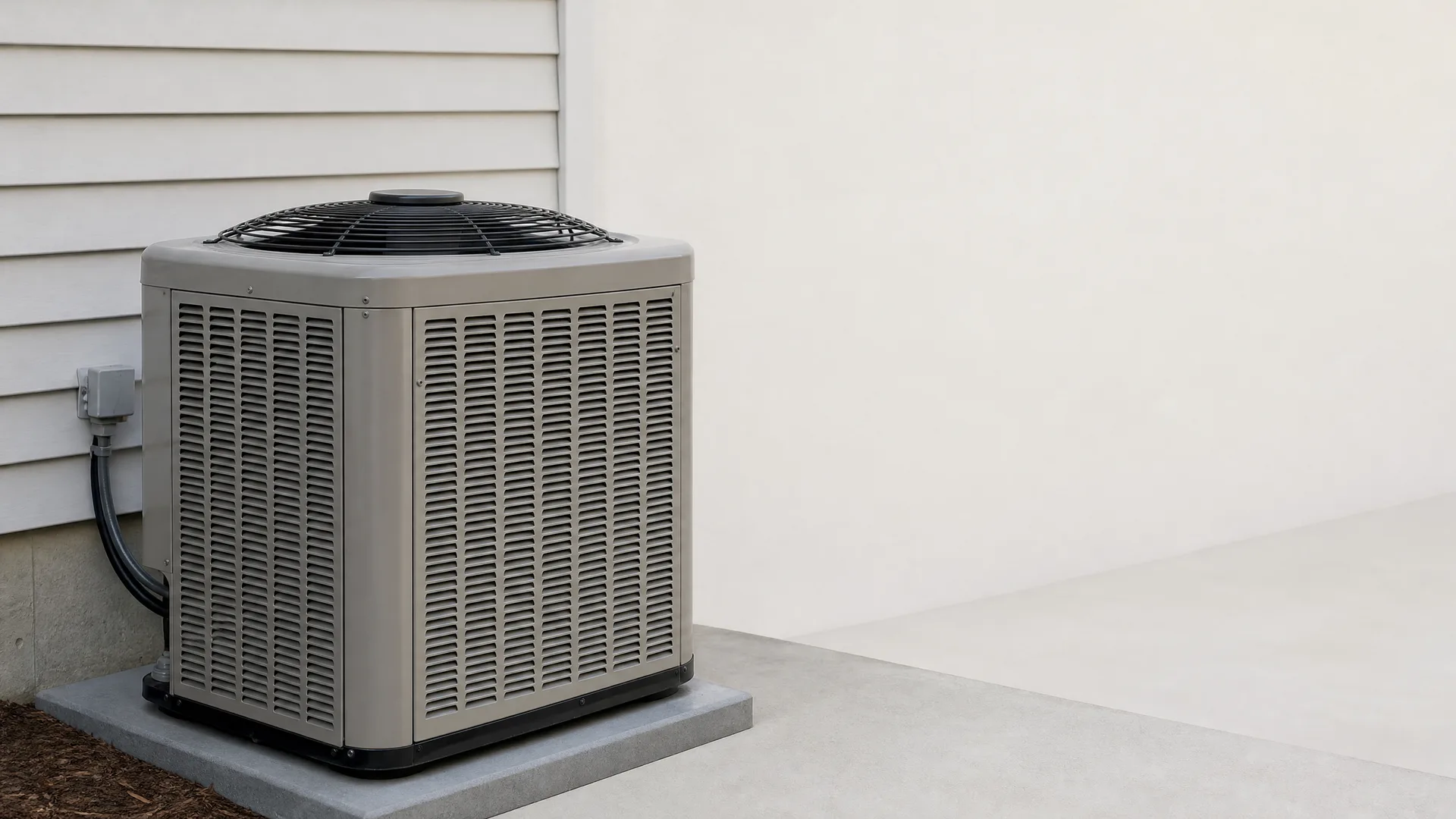
An outdoor air conditioning condenser unit on a concrete pad beside a house with horizontal lap siding, with an electrical disconnect box and conduit on the wall, mulch and a green shrub to the right, and a concrete walkway in the foreground.
Before you get your air conditioner maintenance
A gray outdoor air conditioner condenser unit on a concrete pad beside a house with horizontal siding and a stucco foundation, with a disconnect box and conduit on the wall, decorative gravel, mulch, and a shrub nearby.
After you get your air conditioner maintenance

No calling every shop in Tippecanoe County

You could spend an afternoon calling around Tippecanoe County, explaining the same thing to five different shops, then sitting with five quotes trying to guess which one actually knows what they're doing. Or you could hand this off once. The contractor who picks this up works on these units all summer, in the same neighborhoods with the same humidity and the same strain on a compressor that's been idle since September. He's seen what usually fails first in a unit that's sat all winter, and he's not learning on your system. One request, one contractor, no five phone calls to repeat yourself on. You've already decided to get ahead of the heat. The part left is getting someone qualified out to your house before every other homeowner in Lafayette has the same idea in July.

If you tune it up now

The visit happens on a schedule you picked, not one forced on you by a 95 degree afternoon. A technician has time to actually check the capacitor's output, measure the charge against the manufacturer's spec, and clear the condensate line without rushing to get to the next emergency call. If something's marginal, like a capacitor reading low but not dead yet, you hear about it now and can decide what to do before it strands you without cooling. The unit starts the summer already proven to run, so the first hot week in Lafayette is just another day it handles.

If you wait and see

The AC might run fine all summer with no attention at all. Plenty do. But if something is going to fail, a compressor straining against a low charge or a capacitor that finally gives out, it tends to happen under load, which means the first real stretch of heat. That's also when every contractor in Tippecanoe County is stacked with calls, so a same-day fix gets harder to get. Waiting costs you nothing if the unit holds up. It costs you a hot house and a longer wait for help if it doesn't.

A smiling middle-aged man in a dark knit sweater sits at a dimly lit dinner table with a glass of red wine, a bowl of food, and a lit candle in the foreground.
A woman with long wavy brown hair in a knit sweater reclines on a couch with eyes closed under a textured blanket, an open book on her lap, beside a lit table lamp and potted plant.

Cooling runs June through August

Three months a year, your AC is the only thing standing between you and the heat. Everything else is standing idle. June, July, August, it has to work, and whatever shape it's in now is the shape it'll be in on the first 95 degree day.

NOAA nClimDiv 1991-2020

A gray outdoor air conditioner condenser unit on a concrete pad beside a house with horizontal lap siding, with a flowering shrub at left and a disconnect box with conduit on the wall at right.

Running clean

This is a unit ready for summer. The pad is clear, the conduit's intact, and nothing's blocking airflow around the cabinet. A unit kept like this holds its charge and its coil stays able to shed heat on the afternoons that actually test it.


An outdoor air conditioner condenser unit on a concrete pad beside a house with light horizontal vinyl siding, surrounded by bare dirt, gravel and dry leaves, with refrigerant lines and conduit running along the wall.

Neglected and clogged

Leaves and dirt have built up around the base all winter, right where the unit needs open air to breathe. Refrigerant lines running bare along the wall take the weather too. Left like this, the coil underneath is losing the ability to cool.

A closed silver laptop and a light ceramic mug of dark coffee on a wooden table, with a wooden chair, kitchen counter with sink, pendant lamp, potted plant, and a window showing a sunset sky in the background.

What a weak AC costs you in July

A unit that's low on refrigerant or dragging a dirty coil doesn't fail outright most of the time. It just runs longer to hit the same temperature, and runs again sooner after it stops. You notice it in the bill before you notice it in the air, and by the time the house feels warm at 4pm with the thermostat set where it's always been, the compressor's already been working harder than it should for weeks.

The other cost is timing. If something does give out, it tends to happen on the hottest afternoon of the week, because that's when the unit is under the most strain. That's also when every contractor in Tippecanoe County has a full board and a callback list. Getting a tune-up now means you're not one of the names on that list, calling around, waiting for someone to fit you in between emergency jobs.

A light-colored ceramic vase holding green leafy branches sits on a round wooden table, with a wooden-framed armchair draped in a cream throw, a tripod floor lamp, and sheer curtains blurred in the background.
A two-story light-colored house with horizontal siding, a covered front porch with white railings and columns, flanked by green trees and shrubs, with a concrete walkway leading to a wet sidewalk and street.

That mugginess you feel all summer has a number attached. In Tippecanoe County the dew point averages 64°F across June, July and August, per NOAA climate data. At that level your air conditioner isn't just dropping the temperature, it's pulling a steady load of moisture out of the air, and that's the harder half of its job. A unit that's low on refrigerant or dragging a dirty coil struggles with the humidity side first, so the house feels clammy even when the thermostat says it hit the number. You'll notice it in how the air feels on your skin, not just what the dial reads.

NASA POWER T2MDEW

The question was never whether your AC needs looking at before summer. It does. The answer is to get it done now, while a technician has time to check the capacitor, measure the charge, and clear the drain line before any of that matters on a 95 degree afternoon. Once you request service, this goes to one licensed contractor in Tippecanoe County, not a handful competing for your callback. Someone who works on these units all season knows which capacitor brands fail early here and which coils clog fastest, because they've already seen it this year on a dozen other units like yours. You won't spend your evening comparing quotes or repeating the same explanation to different shops. You'll talk to one person who already knows what's likely wrong before they get to your house, and who can tell you straight what your unit needs before the heat decides it for you.

An outdoor air conditioner condenser unit on a concrete pad beside a house with horizontal lap siding, with an electrical disconnect box and conduit on the wall and dark mulch and shrubs around it.

Skip calling around

Tune-up, service, or cleaningCentral ACTippecanoe County, IN
Step 1 of 2

What ZIP code is the job in?