






An overhead view of a residential air conditioning condenser unit mounted on a concrete pad next to a house with vinyl siding.

AC Maintenance in Michigan City, IN

Tell us about the job

Takes about a minute. No obligation.

Tune-up, service, or cleaningCentral ACLaPorte County, IN
Step 1 of 2

What ZIP code is the job in?

A quick tune-up gets you a glance at the outdoor unit and a new filter. A thorough one gets the refrigerant charge checked against what the system actually calls for, not just a gauge reading and a nod. The tech should pull the capacitor and test it under load, since a capacitor can read fine sitting still and still fail the first hot day it has to work. The condenser coils need an actual rinse, not a wipe, because dirt packed between the fins blocks heat from leaving the refrigerant no matter how clean the cabinet looks. Electrical connections get checked for looseness and corrosion, since a loose wire creates resistance and heat before it ever trips a breaker. Ask what was measured, not just what was looked at. If nobody can tell you the suction line temperature or the delta across the coil, nobody checked.

3 months
June through August, your air conditioner is on duty
81°F
the average summer afternoon it cools against
32 hail events
in ten years, and hail bends the fins on outdoor coils
60 wind events
in ten years, and wind drives debris into outdoor units
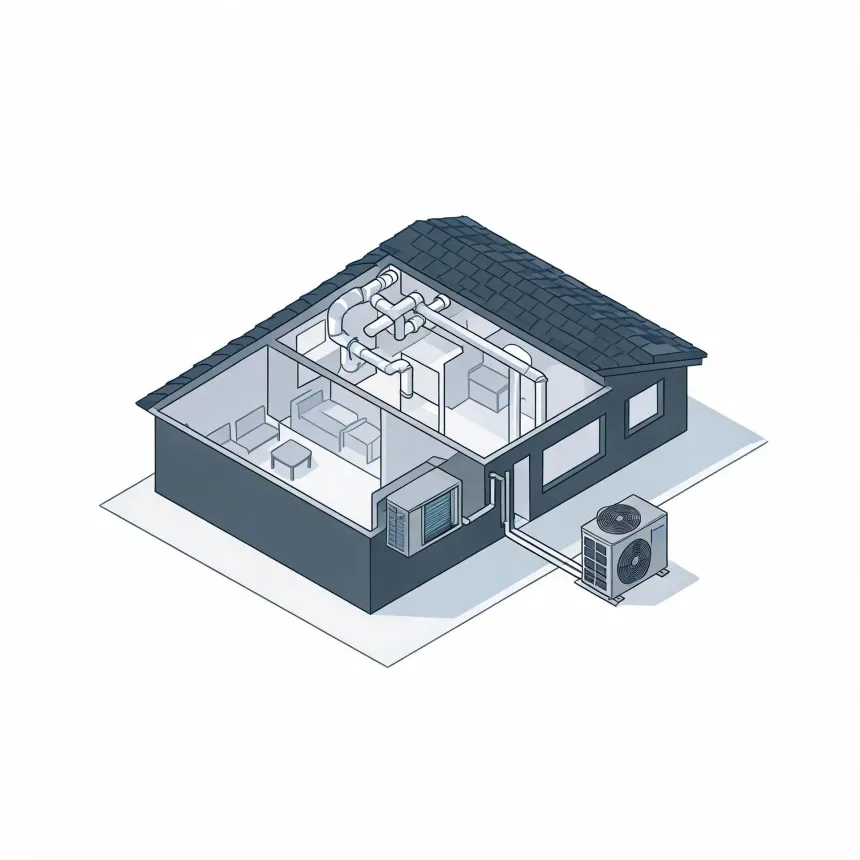
Isometric line illustration of a cutaway single-story house showing interior rooms with furniture, ceiling ductwork, an indoor air handler, and an outdoor condenser unit connected by lines along the exterior wall.
Your air conditioner works hardest from June through August.

NOAA nClimDiv, 1991–2020 normals

Michigan City summers only ask three months of real work from your AC, June through August.

The rest of the year it sits idle, and idle is no excuse to skip the yearly check.

June through August is the only stretch that counts

Power costs 14.77 cents a kWh statewide
Cooling runs June through August
Summer afternoons average 81°F
Half these homes were built in 1969 or earlierA system that old deserves a yearly look, not just a call when it quits.

Skip the yearly check and the first thing to go is usually the capacitor, since a weak one still starts the compressor on a cool morning and just fails outright on the first real hot day. Dirty coils are slower trouble. The system keeps running, but it runs longer to do the same job, and the compressor spends more time under strain than it was built for. A refrigerant leak behaves the same way, small enough that the system limps along for a while before it finally can't keep up. None of this announces itself. The air still comes out cold until the day it doesn't, and by then it's a repair instead of a tune-up.

Have it looked at yearly, not just when it fails

If your system came with a house built in 1969 or earlier, nobody but you knows how long it's been running or when it was last serviced. A yearly check is how you find the weak capacitor or the dirty coil while it's still a tune-up, before it turns into a breakdown.

Find a contractor
A man in a cap, dark jacket and work pants carries a canvas tool bag as he walks up steps toward an orange front door of a house with gray siding and a potted shrub.
An outdoor air conditioning condenser unit mounted on a concrete pad beside a house, with electrical conduit running to a wall-mounted disconnect box.

The hardest start is the first one after sitting idle

An AC that sits idle for months doesn't fail the way one running every day does. Dust settles on the coils and in the cabinet during the quiet stretch, and that same dust is still there the first morning the system has to work hard. Oil inside the compressor can settle too, so the first startup after a long rest is the hardest one it will do all year. If a capacitor was already weak, that first real startup is when it gives out. None of this shows up by looking at the unit sitting still. It shows up under load, which is exactly what a yearly check is for.

The filter is doing more than keeping dust off the coil

A clogged filter starves the system of airflow, and the blower has to push harder to move the same amount of air across the coil. Less air across the coil means the coil can freeze even on a hot day, and a frozen coil stops cooling altogether until it thaws. Changing the filter is the one part of maintenance a homeowner can do between visits, and it protects everything downstream of it.

The drain line fails quietly, then all at once

Algae and dirt build up inside the condensate drain the same way they build up in any pipe that sits wet. The system keeps cooling the whole time this is happening, so there's no warning in how the air feels. The first sign is usually water where it shouldn't be, pooling at the indoor unit or shutting the system down through a safety switch. Clearing that line is part of a yearly check precisely because nothing about running the AC tells you it needs it.

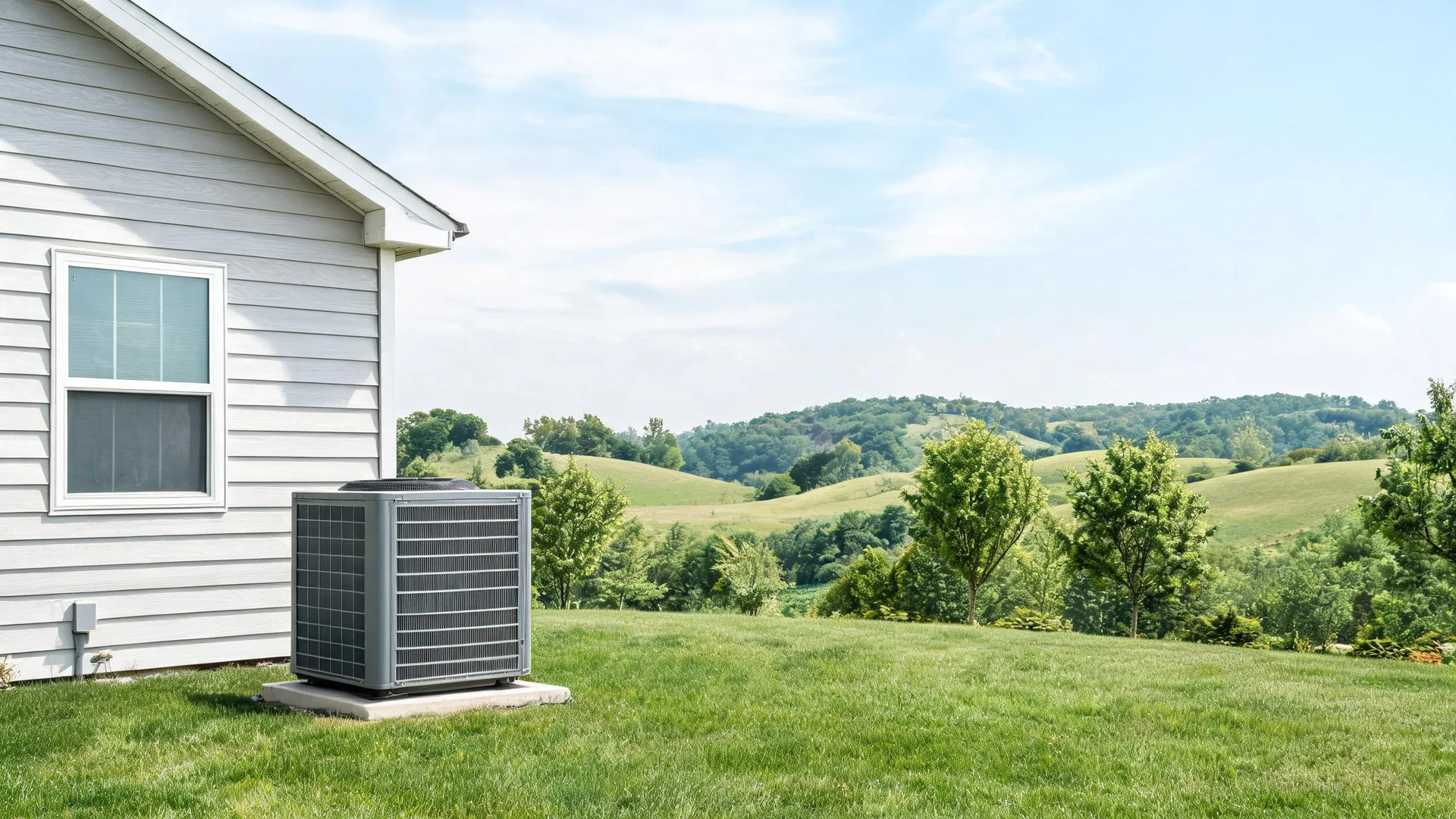
An outdoor air conditioning condenser unit on a concrete pad next to the gray vinyl siding of a residential home.

Book your AC tune-up in May, before homes here start needing cooling in June.

  1. Jan
  2. Feb
  3. Mar
  4. Apr
  5. May
  6. Jun
  7. Jul
  8. Aug
  9. Sep
  10. Oct
  11. Nov
  12. Dec

A tune-up checks the refrigerant charge, cleans the coils, tests the capacitor and tightens the electrical connections.

A tune-up worth paying for ends with the system running, not just inspected. After the coils are rinsed and the capacitor tested, the tech should start the unit up and watch it work. That means checking the refrigerant pressures while it runs, not before, and measuring the temperature of the air coming off the coil against the air going into it. The blower wheel gets looked at too, since dust cakes onto those blades the same way it does the coil, and a dirty blower wheel moves less air no matter how clean the filter is. The drain line gets flushed, not just glanced at, because a clear line today still grows algae tomorrow. A tune-up that skips the startup check is really just a cleaning.