Three illuminated two-story brick houses on a tree-lined residential street photographed at twilight, with warm window light and landscape uplighting visible against a deep blue evening sky.

AC Maintenance in Jasper, IN

Tell us about the job

Takes about a minute. No obligation.

Tune-up, service, or cleaningCentral ACDubois County, IN
Step 1 of 2

What ZIP code is the job in?

Change the filter yourself

A dirty filter is the one thing that causes real damage and is easy to prevent. When it clogs, airflow drops and the evaporator coil can ice over, and a frozen coil can push liquid refrigerant back into the compressor. Check it against the light and swap it when you can't see through it.


Leave the rest to the technician

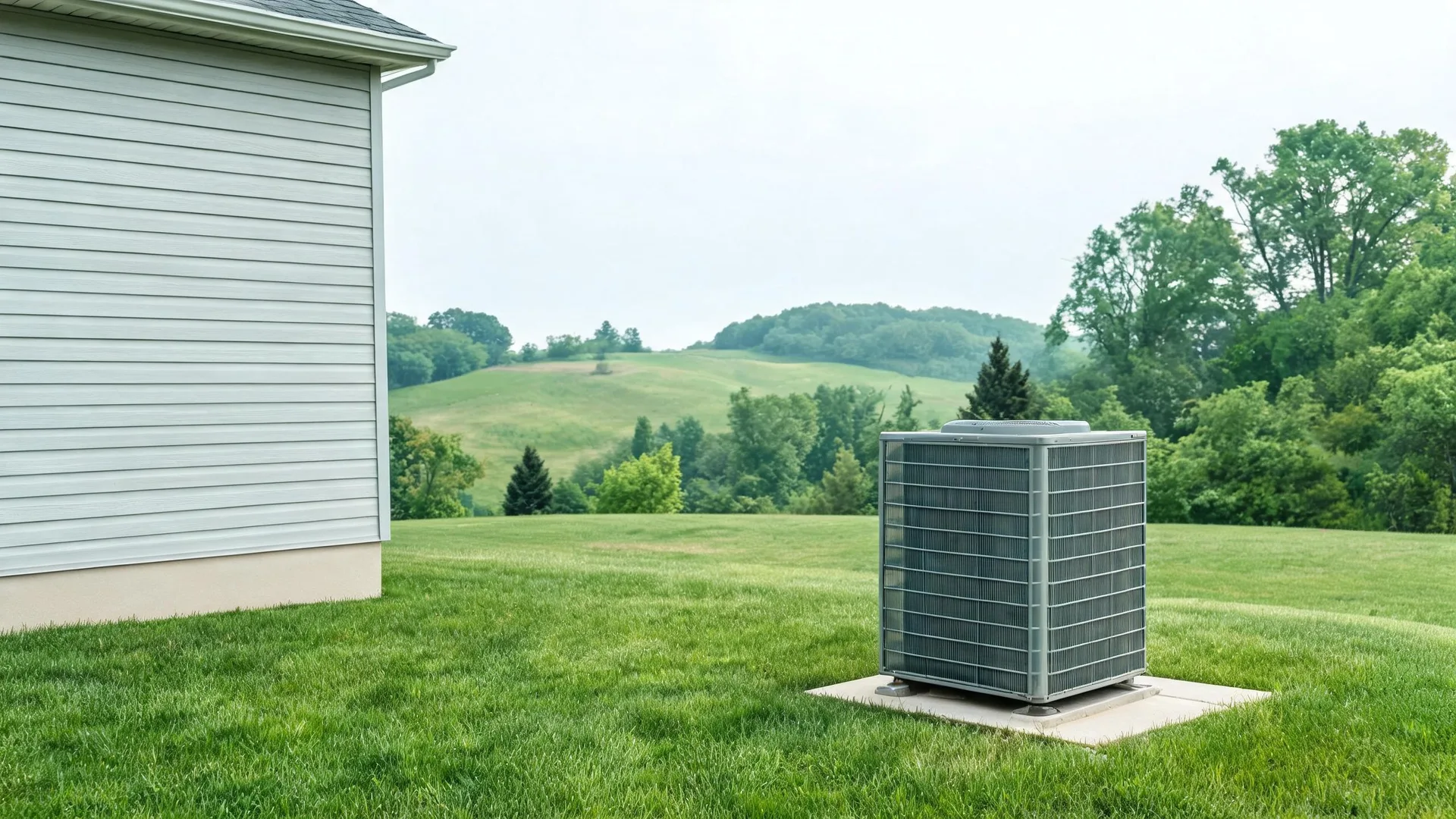
Checking refrigerant charge, testing the capacitor, and clearing the condensate drain all call for gauges and training most homeowners don't have. Opening the outdoor unit yourself risks a shock or a bent fin that throws off airflow. Keep the area around the outdoor unit clear of leaves and grass clippings, and let a licensed tech handle what's inside the cabinet.

5 months
May through September, your air conditioner is on duty
86°F
the average summer afternoon it cools against
12 hail events
in ten years, and hail bends the fins on outdoor coils
96 wind events
in ten years, and wind drives debris into outdoor units
Isometric illustration of a cutaway single-story house showing interior rooms, ductwork running from an indoor air handler, and an outdoor condenser unit on a pad beside the building.
Your air conditioner works hardest from June through August.

NOAA nClimDiv, 1991–2020 normals

May is when AC starts working hard in Dubois County.

Book the maintenance check in April, before that first hot stretch hits.

One check before May covers the season Jasper asks of an AC

Power costs 14.77 cents a kWh statewide
Cooling runs May through September
Summer afternoons average 86°F

Dubois County recorded 120 severe weather events between 2015 and 2024, and most of it was wind. None of that wears on a condenser the way a clogged filter or a low refrigerant charge does. Wind and hail show up on a roof or in a yard, not inside a sealed system. What does wear on the unit is a summer of running without anyone checking the charge or the capacitor first. That's the case for the once-a-year visit. It isn't about storms, it's about catching ordinary wear before the system has to work hard.

Book it before the season

It starts running hard in the first month of the season here. Book the check the month before.

Find a contractor
A man in a dark long-sleeved shirt and brown work pants, seen from behind, carries a waxed canvas tool bag up porch steps toward an orange front door, with a potted shrub in a terracotta pot beside him.
An outdoor residential air conditioning condenser unit mounted on a concrete pad, surrounded by gravel with a blue sky in the background.

A newer system still needs the yearly check to make it to old age

Half the homes in Dubois County were built in 1980 or later. If yours is one of them, the system running now may not be the original, but there's a good chance it still has plenty of working life ahead of it. A yearly check is what gets it there. The capacitor and the coil wear a little with every season of running, no matter how old the unit is. Catching a weak part early keeps a small problem from taking the compressor down with it.

The coil needs airflow to do its job

The evaporator coil pulls heat out of the air passing over it. That only works if air is moving through freely. A clogged filter or a coil caked with dust slows that air down, and the coil gets colder than it should until frost forms on it. Once that happens the system is losing capacity even though it's still running.

The drain is the part nobody thinks about

As the coil pulls moisture out of the air, that water has to go somewhere. It runs down into a drain pan and out a condensate line. If that line clogs with algae or sludge, the pan backs up and water finds its way out, sometimes into the ceiling below the unit. A technician clears that line during a seasonal check, before it backs up on its own.

An outdoor central air conditioning unit mounted on a concrete pad beside a blue-sided house at sunset.

Book your AC tune-up in April, before homes here start needing cooling in May.

  1. Jan
  2. Feb
  3. Mar
  4. Apr
  5. May
  6. Jun
  7. Jul
  8. Aug
  9. Sep
  10. Oct
  11. Nov
  12. Dec

A tune-up checks the refrigerant charge, cleans the coils, tests the capacitor and tightens the electrical connections.

A tune-up starts outside at the condenser. The technician checks the refrigerant charge, because a system low on refrigerant has to run longer to do the same job and that extra runtime wears on the compressor. They test the capacitor, which gives the compressor and fan motor the jolt they need to start. A capacitor that's weak might still start the system today and fail on the next hot afternoon. Inside, they check the evaporator coil for dust and clean it if it's caked, since airflow across that coil is what lets it pull heat out of the air. They'll also flush the condensate line so it can't back up later, and check that the blower motor and electrical connections are sound. None of it is guesswork. It's the same handful of parts, checked the same way, before the system has to carry a full season on its own.