







Overhead view of an outdoor AC condenser unit on a concrete pad next to a house with a dark shingle roof.

AC Maintenance in Indianapolis, IN

Tell us about the job

Takes about a minute. No obligation.

Tune-up, service, or cleaningCentral ACMarion County, IN
Step 1 of 2

What ZIP code is the job in?

Marion County saw 227 severe weather events between 2015 and 2024. Most of that was wind, 140 events, with 67 hail events mixed in. A hailstorm can dent the fins on your outdoor unit or crack the housing, and bent fins choke off airflow the system needs to cool your home. Wind-blown branches and grit get into the coil the same way. Four tornadoes touched down in the county over that span too. None of this means your unit has damage, but it's worth having someone look before summer puts it to work.

4 months
June through September, your air conditioner is on duty
83°F
the average summer afternoon it cools against
67 hail events
in ten years, and hail bends the fins on outdoor coils
140 wind events
in ten years, and wind drives debris into outdoor units
Isometric cutaway illustration of a house showing attic ductwork, an indoor air handler, refrigerant lines running outside, and an outdoor condenser unit on a pad.
Your air conditioner works hardest from June through August.

NOAA nClimDiv, 1991–2020 normals

A quick visit checks the filter and calls it done.

A real tune-up pulls the panel, washes the coil, tests the capacitor and checks the refrigerant charge.

Half the homes here were built by 1973, and an aging system needs eyes on it every year

Half the homes here were built by 1973
Climate zone 4A
Power here costs 14.77 cents per kilowatt-hour
June is when it starts working for realCooling runs June through September here, so May is the month to get it checked.

The filter is the cheapest part of this system and the one that does the most damage when it's ignored. Air has to pass through it before it ever reaches the blower, and once it's clogged, the whole system is working against itself. That lost airflow shows up at the coil next. A coil needs steady air moving across it to pull heat out of your house, and when it doesn't get that air, it can frost over even in the middle of summer, which only chokes things further. The drain does a quieter job, but skip it and the consequence is wet, not warm. Condensation has to go somewhere, and the line that carries it away narrows with algae and sludge over time whether the unit is new or old. A clogged drain backs that water up into the pan and from there into the house. Three different parts, three different ways of failing, and none of them announce themselves until the system is already struggling.

Have the outdoor unit checked before storm season tests it

A tech can check your outdoor unit for bent fins, debris and corrosion in the same visit that tests the capacitor and the charge. If storm season already dented it, you want to know before it fails on a hot day, not after.

Find a contractor
A man in a cap, gray long-sleeve shirt and brown pants carries a worn canvas tote bag up porch steps toward an orange front door beside a potted olive tree.
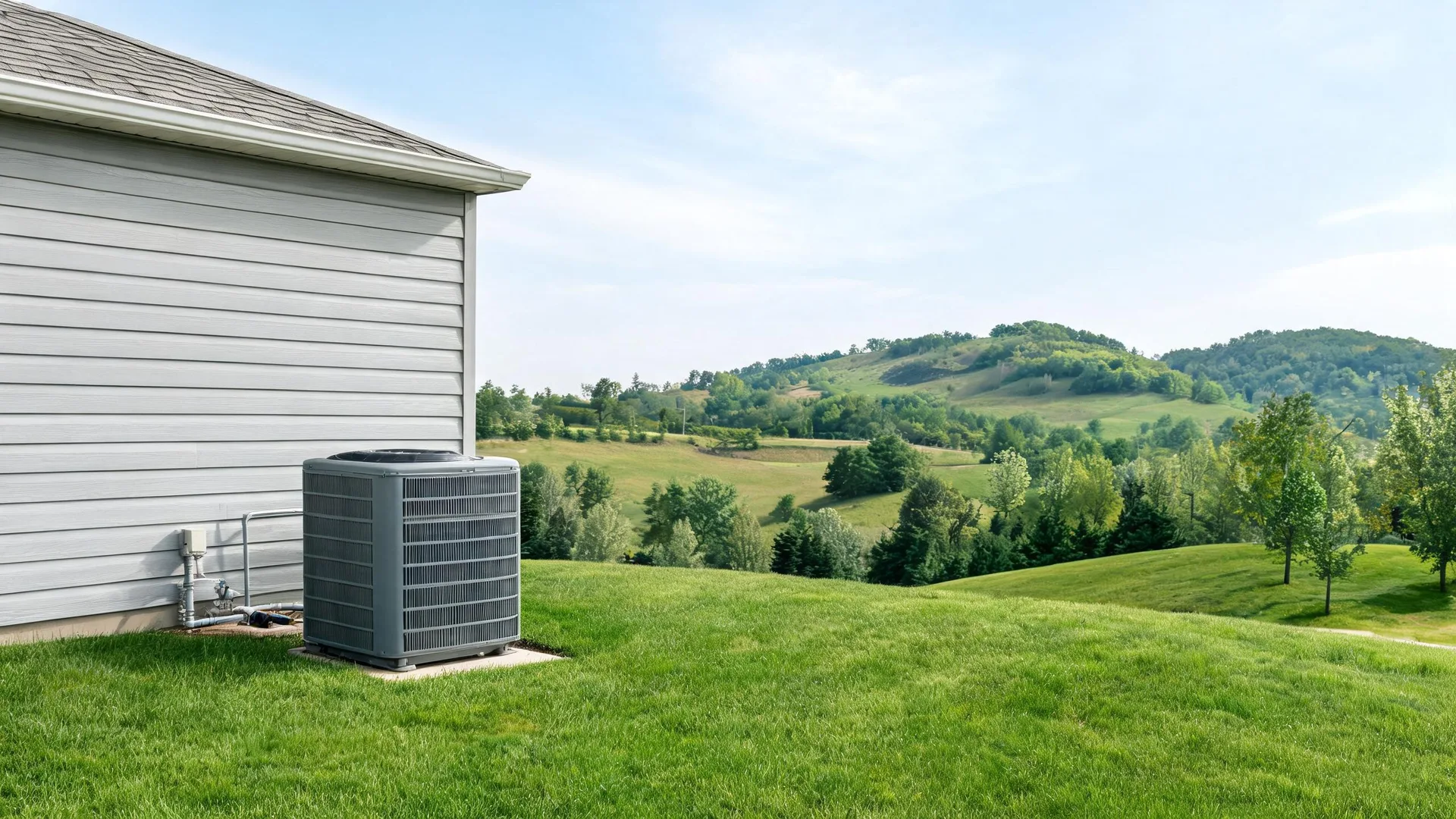
A gray residential air conditioning condenser unit mounted on a concrete pad outdoors, surrounded by green grass under a partly cloudy blue sky.

The unit usually asks first

Weak airflow from the vents is the first thing most people notice, and it usually means the blower is struggling or the coil is caked with dust. Warm air coming out when the thermostat is set low points the same way, toward a dirty coil or a refrigerant charge that's dropped. Short cycling, where the unit kicks on and off every few minutes instead of running a full cycle, wears on the compressor and usually traces back to a dirty filter or a failing capacitor. A unit that runs constantly without the house ever feeling cool is losing the fight somewhere, often at the coil or the charge. Water pooling near the indoor unit means the condensate line is clogged and needs to be cleared before it backs up into the house. Any grinding, squealing or clicking that wasn't there before is a motor or a relay asking for attention. None of these mean the system is done. They mean it's telling you what it needs before it stops telling you anything at all.

Dirt is the thing maintenance removes

The coil outside and the coil inside both need open metal to move heat. Dust and grime lay down on those fins like a blanket, and the system has to run longer to do the same job. Left alone, that extra strain is what wears out a compressor years before it should.

Small problems don't stay small

A capacitor that's starting to weaken still starts the unit, so nothing seems wrong. A refrigerant charge that's a little low still cools, just not as well. Skip the yearly check and those keep sliding until the day the compressor can't start at all or the system can't cool the house no matter how long it runs.

Overhead view of a gray outdoor AC condenser unit on a concrete pad beside a mulched garden bed and a house with vinyl siding.

Book your AC tune-up in May, before homes here start needing cooling in June.

  1. Jan
  2. Feb
  3. Mar
  4. Apr
  5. May
  6. Jun
  7. Jul
  8. Aug
  9. Sep
  10. Oct
  11. Nov
  12. Dec

A tune-up checks the refrigerant charge, cleans the coils, tests the capacitor and tightens the electrical connections.

A tune-up starts with power to the unit cut at the disconnect, because nothing gets touched live. The condenser fan motor gets checked for play in the bearing and for a blade that wobbles instead of spinning true. The contactor gets inspected too, since the points on it pit and burn with age and that pitting shows up as a unit that hums but won't start. Refrigerant lines get checked at the joints for oily residue, which is how a slow leak shows itself before the charge drops enough to matter. Inside, the blower wheel gets pulled and checked for dust packed between the blades, not just wiped on the surface, because a caked wheel throws off the airflow the whole system is built around. The drain pan and condensate line get flushed clear, since algae and sludge build there whether the system is new or old. Electrical connections get tightened, because a loose lug heats up under load and that heat is what eventually takes out a terminal. None of this is guesswork. It's the same handful of parts, checked the same way, every time.