






An overhead view of a residential air conditioning condenser unit mounted on a concrete pad next to a house with vinyl siding.

AC Maintenance in Hammond, IN

Tell us about the job

Takes about a minute. No obligation.

Tune-up, service, or cleaningCentral ACLake County, IN
Step 1 of 2

What ZIP code is the job in?

A dirty filter is where most AC trouble starts. Airflow drops, the evaporator coil gets colder than it should, and eventually it ices over. Once that happens the system can't pull heat out of the air no matter how long it runs. The outdoor coil has its own problem. It sits outside collecting dirt, leaves and grass clippings, and a caked coil can't dump heat the way it needs to. The drain line is the quiet one. It carries condensation away from the indoor coil, and it's narrow enough that algae and sludge clog it over time. When it backs up, water finds somewhere else to go, usually the pan under the unit or the ceiling below it if that pan overflows. Neglect the filter, the coils and the drain together and the compressor ends up working against a system that can't breathe, can't shed heat, and can't drain.

3 months
June through August, your air conditioner is on duty
82°F
the average summer afternoon it cools against
32 hail events
in ten years, and hail bends the fins on outdoor coils
121 wind events
in ten years, and wind drives debris into outdoor units
Isometric illustration of a cutaway house showing interior ductwork, an indoor air handler and furniture, connected by lines to an outdoor condenser unit on a pad.
Your air conditioner works hardest from June through August.

NOAA nClimDiv, 1991–2020 normals

Cooling in Hammond runs from June through August.

May is when to get the AC checked, before it has to work.

Half the homes in Lake County date to 1968 or earlier, and an older system is more worth checking every year

Half the homes here were built by 1968
Cooling runs June through August
Summer afternoons average 82°F
Nothing unusual here, just the basics done on timeLake County saw 121 damaging wind events between 2015 and 2024, but that's weather, not a reason to check this system any more than once a year

Cooling here only has to carry three months, June through August, with afternoon highs averaging 82. That's not a heavy load compared to what systems face further south, and it's not what wears a unit out early. One tuneup before the season starts covers what this climate asks of it. Lake County's bigger weather risk is wind and hail, not heat. A technician doing a spring check can also tell you if last year's storms left any mark on the outdoor unit, a bent fin or a dented cabinet, while they're already out there.

Book it before the season

It starts running hard in the first month of the season here. Book the check the month before.

Find a contractor
A gray metal air conditioning condenser unit mounted on a concrete pad in a flat grassy field under a partly cloudy sky.

A quick look and a real check leave different marks on the unit

A quick visit checks that the system turns on and blows cold, then moves on. That tells you almost nothing, because a system can do both while it's losing capacity underneath. A thorough one puts numbers against the nameplate rating and writes them down, so next year's numbers mean something next to this year's. It also means hands on the equipment. Pulling the blower access panel to look at the wheel. Pulling the disconnect to check the contactor points for pitting. Taking the drain line apart at the trap instead of just running water through it, since a partial clog can still pass water while it's narrowing. The gauges either came out or they didn't, and that's the easiest way to tell which visit happened.

What gets measured, not just looked at

A tune-up checks the refrigerant charge against what the system actually calls for, not just whether the lines feel cold. Too little charge and the coil runs too cold and ices up. Too much and the compressor takes on liquid refrigerant it was never meant to handle. Neither one shows up by looking at the outside of the unit.

The electrical side wears out quietly

Capacitors and contactors take a beating every time the system cycles on, and they weaken gradually instead of failing all at once. A weak capacitor still starts the compressor most of the time, right up until the day it doesn't. Testing it under load is the only way to catch it before it leaves the system down on a hot afternoon.

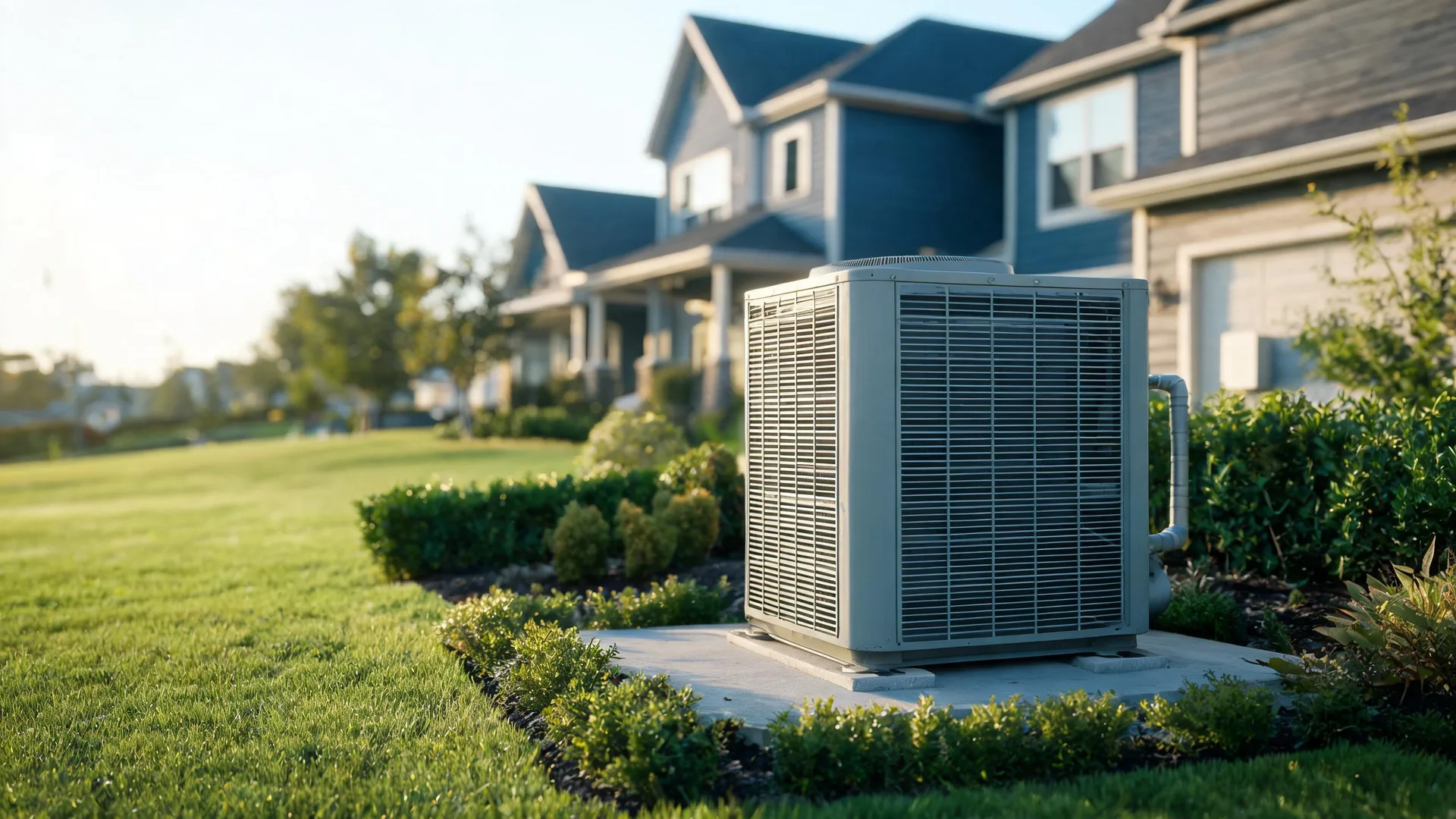
Overhead view of a gray outdoor AC condenser unit on a concrete pad beside a mulched garden bed and a house with vinyl siding.

Book your AC tune-up in May, before homes here start needing cooling in June.

  1. Jan
  2. Feb
  3. Mar
  4. Apr
  5. May
  6. Jun
  7. Jul
  8. Aug
  9. Sep
  10. Oct
  11. Nov
  12. Dec

A tune-up checks the refrigerant charge, cleans the coils, tests the capacitor and tightens the electrical connections.

A real tune-up starts with the nameplate, not a checklist. The technician matches refrigerant charge against what that specific system calls for, checks static pressure across the coil, and measures temperature split between the return and supply air. Each of those tells them something the others can't. Low split with normal charge points at airflow. Good split with the wrong charge points at the metering device or a slow leak somewhere in the lines. They'll pull the blower wheel if it looks caked, since a dirty wheel moves less air even at full speed and nobody can see that from outside the cabinet. The condensate line gets flushed, not just glanced at, because a clog that hasn't backed up yet still will. None of this shows up by listening to the unit run or feeling the air at a vent.