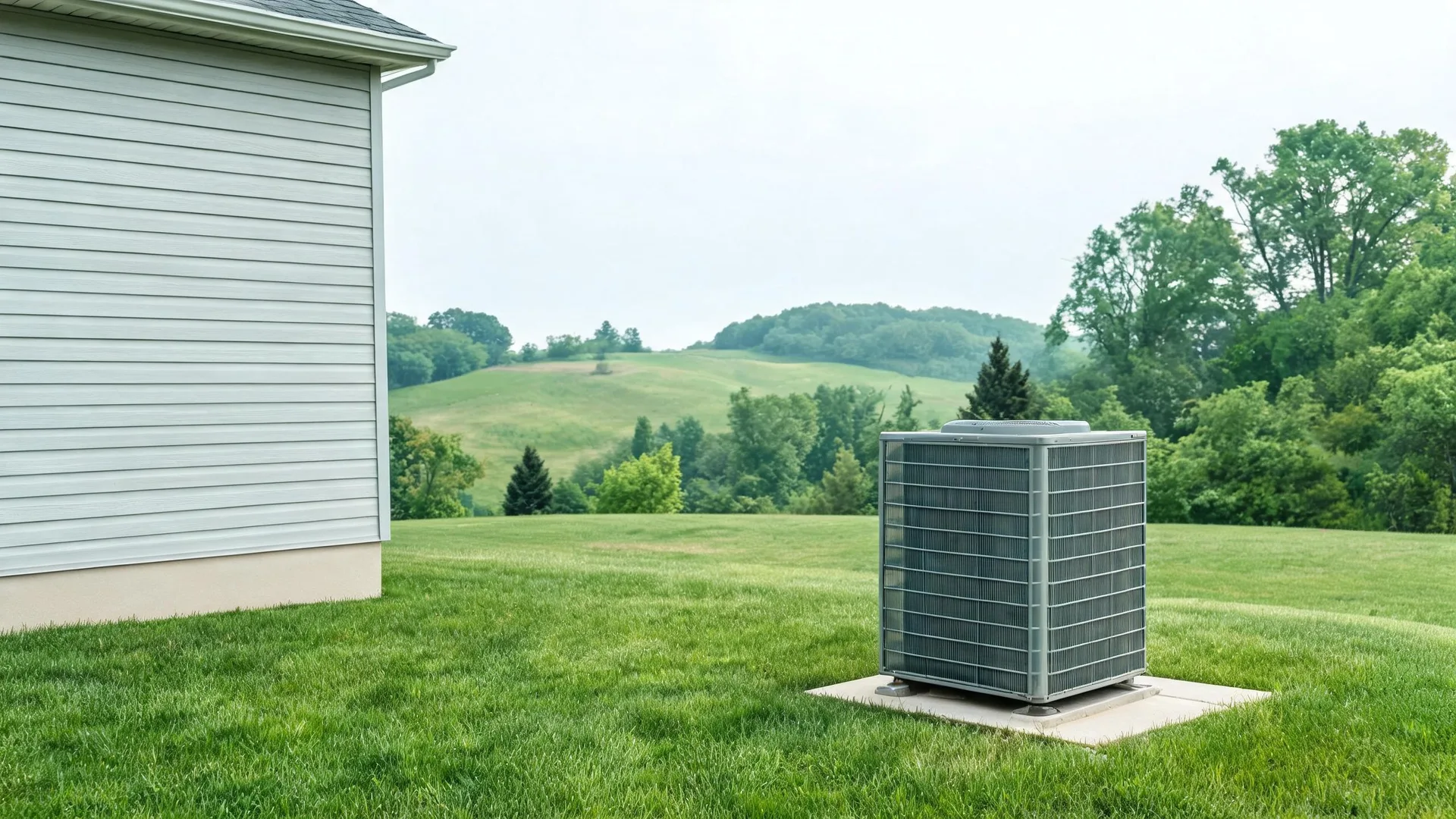
Dirt turns into strain
A dirty condenser coil can't shed heat the way it should, so the compressor runs longer to reach the same temperature. Kept up long enough, that extra strain wears the compressor out well before its time.
Takes about a minute. No obligation.
A dirty condenser coil can't shed heat the way it should, so the compressor runs longer to reach the same temperature. Kept up long enough, that extra strain wears the compressor out well before its time.
A tune-up checks the refrigerant charge, the capacitor, and the drain line before any of them cause a breakdown. Skip it, and the first sign of a weak capacitor is the system not starting on the hottest day of the year.

NOAA nClimDiv, 1991–2020 normals
Greenfield air conditioners run three months a year, June through August.
The rest of the year the system sits idle, so a yearly check has less wear to undo and a better chance of catching something small.



Half the homes in Hancock County were built in 1991 or later. A system that age still has plenty of working life in it, and a yearly check is what keeps it running that long instead of failing early.
Find a contractor
A quick visit checks that the system turns on and blows cold, then packs up. A thorough one opens the cabinet and looks at what the cold air is costing the system to make. That means pulling the capacitor and testing it under load, not just eyeing it for a bulge. It means washing the condenser coil instead of just checking it looks clean, since a coil can look fine and still be coated enough to hold heat in. It means checking refrigerant pressures against what the system is supposed to run at, not just confirming cold air is coming out of the vents. A tech who only checks air temperature at the register can miss a capacitor that is a season away from failing, because a weak capacitor often still starts the system, just slower and under more strain each time.
The filter needs checking every few weeks and changing when it looks gray or clogged. A blocked filter starves the system of airflow, and the evaporator coil behind it can ice over. Outside, keep the area around the condenser clear of grass clippings, leaves and anything growing close enough to block the sides.
Between visits, notice if the system runs longer than it used to, or if a room that used to cool fine now doesn't. A new sound, a smell when it starts, or water pooling near the indoor unit are all worth paying attention to. None of it means doing repair work. It means knowing when to call before a small problem turns into a breakdown.
A tune-up checks the refrigerant charge, cleans the coils, tests the capacitor and tightens the electrical connections.
A proper tune-up starts at the disconnect, with the power off before anyone touches a wire. From there it's the capacitor tested under load, not just looked at. A weak one can still start the system while drawing more current than it should. The condenser coil gets washed clean, not wiped, because dirt packed between the fins holds heat in even when the outside looks fine. Refrigerant pressures get checked against the number the system is built to run at, with gauges, not guessed from how cold the air feels at the vent. The drain line gets flushed so condensation has somewhere to go instead of backing up into the pan. Electrical connections get snugged down too, since a loose one heats up under load and that heat is what burns through a wire or a terminal months later.