






A nighttime view of a tree-lined residential street with illuminated two-story brick houses and street lamps.

AC Maintenance in Fort Wayne, IN

Tell us about the job

Takes about a minute. No obligation.

Tune-up, service, or cleaningCentral ACAllen County, IN
Step 1 of 2

What ZIP code is the job in?

Allen County saw 241 severe weather events between 2015 and 2024. Most of that was damaging wind, 166 times in that span, along with 56 hail events and 5 tornadoes. An outdoor AC unit sits outside through all of it, exposed to whatever blows through or falls out of the sky. Wind drives debris into the coil and fan. Hail dents the cabinet and can bend the fins enough to choke airflow. None of that announces itself. A unit can run while it's damaged, just worse than it should, until the day it doesn't run at all.

3 months
June through August, your air conditioner is on duty
82°F
the average summer afternoon it cools against
56 hail events
in ten years, and hail bends the fins on outdoor coils
166 wind events
in ten years, and wind drives debris into outdoor units
Isometric cutaway illustration of a single-story house showing interior rooms, ceiling ductwork, an indoor air handler, and an outdoor condenser unit connected by lines, in gray and white tones on a white background.
Your air conditioner works hardest from June through August.

NOAA nClimDiv, 1991–2020 normals

A quick tune-up checks that the unit turns on and blows cold.

A thorough one pulls the panel, checks refrigerant pressure against the target, and looks at the coil and fins for damage a storm already did.

June is already cooling hard, so get it checked in May

Cooling runs June through August
Summer afternoons average 82°F
166 damaging wind events from 2015 to 2024

A system doesn't usually quit without warning. It tells you first, if you know what to listen for. Short cycling is one of the clearest signs: the unit kicks on, runs a few minutes, shuts off, and starts again before the house has cooled at all. That's often a sign the coil is dirty or the refrigerant charge is off. Warm air out of the vents while the outdoor unit is running is another. So is ice on the refrigerant line, which usually means airflow is restricted somewhere between the filter and the coil. A unit that smells musty when it starts is drawing air across a coil that's grown mold. None of these stop the system from running that day. They're just the early version of a failure that gets worse until it doesn't run at all.

Get this year's storm damage found before it finds you

The coil and fins on an outdoor unit don't recover from a dented cabinet or a season of debris on their own. A tune-up gets the panel off and checks for that damage now, while it's still a repair and not a replacement.

Find a contractor
A man in a cap, dark T-shirt and tan work pants walks up porch steps toward an orange front door, carrying a canvas tool bag filled with hand tools, with a potted shrub in a terracotta planter at left.
An outdoor residential air conditioning condenser unit mounted on a concrete pad, surrounded by gravel with a blue sky in the background.

What's already failing before you'd ever know it

Pull the panel and most of what's wrong with a system is invisible from the outside. The contactor, the small switch that sends power to the outdoor unit, pits and burns a little every time it closes. It still works until the day it doesn't close at all. The capacitor that gets the fan and compressor started loses its charge slowly over years, not all at once, so the unit keeps starting right up until it can't. Refrigerant leaks the same way, a slow weep from a fitting that drops the charge a little at a time. The system still cools. It just works harder to do it, and that strain lands on the compressor, the one part in the whole unit that costs the most to replace. A tune-up checks the capacitor against its rating, checks refrigerant against the pressure it should hold, and looks at the contacts before they fail. None of that shows up by looking at the thermostat.

Airflow has to get through three places

Air moves through the filter, across the indoor coil, and the condensate drain carries off what the coil pulls out of the air. A filter clogged with dust chokes that airflow before it ever reaches the coil. The coil itself can grow a layer of dirt that acts the same way, insulating it so it can't pull heat out of the air the way it should. Either one makes the system run longer to do the same job.

A blocked drain doesn't stay a small problem

The condensate drain is a narrow line, and algae grows in it easily since it stays wet. Once it clogs, water backs up into the drain pan and from there into the cabinet or the ceiling below it. A tune-up clears that line and checks the pan before it overflows, not after. Cleaning the coil and swapping the filter keep the airflow a compressor was designed to move, which matters more than anything else for how long that compressor lasts.

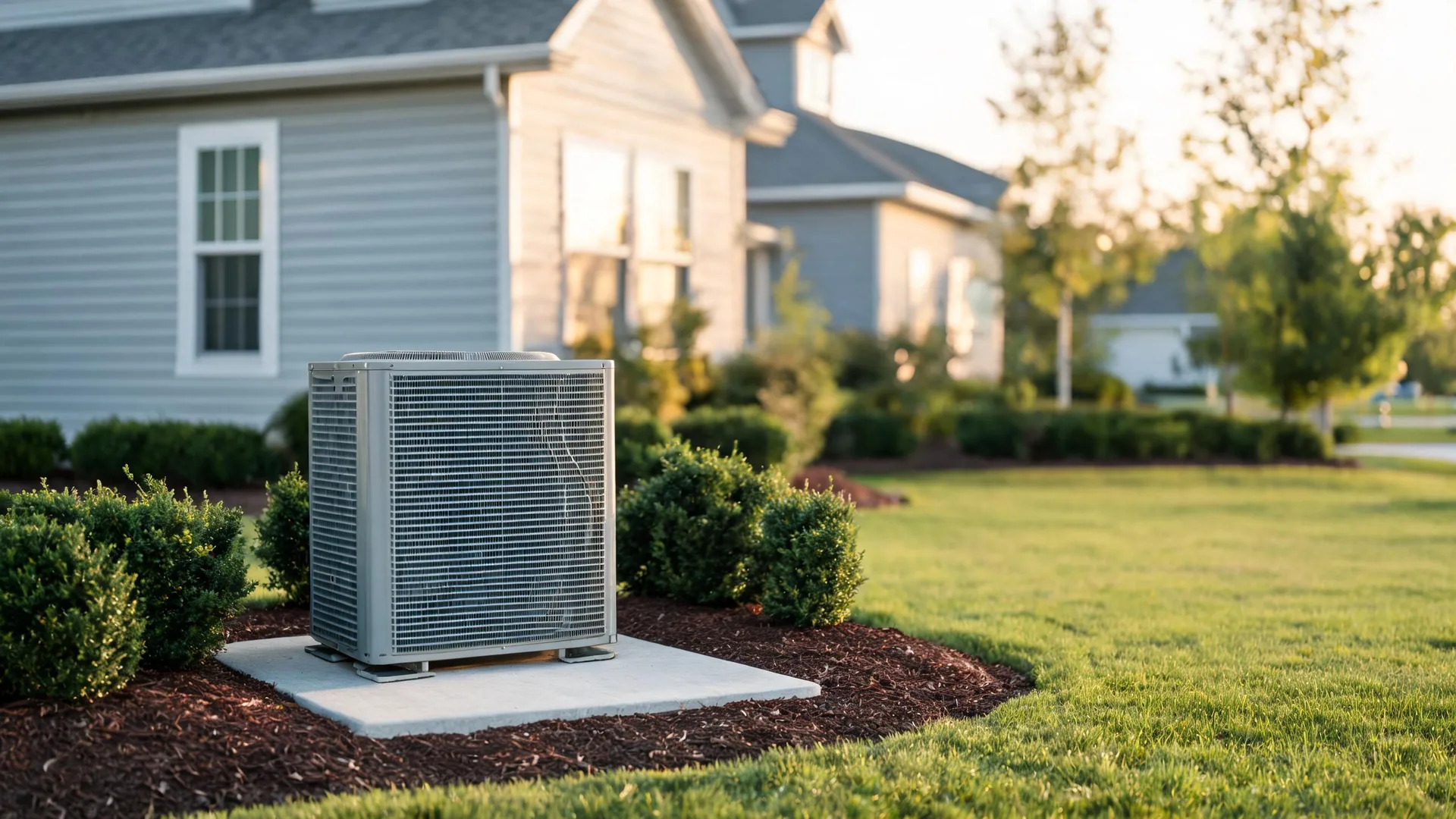
An outdoor air conditioning condenser unit on a concrete pad next to the gray vinyl siding of a residential home.

Book your AC tune-up in May, before homes here start needing cooling in June.

  1. Jan
  2. Feb
  3. Mar
  4. Apr
  5. May
  6. Jun
  7. Jul
  8. Aug
  9. Sep
  10. Oct
  11. Nov
  12. Dec

A tune-up checks the refrigerant charge, cleans the coils, tests the capacitor and tightens the electrical connections.

A tune-up also covers the parts that only matter when the system has to start. The compressor needs a jolt to get moving every time it cycles on, and a weak run capacitor leaves it trying and failing, which is hard on the windings. The contactor has to seat clean each time or the unit won't get power at all. Fan motors need their bearings checked, since a motor that's starting to bind draws more current and runs hotter than it should. None of this is visible with the unit buttoned up and running. It only shows up when someone pulls the panel and tests each part against what it's supposed to do, not just whether the air coming out of the vents feels cold that day.