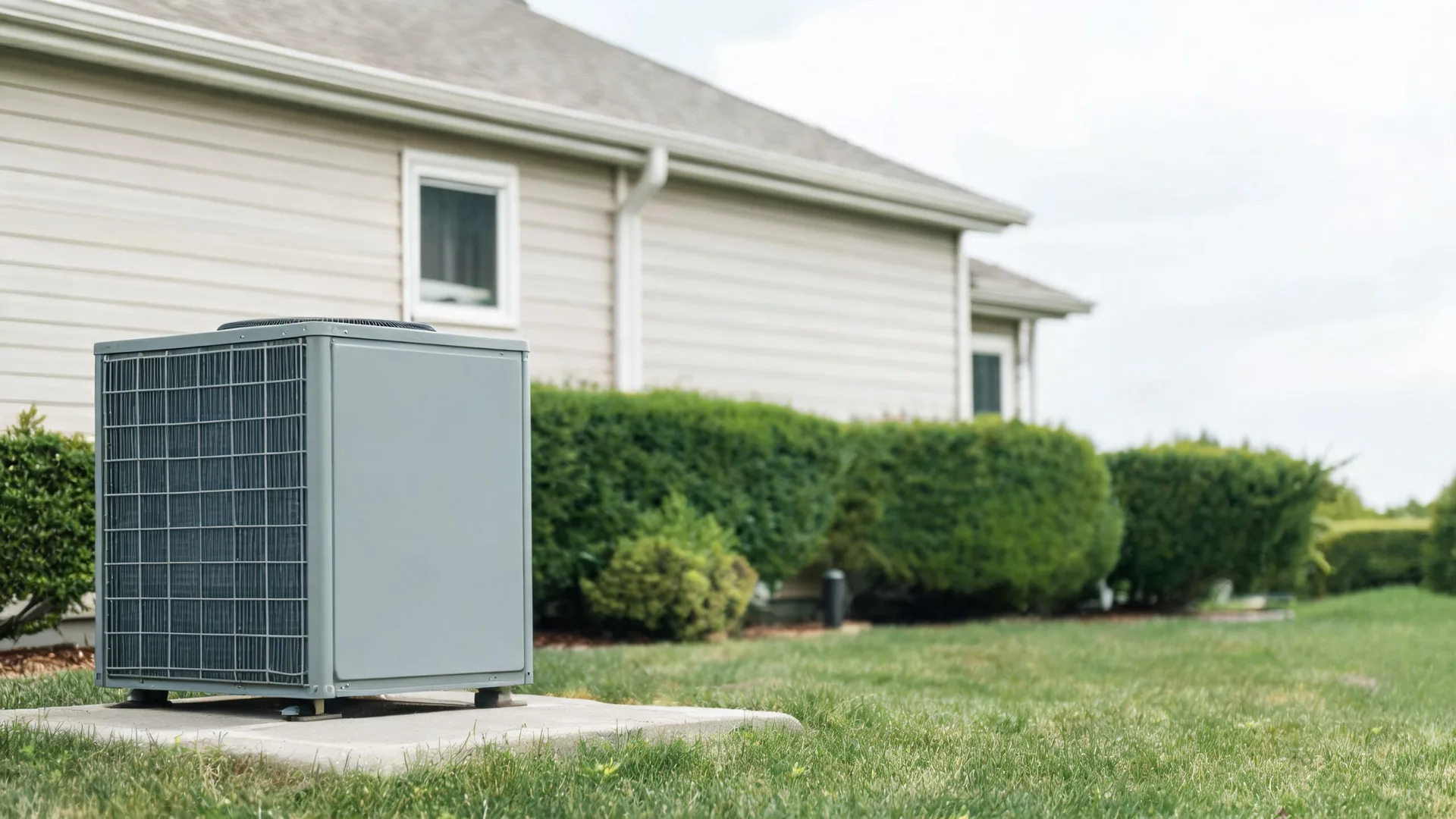
The refrigerant charge is never visible from outside
A unit can look fine, run, and blow cold air while still low on charge. Only gauges on the lines show whether it's correct. Running low for a long stretch makes the compressor work harder than it should, and that's the part you don't want to replace.
The capacitor shows wear before it shows failure
A weak capacitor still starts the compressor and fan most days, right up until a hot afternoon when it can't. A tune-up tests it under load and catches the ones that are close to done, so the failure happens on a bench instead of in the middle of a run of hot days.
3 months
June through August, your air conditioner is on duty
82°F
the average summer afternoon it cools against
44 hail events
in ten years, and hail bends the fins on outdoor coils
117 wind events
in ten years, and wind drives debris into outdoor units
Your air conditioner works hardest from June through August.
Jan
Feb
Mar
Apr
May
Jun
Jul
Aug
Sep
Oct
Nov
Dec
NOAA nClimDiv, 1991–2020 normals
A dirty filter starves the coil of airflow, and the coil can ice over even while the house feels warm.
Once ice builds on the coil, the system is blocking its own airflow further, so clearing the filter and coil is what keeps that cycle from starting.
Three months of work a year is all this unit needs to get right
Cooling runs June through AugustSummer afternoons average 82°F117 damaging wind events from 2015 to 2024
June through August, Elkhart leans on this unitCooling runs three months a year here. May is when a check does the most good.
One checkup a year covers it here. Nothing about Elkhart County puts extra strain on an air conditioner or calls for looking at it more than once a season. Half the homes in the county were built in 1977 or earlier, so plenty of systems here were installed well after the house itself, on their own timeline, separate from the age of the place they're in. That's worth knowing if you're not sure how old your unit is or when it last had a look. Whatever its age, the job is the same. One visit before the weather turns hot, checking the charge, the capacitor and the airflow before a run of hot days puts them to the test.
A real tune-up tests the parts that are about to fail, not just the ones that already have
Anyone can pull the panel off, glance inside and put it back together. That tells you almost nothing. A thorough check means hooking up gauges to read the charge, not guessing from how cold the air feels at the vent. It means testing the capacitor under load, since a weak one still kicks the compressor on most days right up until it doesn't. It means pulling the blower and looking at the coil itself, not just the filter sitting in front of it. A quick visit checks that the unit runs. A real one checks whether it's about to stop.
The system runs loud before it quits
A blower or compressor that's starting to go makes noise first, a rattle, a hum that wasn't there before, a click that repeats before the unit kicks on. Those sounds show up months before the part fails outright, and a check catches them while it's still just a noise.
Short cycling wears parts out faster
An air conditioner that shuts off a few minutes after starting, then starts again soon after, isn't finishing a normal cooling cycle. Each restart puts a hard draw on the compressor and the capacitor, so a unit doing this is aging faster than one that runs a full cycle and rests.
Book your AC tune-up in May, before homes here start needing cooling in June.
Jan
Feb
Mar
Apr
May
Jun
Jul
Aug
Sep
Oct
Nov
Dec
A tune-up checks the refrigerant charge, cleans the coils, tests the capacitor and tightens the electrical connections.
A tune-up starts outside, at the condenser. The fins on that outdoor unit can mat down with grass clippings and cottonwood fluff until air can't pull through them the way it needs to, and a tech cleans that out before anything else. From there it's the fan motor and the contactor, the small switch that sends power to the compressor. A contactor with pitted contacts can hang up and keep the unit from starting at all. The refrigerant lines get checked for the kind of oily residue that points to a slow leak. None of this is guesswork. It's gauges, a meter and a look at parts that don't show their wear from the outside.