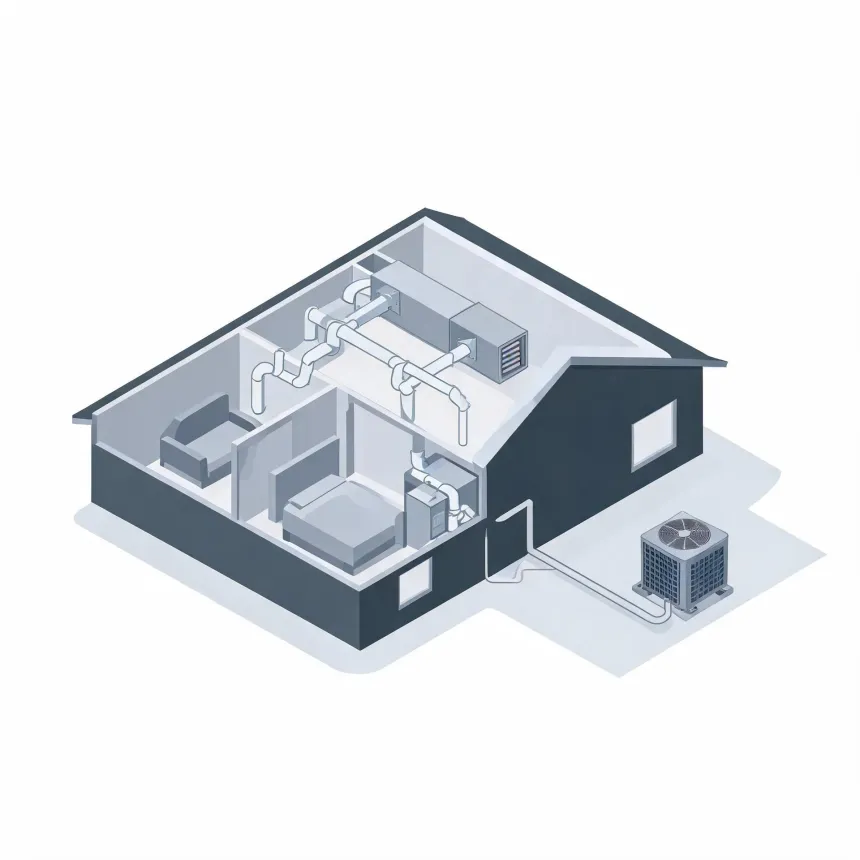
Cooling runs about five months here, May through September, with afternoon highs averaging 86 in June, July and August. That is a real stretch of work for a system most of the year, not a true workload. One visit before that run starts covers it. A tech can check the refrigerant charge, clean the condenser coil, and make sure the capacitor is holding up before the heat sets in. Harrison County also sees its share of wind and hail, so it's worth having someone look over the outdoor unit for anything that dented a fin or knocked a panel loose. Once a year, timed right, is what this system here actually needs.
5 months
May through September, your air conditioner is on duty
86°F
the average summer afternoon it cools against
33 hail events
in ten years, and hail bends the fins on outdoor coils
69 wind events
in ten years, and wind drives debris into outdoor units
Your air conditioner works hardest from June through August.
Jan
Feb
Mar
Apr
May
Jun
Jul
Aug
Sep
Oct
Nov
Dec
NOAA nClimDiv, 1991–2020 normals
Cooling in Harrison County starts in May.
Get the AC checked in April, before it has to work.
Half the homes here were built in 1990 or later, so a lot of these systems are still young
Half the homes here were built by 1990Cooling runs May through SeptemberSummer afternoons average 86°F
Between visits, the filter is the one thing worth checking yourself. Pull it and hold it to a light. If light barely gets through, swap it. A clogged filter starves the coil of airflow, and that coil can ice over, which only makes the air blowing out warmer while the compressor keeps straining. Keep the area around the outdoor unit clear too. Leaves, grass clippings, anything leaning against the cabinet cuts down on airflow across that coil. If you ever see ice on the refrigerant lines, shut the system off and let it thaw fully before running it again. A compressor forced to run while iced up is how a small problem turns into a real repair.
A system that's starting to struggle gives you warning before it quits outright. Watch how long the compressor runs. If it used to cycle off after a while and now seems to run straight through the afternoon, something's making it work harder than it should, usually a dirty coil or a charge that's drifted low. Listen at the outdoor unit too. A new rattle, a hum that wasn't there before, or a click that repeats without the compressor starting are all worth a look before they become a no-cool call. Pay attention to the air at the vents as well. If it's noticeably warmer than it used to be on the same kind of day, or if the system seems to run longer to reach the same temperature on the thermostat, that's the machine telling you it's lost some capacity. None of these mean the system is about to fail. They mean it's time to have someone check it before the small issue behind them turns into the reason it does.
The capacitor goes first
A weak capacitor still starts the compressor most of the time, so the system seems fine right up until a hot afternoon when it doesn't. A yearly check catches a capacitor that's drifting before it leaves you without cooling on the day you need it most.
A dirty coil hides as a slow failure
Dust on the condenser coil makes it shed heat less efficiently, so the compressor runs longer to do the same job. Nothing shuts off. The system just runs harder for months, and that extra strain is what shortens its life.
Book your AC tune-up in April, before homes here start needing cooling in May.
Jan
Feb
Mar
Apr
May
Jun
Jul
Aug
Sep
Oct
Nov
Dec
A tune-up checks the refrigerant charge, cleans the coils, tests the capacitor and tightens the electrical connections.
A tune-up is more than a glance at the thermostat. The tech checks refrigerant charge first, because a system low on charge makes the compressor work past what it was built for. Next comes the coil, cleaned if it's caked with dust, since a dirty coil can't shed heat the way it should. The capacitor gets tested under load, not just looked at, because a weak one can still start the compressor on a cool day and fail on a hot one. Electrical connections get checked too. A loose wire at the contactor runs hotter than it should and that heat wears the connection further. The condensate drain gets cleared, since a clogged one backs up and can shut the system down on its own. Last, the tech checks airflow across the whole system, because a coil can be clean and a charge can be right and the system still won't cool well if something's choking the air moving through it.