







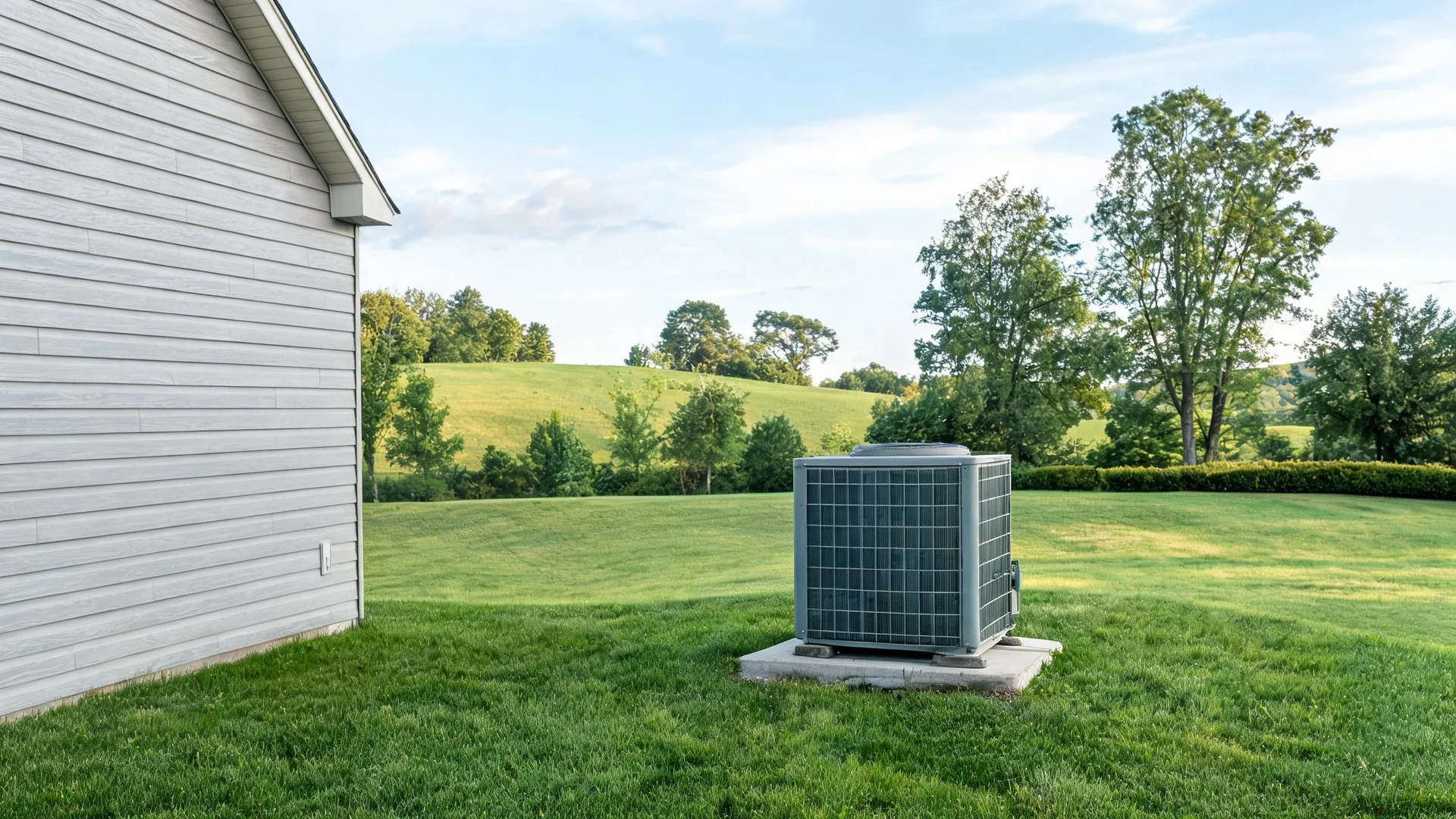
Aerial view of a gray outdoor air conditioning condenser unit mounted on a concrete pad next to a house with vinyl siding.

AC Maintenance in Columbia City, IN

Tell us about the job

Takes about a minute. No obligation.

Tune-up, service, or cleaningCentral ACWhitley County, IN
Step 1 of 2

What ZIP code is the job in?

Your air conditioner here only runs about three months a year, June through August. Afternoons average 82°F, which is warm but not brutal, and the dew point sits around 62°F, so the air feels heavy but not punishing. A system in a place that runs cooling half the year works a lot harder than one that gets three months off. That shorter season doesn't mean no wear, though. The capacitor weakens, the coil picks up dust, the refrigerant charge drifts a little, all on their own schedule regardless of how hard the machine worked. A yearly check catches that early, before a small issue turns into a July afternoon with no cold air.

3 months
June through August, your air conditioner is on duty
82°F
the average summer afternoon it cools against
3 hail events
in ten years, and hail bends the fins on outdoor coils
64 wind events
in ten years, and wind drives debris into outdoor units
Isometric cutaway illustration of a small house showing interior rooms with furniture, ceiling ductwork and an air handler, plus an outdoor condenser unit connected by refrigerant lines beside the building.
Your air conditioner works hardest from June through August.

NOAA nClimDiv, 1991–2020 normals

A refrigerant charge that's a little low won't trip a breaker or trigger a warning.

It just makes the compressor work harder and the air less cold, and nobody notices until the gauges go on.

Half the homes here were built in 1979 or later, so the AC is probably still worth keeping in shape

Half the homes here were built by 1979
Cooling runs June through August
Summer afternoons average 82°F
June Is When It Starts WorkingCooling here runs June through August, so May is when to get it checked.

The filter is the first line of defense and the easiest thing to ignore. Once it loads up with dust, airflow across the indoor coil drops, and that coil can get cold enough to grow a layer of ice right on the fins. Ice on the coil blocks airflow further, so the problem feeds itself until the system is barely cooling at all. The outdoor coil has its own version of this: it sits outside collecting grass clippings, cottonwood fluff, dust, whatever blows through it, and a coated coil can't shed heat the way it's supposed to. The compressor ends up working against that resistance the whole time it runs. Then there's the drain line, which carries away the condensation the coil pulls out of the air. Algae and sludge build up in that line over time, and when it clogs, the water backs up and finds somewhere else to go, usually a pan that overflows onto the floor below. None of these three things announce themselves loudly. They just quietly make the system work harder and cool less until something finally gives out.

Your AC Is Probably Young Enough To Be Worth Protecting

A system built in 1979 or later still has a lot of working life ahead of it. A yearly check is what keeps it getting to that age without a compressor burning out or a coil failing from years of buildup nobody caught. Worth doing while the system's still in good shape to protect.

Find a contractor
A man in a cap, dark long-sleeved shirt and tan work pants carries a worn duffel bag as he climbs concrete steps toward an orange front door, with a potted shrub beside the entry.
An outdoor air conditioning condenser unit mounted on a concrete pad surrounded by gravel, photographed against a partly cloudy blue sky.

What to Check Between Visits

Between visits, the main thing worth doing is looking at the filter. Hold it up to a light. If light doesn't pass through it easily, it needs to be swapped. A dirty filter is the one thing in this whole system an owner can actually see getting worse, and it's the one most likely to cause trouble if ignored. Outside, keep the area around the condenser clear. Grass clippings, leaves, mulch, anything piled against the cabinet blocks airflow across that coil, and the fan can't push heat out if it's fighting a wall of debris. A couple feet of clearance on all sides is enough. Inside, keep an eye on the vents and make sure furniture or rugs haven't ended up blocking one, since that just pushes the system to work harder to move the same air. If the outdoor unit ever looks like it's caked in cottonwood fluff or dust, a gentle rinse with a hose, from the top down, with the power off, helps, but anything beyond that, like straightening fins or opening the cabinet, is not a homeowner job. The one thing worth never ignoring is water. If there's ever a puddle near the indoor unit or water stains on the ceiling below an attic unit, that's the condensate drain backing up, and it needs attention before it causes real damage to the floor or ceiling below it.

Gauges, Not Just a Glance

A real tune-up checks refrigerant pressure with gauges and measures the temperature drop across the indoor coil. A quick visit might swap the filter, glance at the outdoor unit, and call it done. Without gauges on the system, there's no way to know if the charge is right or if the compressor is quietly straining against a charge that's off.

What That Difference Costs You Later

Skip the gauges and a low charge goes unnoticed for another year while the compressor absorbs the extra strain. Skip pulling the blower access panel and a coil that's starting to collect dust goes uncleaned until airflow drops enough to matter. The parts of a tune-up that take the most time are the ones that catch trouble before it becomes a repair.

Aerial view of a gray central air conditioning condenser unit on a concrete pad next to a house with vinyl siding.

Book your AC tune-up in May, before homes here start needing cooling in June.

  1. Jan
  2. Feb
  3. Mar
  4. Apr
  5. May
  6. Jun
  7. Jul
  8. Aug
  9. Sep
  10. Oct
  11. Nov
  12. Dec

A tune-up checks the refrigerant charge, cleans the coils, tests the capacitor and tightens the electrical connections.

A real tune-up starts outside at the condenser. The tech cuts power to the unit, pulls the panel, and checks the capacitor's output against what it's rated for, since that part degrades with age whether the system ran hard or not. The contactor gets a look too, since its contacts pit and burn a little every time the compressor cycles on. Inside, the blower wheel comes out from under the coil if it's dirty, because dust on the wheel itself throws it out of balance and cuts airflow no filter can fix. The condensate drain gets flushed, not just glanced at, so algae buildup further down the line doesn't show up as a leak later. Electrical connections at the disconnect and inside the air handler get tightened, since a loose connection generates heat and that heat damages wire insulation over time. None of this takes long when nothing's wrong. It takes a lot longer, and costs a lot more, when nobody looked until something failed.