A trimmed hedge borders a mown lawn in front of single-story houses with dark siding and shingled roofs, surrounded by large leafy trees under an overcast sky.

AC Maintenance in Carmel, IN

Tell us about the job

Takes about a minute. No obligation.

Tune-up, service, or cleaningCentral ACHamilton County, IN
Step 1 of 2

What ZIP code is the job in?

The refrigerant charge gets checked, not just the filter

A quick visit means someone swaps or rinses the filter, glances at the outdoor unit, and leaves. A thorough one includes checking the refrigerant charge against what the system calls for, measuring the temperature drop across the evaporator coil, and checking the capacitor's readings against what's stamped on it instead of just looking for bulges.


What gets missed shows up as a breakdown later

A capacitor that's weakening but hasn't failed yet, a coil that's starting to ice because airflow is restricted, a contactor with pitted points. None of these stop the system from running today. They're why a system that got a rushed check-up in spring ends up with a dead compressor or a tripped breaker on the hottest day of summer.

3 months
June through August, your air conditioner is on duty
83°F
the average summer afternoon it cools against
53 hail events
in ten years, and hail bends the fins on outdoor coils
69 wind events
in ten years, and wind drives debris into outdoor units
Isometric grayscale illustration of a cutaway house interior showing a furnace with ductwork, interior rooms with furniture, and an outdoor condenser unit connected by lines at the exterior wall.
Your air conditioner works hardest from June through August.

NOAA nClimDiv, 1991–2020 normals

AC here runs three months a year, June through August.

One visit before June covers the season's work.

One tune-up before June covers the months the heat actually hits.

Power costs 14.77 cents a kWh statewide
Cooling runs June through August
Summer afternoons average 83°F
June is when it starts workingCooling in Hamilton County runs June through August. Book the check in May.

A system can run fine right up until the day it can't. Warm air from the vents when the thermostat is set low is one sign. So is ice on the copper line running to the outdoor unit, or a system that shuts off a few minutes after starting and won't hold a cycle. Those are the signs most people notice. A few show up earlier and get missed. A hum when the unit tries to start. A fan that spins slower than it used to. A smell when the blower kicks on. Any one of these is reason enough to have someone look before the system gets asked to run flat out.

A newer system is worth protecting with regular checks

Half the homes in Hamilton County were built in 2001 or later. A system that age still has years of work left in it, and a yearly check is what keeps it that way.

Find a contractor
A man in a dark shirt and tan work pants, seen from behind, carries a canvas tool bag up concrete steps toward an orange front door flanked by gray siding and a potted shrub.
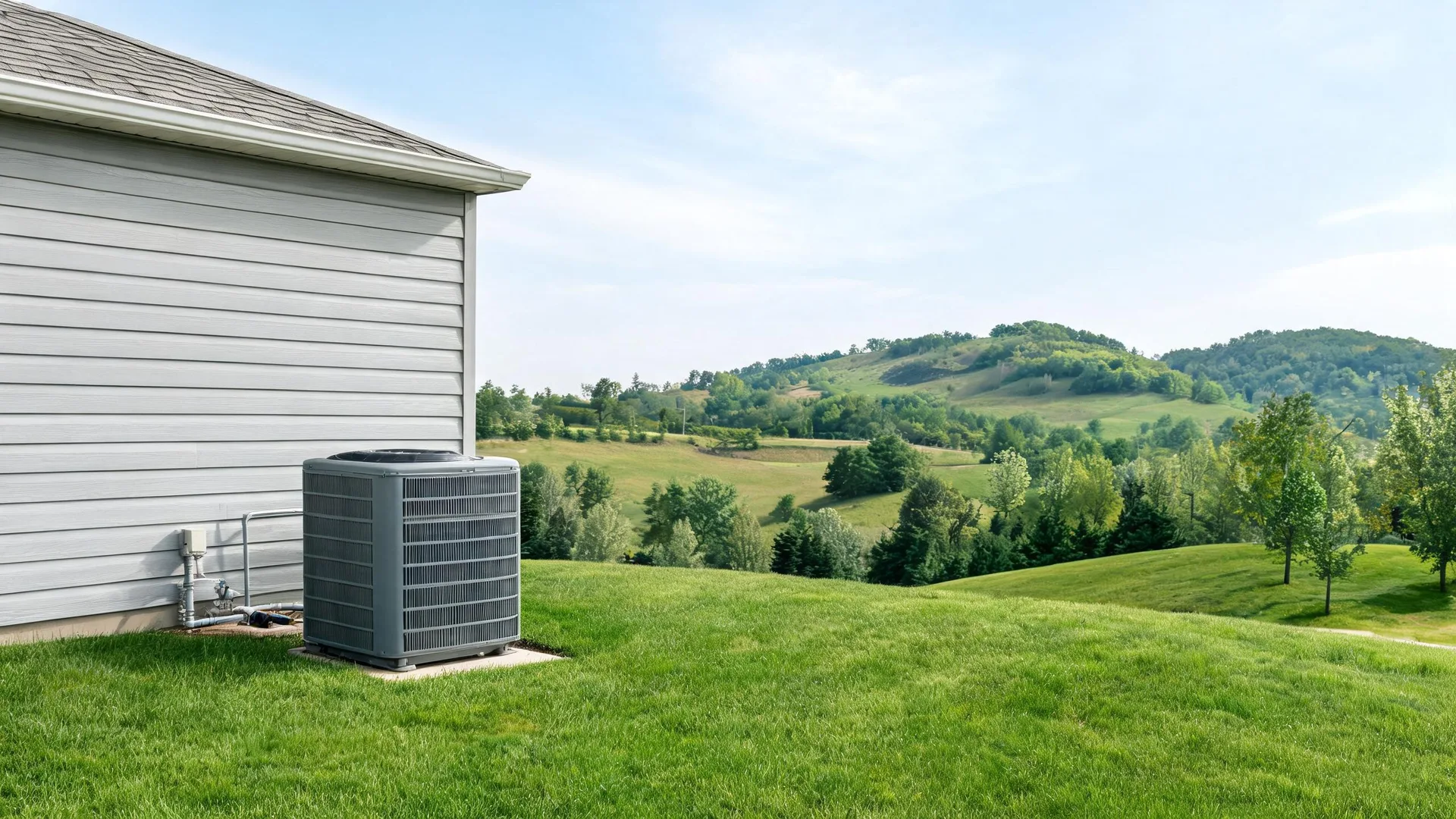
A gray metal air conditioning condenser unit mounted on a concrete pad in a flat grassy field under a partly cloudy sky.

The thermostat tells you less than the unit does

A thermostat set to a given temperature either gets there or it doesn't. What it can't tell you is how long the compressor took to get there, or whether the blower motor is pulling harder than it should to push air through a dirty coil. Those things wear a system down long before they show up as a warm house. A technician checks the temperature split between the air going into the system and the air coming out, listens to how the compressor sounds on startup, and looks at the wiring at the disconnect for scorch marks that mean a connection has been running hot. None of that shows up on the wall. By the time a problem reaches the thermostat, the part behind it has usually been failing for a while.

A dirty filter works the whole system harder

A clogged filter chokes the air moving across the evaporator coil. The system pulls colder air past less airflow, and the coil can frost over because there isn't enough warm air passing across it to keep ice from forming. Once ice builds, airflow drops further and the compressor can end up running against conditions it wasn't built for.

A clogged drain backs water up into the house

The coil pulls moisture out of the air as it cools it, and that water needs somewhere to go. The drain line carries it out, and algae or dirt can block that line the same way hair blocks a shower drain. When it backs up, the water doesn't just sit there. It overflows the drain pan and shows up as a stain on the ceiling or a puddle by the indoor unit.

Overhead view of a gray residential air conditioning condenser unit mounted on a concrete pad beside a house with asphalt shingle roofing.

Book your AC tune-up in May, before homes here start needing cooling in June.

  1. Jan
  2. Feb
  3. Mar
  4. Apr
  5. May
  6. Jun
  7. Jul
  8. Aug
  9. Sep
  10. Oct
  11. Nov
  12. Dec

A tune-up checks the refrigerant charge, cleans the coils, tests the capacitor and tightens the electrical connections.

A tune-up also means someone opens up the outdoor unit and cleans the condenser coil, the one covered in metal fins that sheds heat from the refrigerant. Dirt, grass clippings and cottonwood fluff mat down on those fins over a season, and once that happens the system can't dump heat the way it's supposed to. It ends up running longer to do the same job, and the compressor runs hotter the whole time. Checking the contactor and the electrical connections at the disconnect matters too, since a loose connection there heats up under load and can burn through a wire. A full visit also means confirming the blower wheel is clean, because a wheel caked with dust moves less air even when the motor behind it is fine.