

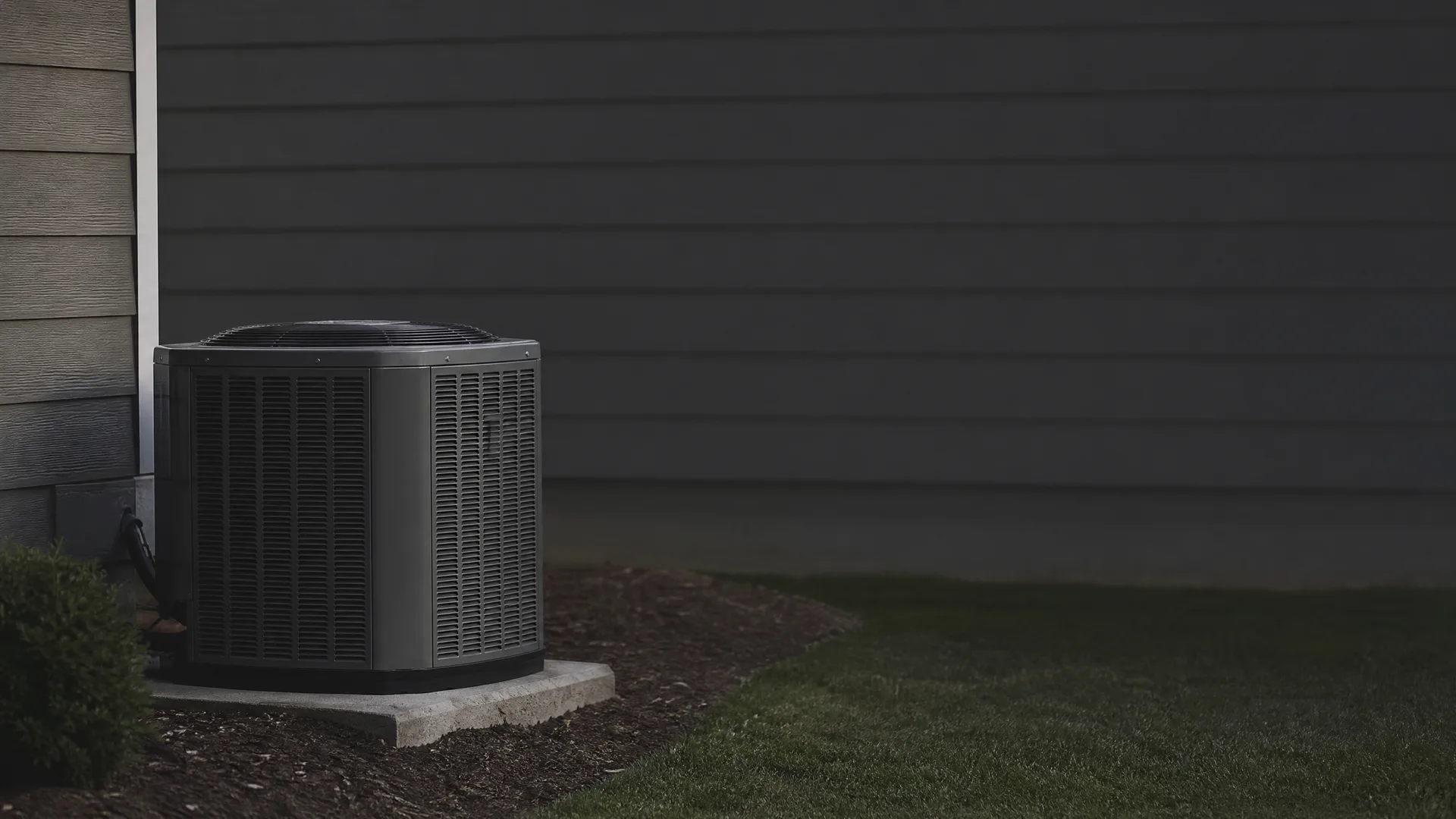
The unit outside, running clean
A healthy condenser sits level on its pad, lines running into the house without any ice or staining. Water should stay inside the drain line, not pool at the base or show up on a vent indoors.
Get matched with a pro who works on air conditioners in Madison County.
Connect with a proWater showing up around your indoor unit or dripping from a vent is one of the more alarming things an AC can do, especially when it's running hard to keep the house comfortable through an Anderson summer. You want to know if it's safe to keep running the system or if you need to shut it off right now.
Your AC pulls moisture out of the air as it cools, and that water is supposed to run off through a drain line to the outside. When that line clogs with algae or dirt, the water backs up and spills out of the drain pan inside your house instead. The other common cause is a dirty air filter or low refrigerant, which lets the evaporator coil get too cold and ice over. When that ice melts, it melts faster than the pan can handle and overflows. Either way, water inside the house means something is blocking the normal path that water is supposed to take, and it needs a look before it stains a ceiling or warps a floor.

A healthy condenser sits level on its pad, lines running into the house without any ice or staining. Water should stay inside the drain line, not pool at the base or show up on a vent indoors.

Years of dirt on the fins make a unit work harder, and the same neglect often shows up in the drain line and drain pan. A cracked pan or an algae-clogged line will send water into the house instead of outside where it belongs.




The coil inside your indoor unit does the real work of cooling. As warm air passes over it, moisture condenses on the metal fins and drips down into a shallow pan built to catch it. From there it should leave through a drain line, usually PVC pipe that runs outside near the condenser or ties into a floor drain. That line is narrow, and over months algae and dust settle on the inside of it the same way they would in any slow-moving pipe. Once it narrows enough, water has nowhere to go but back up into the pan, and from the pan it spreads wherever gravity takes it, often along a duct seam and out the nearest vent. Some systems have a float switch that senses the rising water and shuts the unit off before it gets that far, which is why the AC quitting and water appearing sometimes happen together. A dirty filter can choke airflow across the coil badly enough to freeze it solid, and when that ice melts, it melts fast.


A leaking indoor unit rarely stays a small problem if it sits unattended. The pan catches water only up to a point, and once it tops out, that water goes somewhere: down through the ceiling below, into the subfloor, behind a closet wall. None of that dries out on its own the way a puddle on tile does. Drywall holds moisture, wood swells and softens, and a musty smell is usually your first sign that water has been sitting somewhere you can't see it. If the unit is upstairs or in an attic, the ceiling underneath takes the damage first, and by the time you see a stain, the leak has likely been going on for days. A clogged drain line doesn't just make a mess. Many systems have a safety switch that shuts the AC off once the pan fills too high, which means a drain problem can leave you without cooling on a day you need it most. Left long enough, what started as a clogged line turns into a repair that covers flooring or drywall as well as the AC itself, and that's a different kind of job than clearing a drain. None of this means the leak is complicated to fix. It means the clock matters more than it looks like it does when you first notice the puddle or the stain. The sooner someone traces it back to the pan or the line, the less of your house it touches on the way there.


A clogged drain line or a cracked pan does not clear up on its own. Left alone, it keeps dripping, and the ceiling stain or soft spot in the floor you already noticed only spreads. Meanwhile the unit is still running, because an Anderson summer does not let up, so the water keeps finding its way out somewhere in the house. Figuring out whether it is the drain line, the pan, or the coil itself takes someone opening up the unit and looking, not guessing from a stain on the ceiling. That means getting a contractor out to your house, and most people get there by calling a few, explaining the dripping and the stain each time, then waiting on quotes to compare before they even pick one. You can skip that part here and have a licensed contractor who handles this kind of leak reach out to you directly about what you're seeing at your place.
A one-inch PVC drain line only needs a small clog to back up. Algae, dust, and condensation build a film inside the pipe that narrows the opening until water has nowhere left to go but back into the pan.
Once that pan overflows, the water doesn't stop for the night or wait for a slow weekend. It keeps pace with however hard the system is running, which in an Anderson summer is often most of the day.



A condenser like this sits level on its pad, lines running up the wall without any staining or ice. The disconnect box is dry, the shrub next to it undisturbed. Nothing here explains water showing up inside your house. That points you toward the drain line or the pan under the coil instead.

Dust and grime coat this cabinet's wire mesh, built up over seasons without a cleaning. A dirty condenser does not by itself cause an indoor leak, but it tells you the system has gone a long time without attention. The drain line and pan likely need the same look.
Go look at the indoor unit, usually in a closet, attic or basement. You might find a puddle on the floor beneath it, or the pan underneath already full. Check the ceiling below if the unit sits in the attic or upstairs. A brown ring or a soft spot in the drywall means water has been getting through for a while, not just today. Carpet or flooring near the unit that feels damp or has started to cup and warp points the same way. If the smell in that part of the house has turned musty, water has been sitting somewhere long enough to grow mold, and that's worth taking seriously for anyone in the house with allergies or asthma.

That drain line is already working against the air itself. Madison County summers run a dew point of 63°F across June, July and August, which is the kind of heavy, wet air that makes your AC pull more moisture out of the house just to keep things comfortable. More moisture means more water moving through that drain line every single day. A line that might handle a drier summer without issue has far less room for error here, since there's simply more water trying to get through it. If algae or dust have already narrowed that pipe, a summer this humid is what pushes it from a slow problem to standing water on your floor.
NASA POWER T2MDEW

Water from an overflowing pan does not stay in one place. It follows gravity into the drywall, along the top plate, down into insulation you cannot see. By the time a stain shows on the ceiling, the wet has usually been there for days. Drywall swells and sags, wood trim cups, and once insulation gets soaked it stops doing its job until it dries out or gets replaced.
If the indoor unit sits in a closet near bedrooms, that musty smell you noticed is not going away by itself. Finding the right contractor for a leak like this means someone who checks the drain line, the pan and the coil in one visit instead of guessing at one part and coming back. Getting matched with a contractor who handles this regularly means you explain the problem once, to someone who shows up ready to find where the water is actually coming from.

A technician shuts down the unit before opening the drain access.
A wet/dry vacuum pulls the clog straight out of the drain line.
Algae and sludge inside the pan get cleaned out by hand.
The pan and float switch get checked before the system runs again.
Three months a year, your AC runs hard against an Anderson summer, and that long stretch is what gives algae and sludge time to build up inside the drain line. The leak you're looking at now is what months of steady running does to a line nobody checked.
NOAA nClimDiv 1991-2020
Water inside the house, whether it's a puddle by the indoor unit or a stain spreading on the ceiling, almost always traces back to the same thing: a drain line that can't carry water out of the house anymore, or a pan that's cracked or overflowing. The fix depends on which one it is and how long it's been going on, but the cause is mechanical, not mysterious. You don't have to figure out whether it's the line, the pan or the float switch before you call someone, and you don't have to be the one who finds a contractor, checks their reviews, calls two or three more for quotes, and explains the ceiling stain and the puddle all over again to each one. That part ends once you're matched with a contractor who knows this problem in homes around Anderson and reaches out to you directly. What's left is straightforward: someone looks at the unit, finds where the water is actually coming from, and stops it before another summer of running hard does more damage to your ceiling or your floor.
Skip calling shops to ask who repairs air conditioners in Madison County.