A cornfield on a rolling hillside leads to a red barn with two tall silos and metal grain bins beside large trees under a partly cloudy sky.Hand it over

Heat pump leaking water in Indianapolis, IN

Send the request today and let a heat pump pro reach out to you.

Water showing up around your indoor unit or pooling near the outdoor unit is not something to watch for a few days. A heat pump moves a lot of condensation, especially this time of year, and when that water ends up somewhere it shouldn't, something in the drain path or the coil has already failed.

Most of the time it is a clogged condensate line or a drain pan that has rusted through, sometimes a frozen coil that is now thawing faster than the pan can handle. Which one it is changes what gets fixed, but none of them get better by waiting.

In Marion County, a heat pump runs for most of the year, cooling through the muggy summers and carrying some of the heating load once winter sets in. That means the drain system rarely gets a break, and a small clog or crack tends to show up again if it is not actually cleared or replaced.

This is a repair job for someone who already knows heat pumps, not a general handyman call. A local contractor who works on this equipment all season has likely seen this exact leak in a dozen other houses nearby and knows where to look first.

Once you send the request, you are done hunting for someone to call. It goes to one licensed contractor local to Indianapolis, not a handful of companies competing for your callback. Finding help stops being your problem to solve. You can get back to mopping up the floor instead of the phone.

Why is my heat pump leaking water?

You noticed water around your indoor unit, or puddling near the outdoor unit, and you want to know what's causing it before it turns into a bigger problem. A heat pump moves condensation constantly, so water in the wrong place usually means something in that path isn't working the way it should.

Usually a clogged drain line or a dirty filter

Most of the time the condensate drain line has algae or sludge built up inside it, so the water that normally drains away backs up and finds another way out. A dirty filter causes the same problem a different way. It blocks airflow across the indoor coil, the coil gets too cold, and ice forms on it. When that ice melts, it melts faster than the drain pan can handle and water ends up on your floor instead. With Marion County summers running humid for months at a time, a heat pump pulls more moisture out of the air than it would somewhere drier, so a partial clog that would sit quiet in a dry climate shows up here as an active leak.

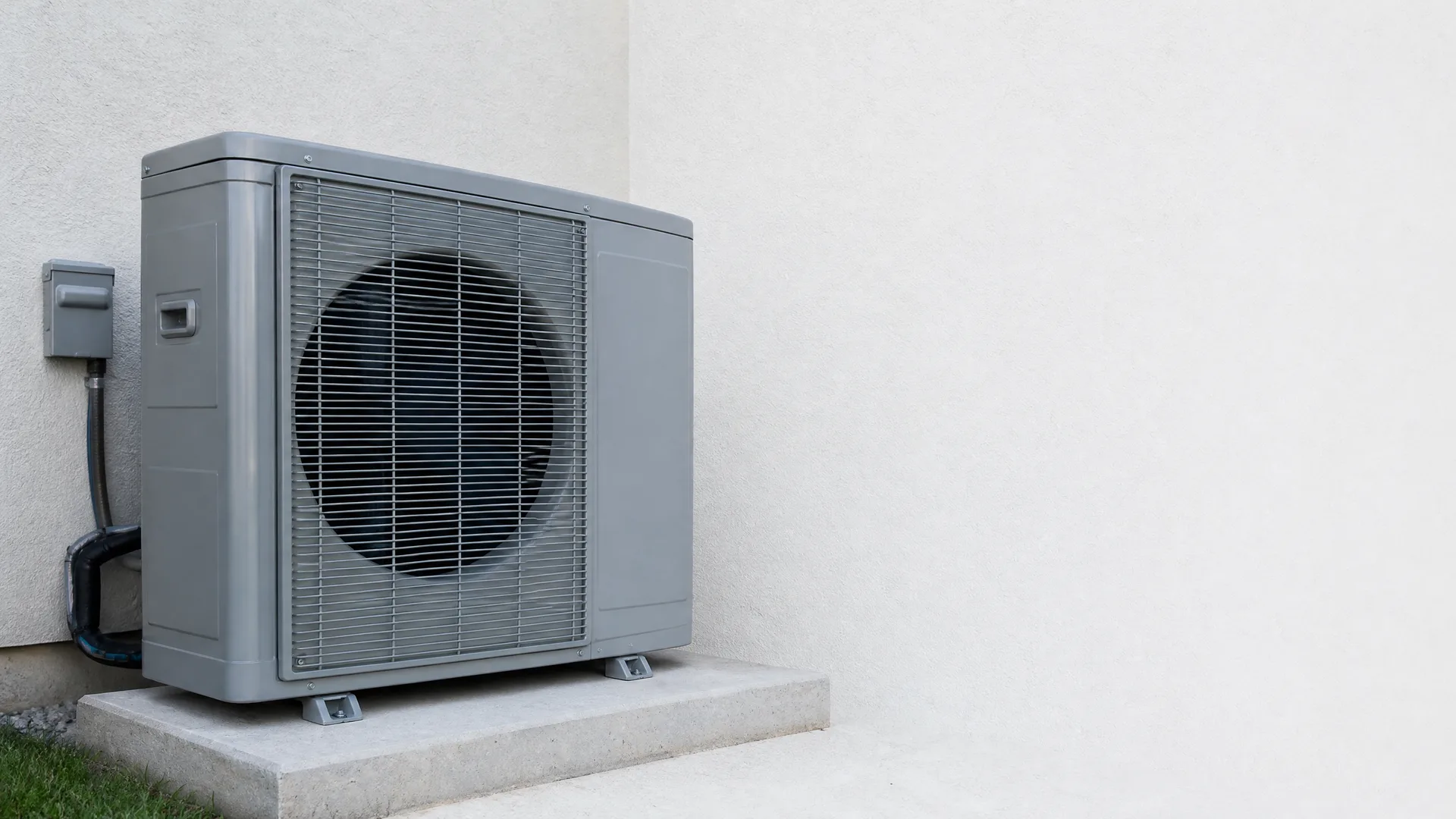
A gray outdoor heat pump unit on a concrete pad against a light stucco wall, with an electrical disconnect box and conduit on the wall to its left.

Where the water is supposed to go

A heat pump pulls moisture out of the air and routes it through a drain line to a condensate pan underneath the indoor coil, then out of the house. That line runs downhill the whole way. If it sags, kinks, or has algae built up inside it, water backs up instead of draining, and it finds the lowest spot it can, usually the floor around the indoor unit.

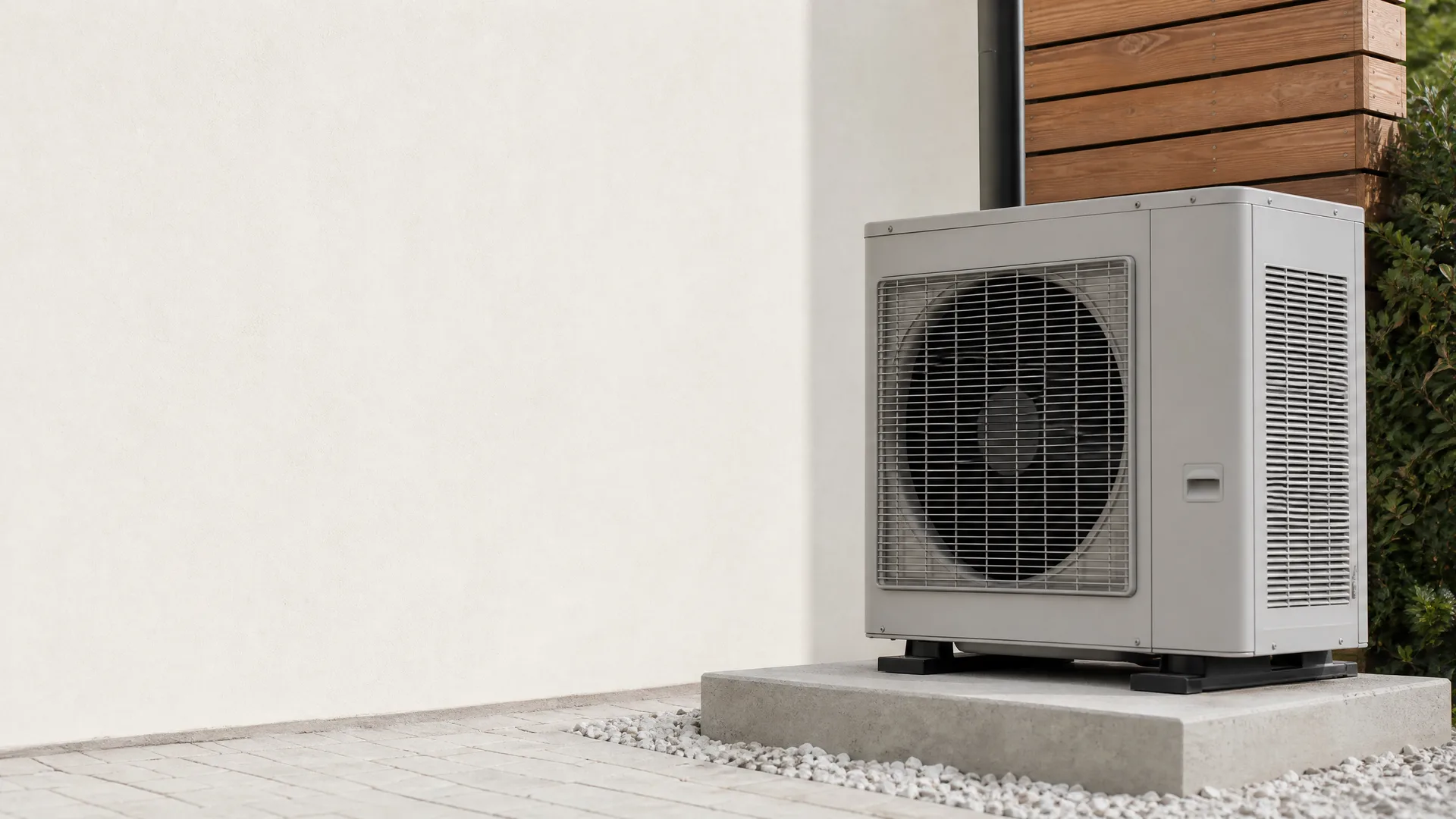
A gray outdoor heat pump unit with a large fan grille sits on a concrete pad beside a pale stucco wall, with horizontal wood cladding and a green shrub behind it and paving stones and gravel in front.

Why it shows up more right now

The amount of water a heat pump produces depends on how much moisture it is pulling out of the air, and a system running long hours in sticky weather pulls more of it than one running a few minutes at a time. A drain line that handled a light spring fine can fall behind once the unit is working harder, which is why leaks like this tend to turn up with the first real stretch of hot, humid days.

Why does a Marion County heat pump run into drain trouble so often?

  • Winter nights average 23°F

    Winter nights average 23°F here, cold enough that a clogged or frozen drain line backs up fast instead of draining slow.

  • Heat runs October through May

    Heat runs October through May, about eight months, so the drain line and pan stay under near constant use with little rest.

  • Cooling runs June through September

    Cooling runs June through September, when humidity is highest and the coil pulls the most water through that same line.

NOAA nClimDiv 1991-2020

A clogged drain line still lets the system run, so the water keeps backing up every hour the heat pump does, and the pan underneath fills before you notice anything on the floor.

A frozen coil dripping as it thaws looks the same on the floor, but it clears on its own once the ice is gone. The difference is whether the water comes back the next time the system cycles.

A gray-haired man in a dark green sweater sits on a sofa in a sunlit living room, looking off to the side, with a framed landscape painting, dining table and shelving behind him.
A gray-haired bearded man in a dark green collared sweater sits on a sofa in a living room with a window, houseplant, floor lamp and bookshelves, looking off to the side.
A middle-aged man in a dark green sweater sits on a light grey sofa looking toward a sunlit window, with a wooden shelving unit, lamp and potted plants in the background.
A gray-haired bearded man in a dark knit sweater sits on a light gray sofa in a sunlit living room, looking to his left, with a framed artwork, a potted palm, and a curtained glass door behind him.
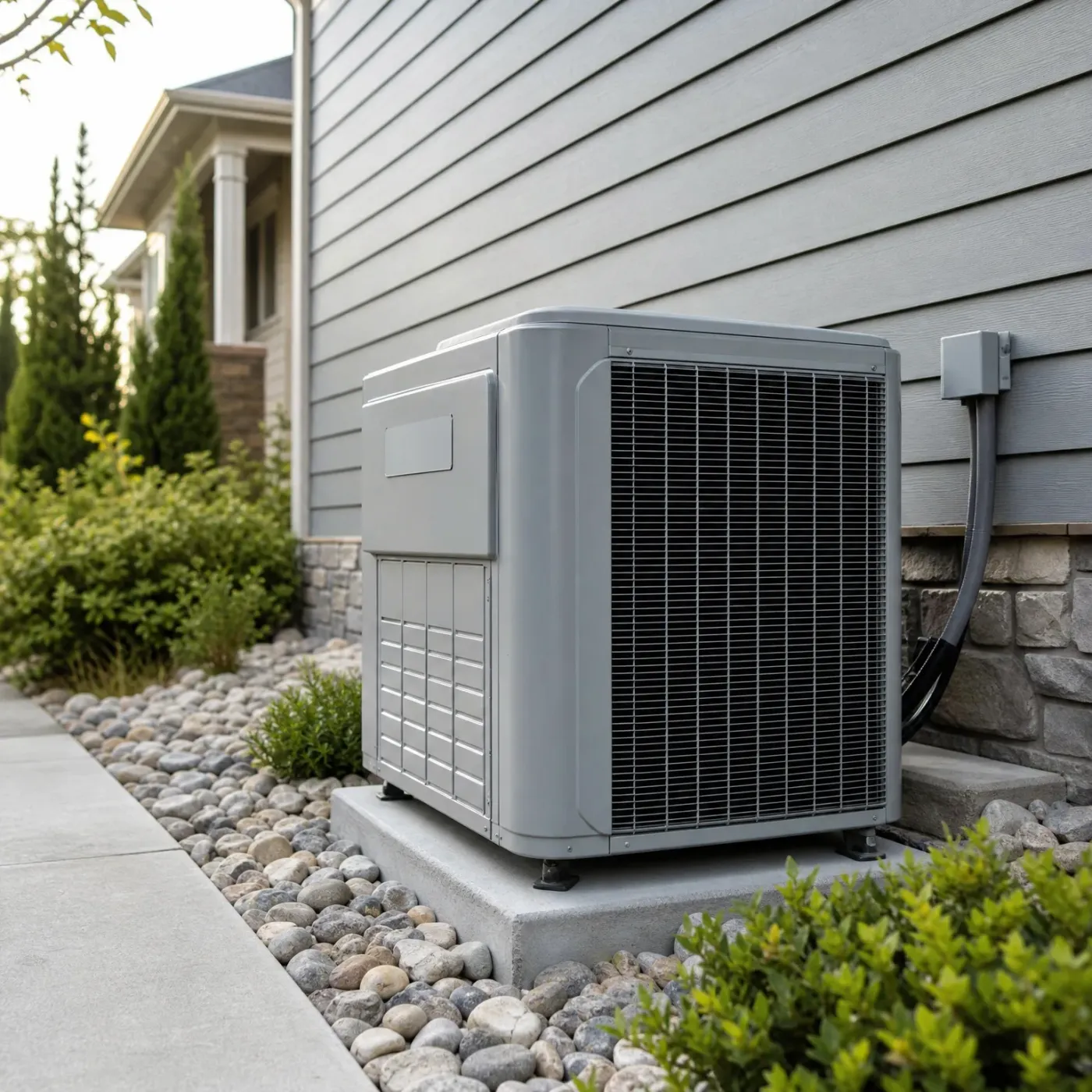
A gray outdoor heat pump unit on a concrete pad beside a house with light gray horizontal lap siding and a stone base, surrounded by river rock and shrubs next to a concrete walkway.

Hand off the heat pump problem

A licensed pro who repairs heat pumps in Marion County gets your request.

Get the heat pump repair search off your mind today.

Hand off my repair

You only hire the pro if you want to.

A gray outdoor air conditioner or heat pump unit on a concrete pad beside a house with horizontal lap siding, with conduit and refrigerant lines running up the wall and green shrubs and mulch at left.
The condensate line is draining the way it should, water moving out to the yard with no backup at the pan.
An outdoor air conditioning condenser unit sits on a concrete pad beside a white horizontal-siding house, with a gray electrical disconnect box and insulated refrigerant lines on the wall, mulch and green shrubs to the right, and a concrete slab in the foreground.
Conduit and refrigerant lines run clean into the wall here, but a cracked pan or a collapsed line can still soak this bed before you spot it indoors.
A dimly lit bedroom at night with an unmade bed and pillows, a lit table lamp on a nightstand, and a condensation-covered window showing a streetlight and foliage outside.

It is past midnight in August, and the air in the bedroom is thick enough to feel. The window has fogged at the edges even with the heat pump running. You push the sheet off your legs and roll toward the dry side of the bed, except it isn't dry anymore. There is a damp patch spreading near the wall where the indoor unit sits in the closet. You sit up and press your palm against the carpet. Wet. Not soaked yet, just cool and heavy under your hand. The unit is still running, air still coming out of the vent, so nothing sounds wrong. You lie back down for a minute, listening, before you get up to find a towel.

What are you actually seeing in your house right now

A stain spreading across the ceiling under the indoor unit, or a dark ring on the drywall that wasn't there last week. A musty smell in the closet or utility room where the air handler sits. Water beaded on the floor near the unit, or the carpet nearby staying damp no matter how many times you dry it. Outside, you might see water pooling under the outdoor unit when the ground around it is otherwise dry. None of this clears up on its own, and left alone, standing water near drywall and wood framing invites mold and soft, weakened spots in the ceiling or floor underneath it.

A gray outdoor condenser unit on a concrete pad beside a light-colored lap-sided house, with a wall-mounted disconnect box and conduit, dark mulch, and a green shrub to the right.

Clear and maintained

Fins open, coil exposed, nothing blocking airflow around the cabinet. Air moves through the unit the way it's built to, so the coil cools evenly and the condensate it produces drains off the way it should. This is what lets a service call stay simple.

A dirty outdoor air conditioner condenser unit with debris on its coil grille, sitting on a concrete pad beside a light-colored horizontal siding wall, with bare dirt ground in front and a shrub at right.

Clogged with debris

Dirt and plant matter packed into the grille and fins like this cuts off airflow across the coil. The coil can ice up, and when it thaws, that water goes wherever gravity takes it instead of down the drain line. A unit left like this makes the leak harder to run down.

An outdoor air conditioning or heat pump condenser unit on a concrete pad beside a house with horizontal vinyl siding, a gray electrical disconnect box and conduit on the wall, and a concrete walkway in the foreground.
Before you get your heat pump repair
A dark gray outdoor condenser unit on a concrete pad beside a house with beige horizontal siding, with a gray electrical disconnect box and conduit on the wall, mulch beds, a hosta plant, a shrub, and mowed lawn in front.
After you get your heat pump repair

A drip you can live with for now

A slow drip into a pan you're emptying by hand, with no stain on the ceiling or wall yet. It still needs a fix, but it isn't an emergency tonight.

Send it today

Water finding drywall or flooring

A stain spreading, a ceiling sagging, or water reaching the floor near the indoor unit. That damage keeps growing the longer the line stays blocked, and it's worth getting looked at now.

Send it today
A woman with shoulder-length blonde-grey hair in a light knit cardigan sits in a grey upholstered armchair, looking toward a window, with a bookshelf and a small potted plant behind her.
A woman and a child with closed eyes rest together on a gray couch, wrapped in a cream knit blanket, with a lit lamp and houseplant blurred in the background.

A heat pump has a float switch sitting in the condensate pan or the drain line itself, a small part with one job. When water rises past where it should be, the float lifts and trips the switch, and the switch cuts power to the system. That is why a leaking heat pump sometimes just stops running instead of flooding further. It is not broken when it does this. It is doing exactly what it is built to do, shutting the system down before the pan overflows into the ceiling or the floor below. A technician checks that switch early, because if the system is dead and the pan is full, the switch did its job and the real question is why the water backed up far enough to trip it. Clearing the clog or the kink that caused the backup matters more than resetting the switch, since the switch will just trip again the next time the pan fills.

Power here costs 14.77 cents per kilowatt-hour

At 14.77 cents per kilowatt-hour, running a shop vac or a space heater in the utility room while you wait on a repair barely moves your bill. What costs you is the water damage behind the wall, not the few cents of power spent chasing it.

EIA-861 2025

Where this leaves you

  • Water around your indoor unit or pooling by the outdoor unit traces back to a clogged drain line, a frozen coil, or a cracked pan, and each one needs a different fix.
  • The float switch cutting power to your system is doing its job, keeping a drain problem from turning into a ceiling stain.
  • Marion County heat pumps run heat or cooling most months of the year, so a drain line gets more chances to clog here than in places with a short season.
  • A technician who services heat pumps in this area through all eight months of heating sees these same drain and float failures on repeat and knows where to look first.
  • Matching you with one licensed local contractor means a single visit gets scheduled, not a round of competing bids and callbacks.
  • Whether it's a slow drip or water already on the drywall, the part at fault is identifiable and the repair is straightforward once someone's looked at it.

Water where it doesn't belong has a cause you can name: a clogged drain line, a frozen coil still thawing, or a cracked pan letting water find the floor instead of the yard. The float switch cutting your system off isn't a malfunction. It's the one part in the system built to stop a drain problem before it becomes a ceiling you have to replace. None of this is unusual for a heat pump running here. Marion County asks these systems to heat or cool most months of the year, which means more hours of condensation moving through that drain line than a system in a milder climate ever sees. More running time means more chances for algae to build up, for a line to sag, for a pan to crack under years of use. A technician who works on heat pumps in this area through the winter and the summer both has already seen whatever is happening at your house, probably more than once this season. That's who gets matched to the job: one licensed local contractor, so you're not fielding calls from three companies trying to out-quote each other, just one visit from someone who knows what usually fails first and checks there. Whether you caught this as a slow drip into a pan or you're already looking at a stain on the drywall, the fix starts the same way, with someone identifying which part failed. That part is easy to find once someone's standing in front of it.

A gray outdoor heat pump unit mounted on a concrete pad beside a dark horizontal-slat clad house wall, with gravel ground and shrubs nearby.

Done looking for a heat pump pro

RepairHeat PumpMarion County, IN
Step 1 of 2

What ZIP code is the job in?