Algae grows in days, not weeks
The drain line stays wet and dark all summer, which is exactly what algae needs. Regular maintenance clears it before a clog forms.

The humidity Indiana summers are known for is exactly what clogs an AC drain line. Your air conditioner pulls moisture out of the air all day long, and that water has to leave through a small drain line and pan. Algae and mold grow in that wet, dark line, and once enough builds up the line backs up. You might see water stains near the indoor unit, a musty smell, or the system shutting itself off because a safety switch senses the standing water. Left alone, that water can soak the area around the unit or the ceiling below it if the unit sits in an attic. A clear drain line is a basic part of keeping the system running right through a long cooling season, and it is something worth checking before the heat of July and August puts the system to its hardest work.


Warm air moves across the evaporator coil and the moisture it carries turns to water, dripping into a pan below. From there it runs out through the drain line, usually PVC, which often has a P-trap built in to keep air from being pulled back up the pipe. That trap holds a little water at all times, and that standing water, combined with the dark inside the line, is exactly what algae needs to grow. It doesn't take much light or warmth. Over a summer it spreads along the walls of the pipe until the opening narrows and eventually closes. Most systems have a float switch sitting in the pan or line that catches this before it floods anything, shutting the unit off once water rises too high. If a home doesn't have one, or it fails, the first sign is usually a stain on the ceiling under the attic unit, or water pooling near the indoor air handler. Flushing the line on a regular basis clears algae and sediment out while it's still thin enough to move, long before it can seal the pipe shut.
A clogged drain line does not stay a small problem for long. The pan behind your air conditioner can only hold so much water, and once it fills, that water has to go somewhere. If your air handler is in an attic, it finds the drywall below. If it is in a closet, it finds the carpet or the floorboards. Either way, you are looking at a repair that has nothing to do with the air conditioner itself.
Most systems are built with a float switch meant to catch this before it floods, shutting the unit down when the water gets too high. That protects your house, but it also means your AC quits working, usually on a sticky afternoon when you need it most. You come home to a warm house and have to figure out why, instead of just enjoying the cool air.
The water sitting in that pan does not just sit there quietly either. It feeds the same algae that caused the clog in the first place, so the next backup tends to come sooner than the last one. And if it goes unnoticed for a while, a musty smell near the vents is often the first sign something is wrong, followed by cabinet warping or rust on parts that were never meant to stay wet. None of this starts with a dramatic failure. It starts with a line that was never cleared.




The drain line stays wet and dark all summer, which is exactly what algae needs. Regular maintenance clears it before a clog forms.
That switch shuts your AC off if the pan backs up. Maintenance checks it works instead of leaving it to be tested by an actual overflow.
A damp spot on the ceiling under an attic unit, a musty smell near the closet where the air handler sits, or standing water in the drain pan itself all point to the same thing. If your AC has shut off on its own in the middle of a hot afternoon, the float switch may have caught a clog before it turned into a bigger mess. Some homeowners notice the condensate line dripping outside slower than it used to, or not at all. Left alone, the water backs up and finds drywall, insulation or flooring instead of the drain, and that damage costs far more to fix than the clog ever would.
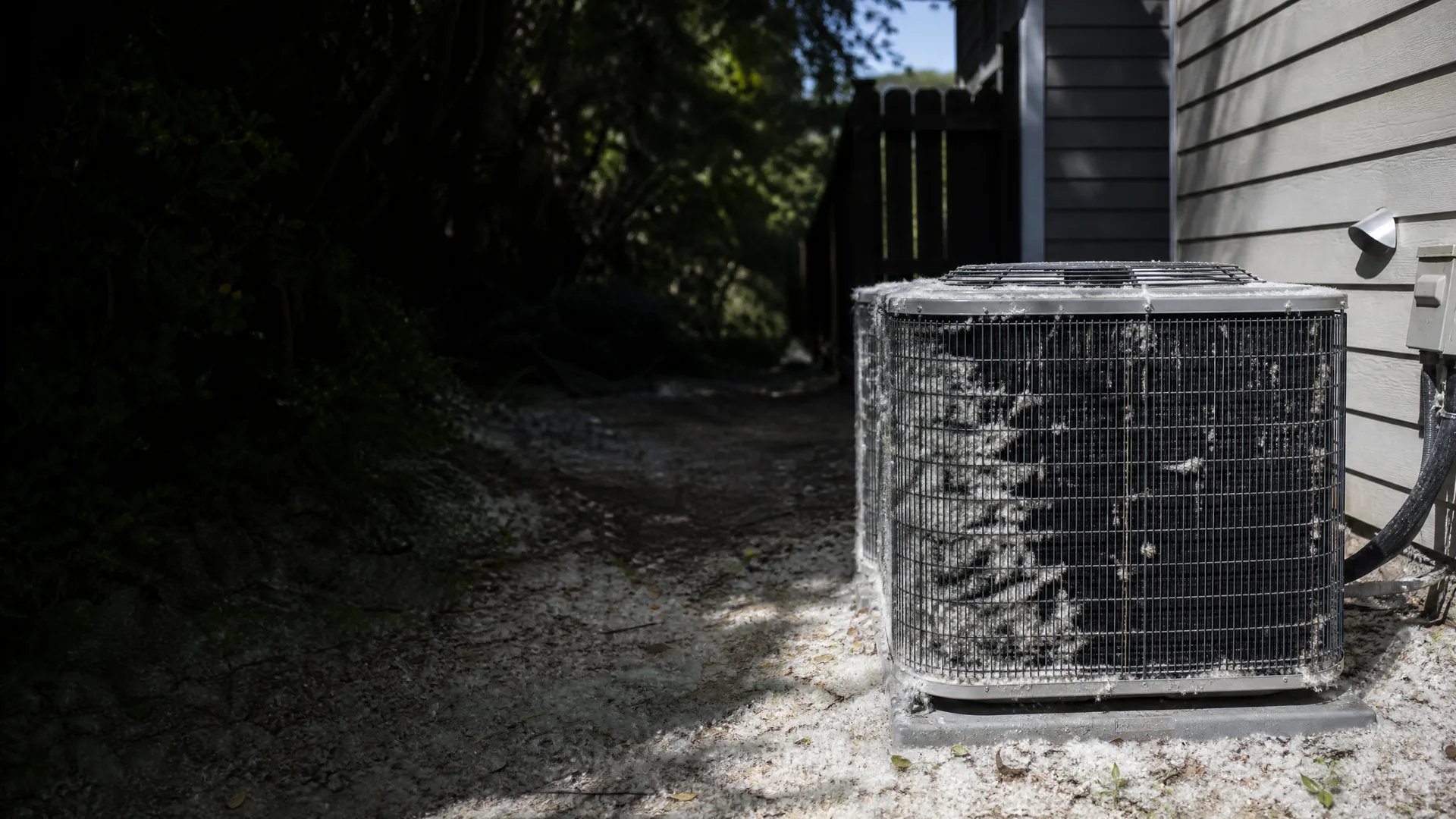
Late May, and the cottonwoods along the side yard have let go. White fluff drifts across the grass and catches on everything low to the ground, including the condenser humming against the house. You walk past with the trash cans and notice the fins look almost frosted, matted thick with it, the airflow through them already choked down. The unit still runs. It just works harder than it needs to, pulling humid air through a coil that's breathing worse every day the fluff keeps falling. A contractor who services AC units through an Indiana spring sees this same pileup on one job after another, and knows which yards back up to cottonwoods and which don't. You make a note to call someone before the real heat sets in.
Your request stays with one local pro.
Sending the form costs nothing.

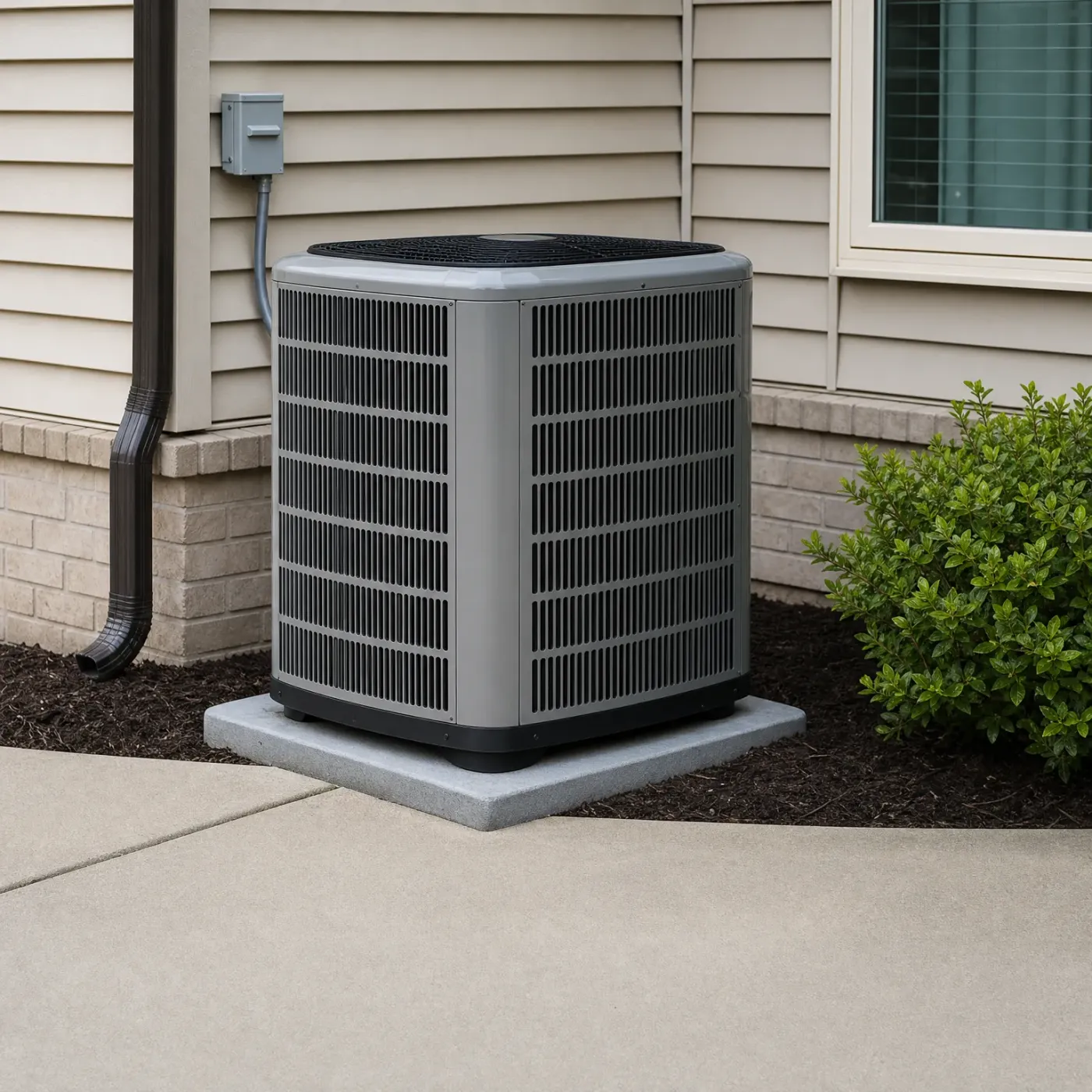
This condenser sits open on its pad, coils clean, nothing blocking the airflow around it. Air moves through the fins the way it should, and the drain line inside stays able to carry condensation out as fast as the coil produces it.

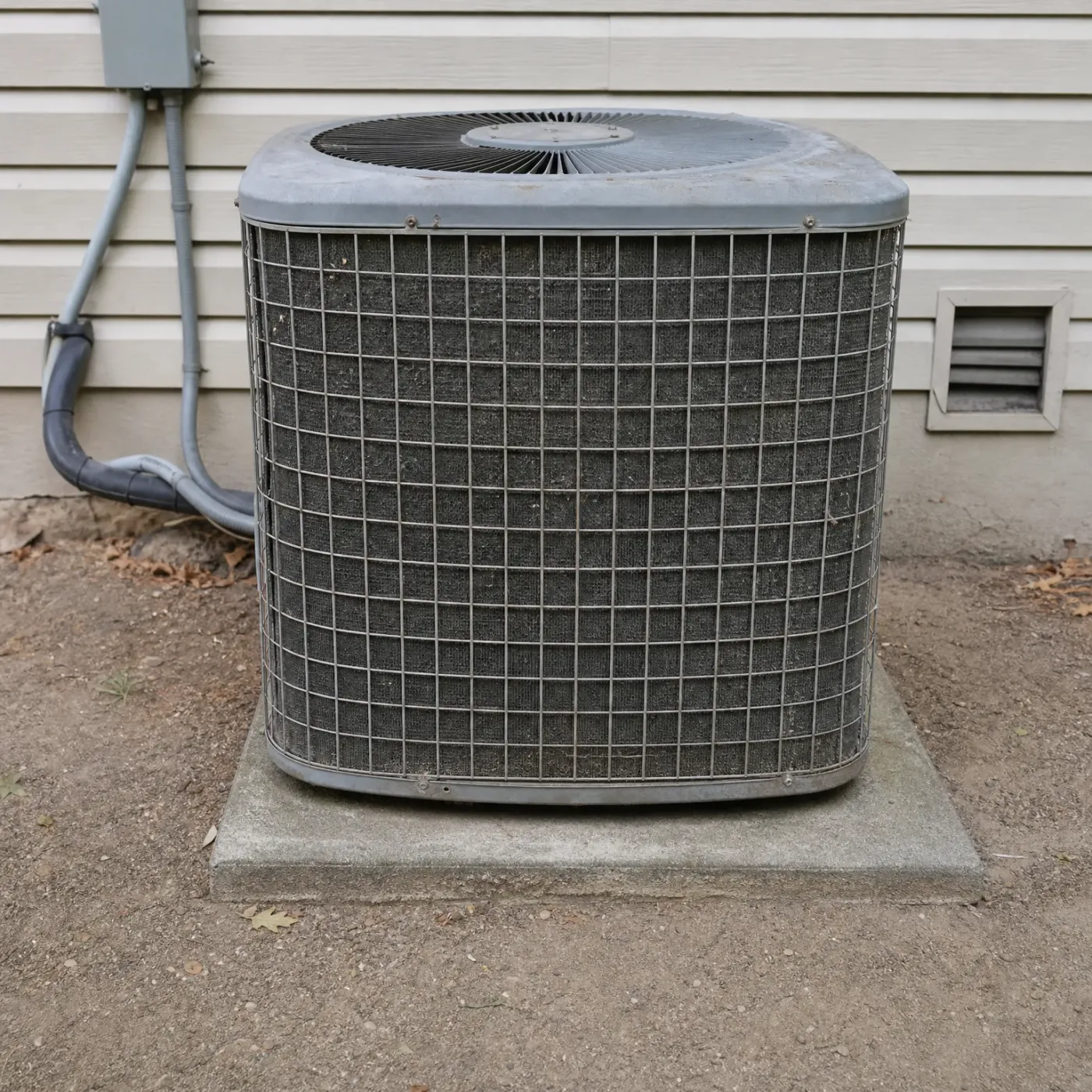
Dust and yard debris have coated these coil guards solid. The unit can still run like this, but a clogged coil and a clogged drain line often show up together, since both come from the same buildup going unchecked all summer.
Why does my AC drain line only clog in summer?
Algae and mold need standing water to grow, and your drain line only has standing water when the air conditioner is actually running and pulling moisture out of the air. In October through April, the line sits dry, and nothing can grow in a dry pipe. Once you turn the AC back on and Indiana's humidity starts loading moisture into the coil, the P-trap fills and stays wet for months at a stretch. That's the window algae needs. A line that clogs in July didn't clog overnight. It built up slowly over weeks of the coil running every day, which is also why a clog tends to show up mid-summer rather than the first week the system comes on.

Weather station data for Indiana puts the summer dew point at an average of 64°F across June, July and August. That's the sticky end of the scale, the kind of air that feels heavy even standing still. Your air conditioner has to pull a lot of moisture out of air that wet to keep your house comfortable, which means more water moving through the drain line on a muggy July afternoon than on a milder day. More water means the line stays full longer, and a line that stays full is a line algae can grow in. That's the direct link between the air outside and the clog risk inside.
NASA POWER T2MDEW county cells weighted by homes


At 15.96 cents per kilowatt-hour, running your air conditioner through a sticky Indiana summer already adds up on its own. A clogged drain line makes the system work harder to keep up with the moisture, which pushes that bill higher before you ever see water on the floor.
EIA-861 2025 statewide residential average

This condenser sits out in the open, coils free of debris, airflow moving through the fins the way it was built to. Nothing around the pad is blocking it, and the drain line inside is doing its job right along with it.

Dirt and organic debris have packed into these fins and the cage around them. A unit left like this is already working harder than it should, and a line that's been neglected this way usually isn't draining clean either.

A clogged drain line is a summer problem with a simple cause: standing water sitting where algae can grow. Keeping that line open is routine maintenance, nothing more, and it's the kind of thing worth staying ahead of rather than fixing after a pan has already overflowed onto your floor.
A contractor who services AC systems all over Indiana through these summers has seen this exact line fail in exactly this way more times than they can count. Getting matched means one licensed contractor local to you reaches out, someone who already knows what a muggy June does to a drain line and what to check first. Not a handful of companies competing for your callback, just the one who handles this for homes like yours every season.


You're not committing to anything by asking.
A technician who works on Indiana systems all summer knows which drain lines back up first and why. Getting yours checked before the pan overflows is a smaller task than drying out a ceiling or a closet floor afterward.
