






An outdoor air conditioning condenser unit on a concrete pad next to the gray vinyl siding of a residential home.

AC Installation in Muncie, IN

Tell us about the job

Takes about a minute. No obligation.

New system or replacementCentral ACDelaware County, IN
Step 1 of 2

What ZIP code is the job in?

Most houses in Delaware County heat with gas, close to 6 in 10. That means most already have gas lines and ductwork in place, and central air shares that same duct system. If your furnace and AC sit side by side now, replacing the AC with another central unit is usually the straightforward path. Electric heat is the next most common here, and those homes often already run on the ductwork a central air system needs too. Either way, the installer will size the new unit to your home rather than just swap in whatever size is already there.

3 months
June through August, your air conditioner is on duty
83°F
the average summer afternoon it cools against
16 hail events
in ten years, and hail bends the fins on outdoor coils
13.4 SEER2
the federal minimum any new unit must meet
Isometric cutaway illustration of a house showing attic ductwork, an indoor air handler, refrigerant lines running outside, and an outdoor condenser unit on a pad.
Your air conditioner works hardest from June through August.

NOAA nClimDiv, 1991–2020 normals

Half the homes in Delaware County were built in 1967 or earlier.

A system going into a house that old has to match the ductwork already there, not the other way around.

Muncie summers don't call for anything special, just a unit sized right

Power costs 14.77 cents a kWh statewide
Cooling runs June through August
Summer afternoons average 83°F

Cooling here runs June through August, so May is the month to get a new system in before it has to work. An installer needs time to size the unit to your house and check the ductwork, and that goes faster without a dead AC forcing the pace. Wait until the first hot week and you're picking a system while the house is already uncomfortable, which tends to rush decisions worth getting right. Install it in May and it's already proven by the time summer asks anything of it.

Any new system here has to clear 13.4 SEER2

Delaware County falls in climate zone 5A, where any new split-system AC under 45,000 Btu/h has to meet 13.4 SEER2 at minimum. A federal tax credit is available for qualifying equipment, which narrows the field to units worth installing once.

Find a contractor
A man in a cap, dark work shirt and tan pants, seen from behind, climbs porch steps toward an orange front door while carrying a worn leather tool bag.
An outdoor air conditioning condenser unit mounted on a concrete pad beside a house, with electrical conduit running to a wall-mounted disconnect box.

Three months of work

Summer here is short, June through August, with afternoons averaging 83°F. That's a mild load for a condenser. It isn't fighting triple-digit heat for months on end. Wind and hail are a bigger concern for equipment sitting outside than the heat is. Delaware County has seen its share of both over the years. A unit here needs to hold up to weather more than it needs to push through extreme heat. You don't need the highest-efficiency model on the lot. You need one built solid and installed right, because the load here is mild and the real risk is what the weather does to the cabinet outside.

The size has to match the house

A contractor figures the right tonnage by measuring the square footage, the windows, the insulation, and the layout of the ductwork, not by matching the old unit. Going bigger doesn't mean more comfort. An oversized condenser cools the air fast and shuts off before it pulls the moisture out, so the house feels clammy even at the right temperature. That sizing work, not the equipment itself, is what the installer spends the most time on.

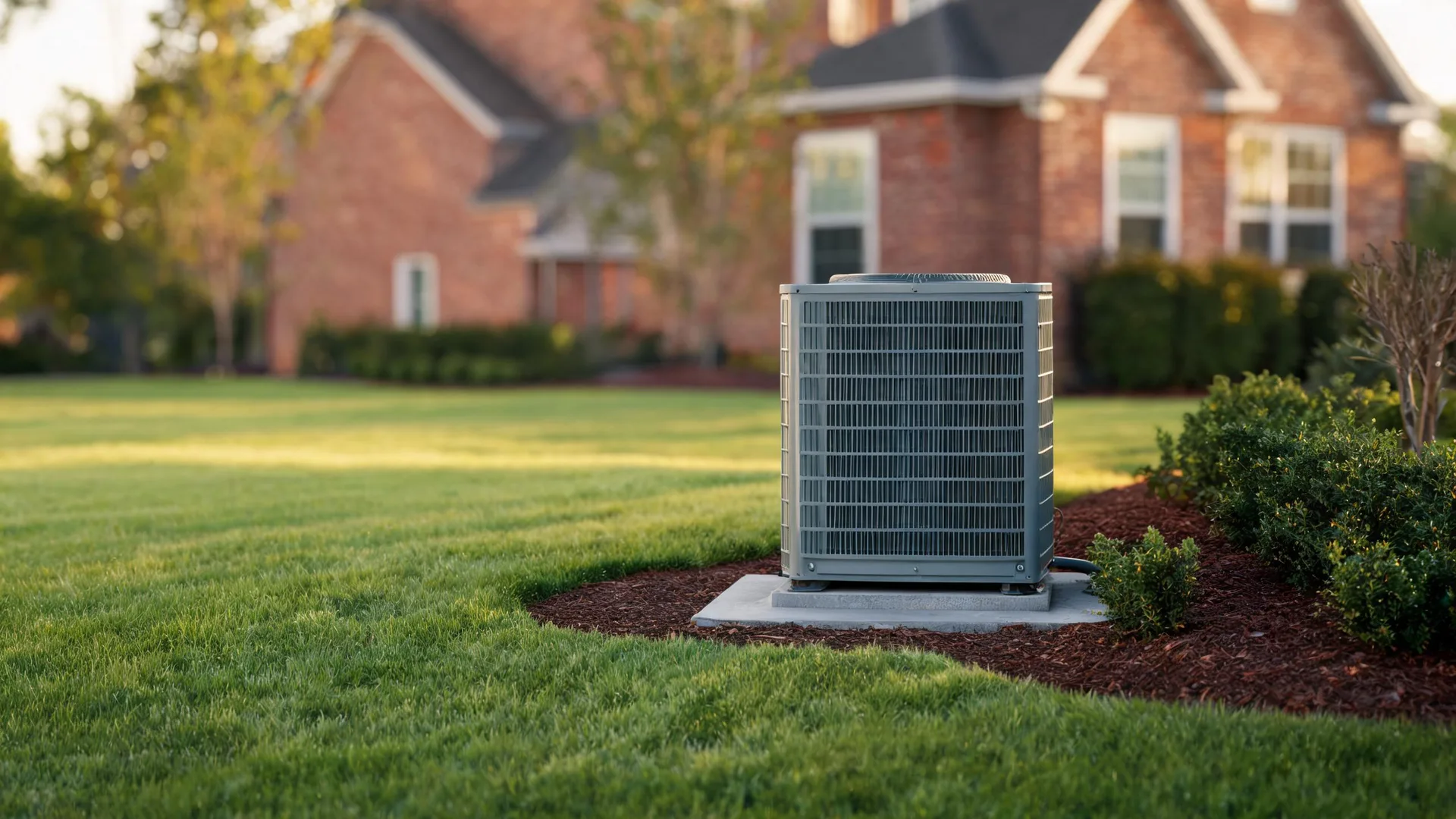
The ductwork decides how much work it is

If the ducts already in the house are sealed well and sized right, a new condenser and coil can usually go in without touching them. If the ducts are leaky, undersized, or were built for a smaller system, the installer has to open up walls or ceilings to fix them before the new unit can work the way it's rated to. That difference, more than the equipment itself, is what separates a quick swap from a longer job.

Overhead view of an air conditioning condenser unit on a concrete pad next to a house with asphalt shingle roofing and vinyl siding.

A higher-efficiency unit would save about $30 a year to run in Delaware County compared with a new unit at the federal minimum.

  • A higher-efficiency unit$200 a year
  • A new unit at the federal minimum, 13.4 SEER2$230 a year

Estimates for a typical Delaware County home, from EIA household energy data, Indiana fuel prices and NOAA climate normals. Your home will differ.

When you're comparing quotes, ask what the SEER2 and the capacity actually are, not just the brand. Ask who is doing the load calculation and whether it accounts for your windows and insulation or just repeats the old tonnage. Ask what the warranty covers on the compressor versus on labor, since those are often different lengths. Ask whether the coil matches the condenser, because mismatched parts can cut the efficiency you're paying for. And ask what happens to the existing ductwork, since a quote that skips that question usually hasn't looked closely enough at your house.