




AC won't turn on in Plainfield, IN

Get matched with someone who does this kind of work in Hendricks County.

Match me with a pro

A few things usually stop an AC from turning on at all. First check the thermostat: a dead battery or a setting bumped off "cool" will leave the system silent. If that's not it, go to your breaker panel. Central air draws enough current that a tripped breaker is common, especially on a hot day when the unit is working hard. Flip it back and see if the system starts. If the breaker trips again right away, don't keep resetting it. That points to a problem in the unit itself, like a failing capacitor or a motor drawing too much power, and running it that way can damage the compressor. One more thing worth checking is the condensate drain line. Many systems have a safety float switch that shuts the whole unit down if that line backs up, which is a common cause of a system that won't start even though everything else looks fine.

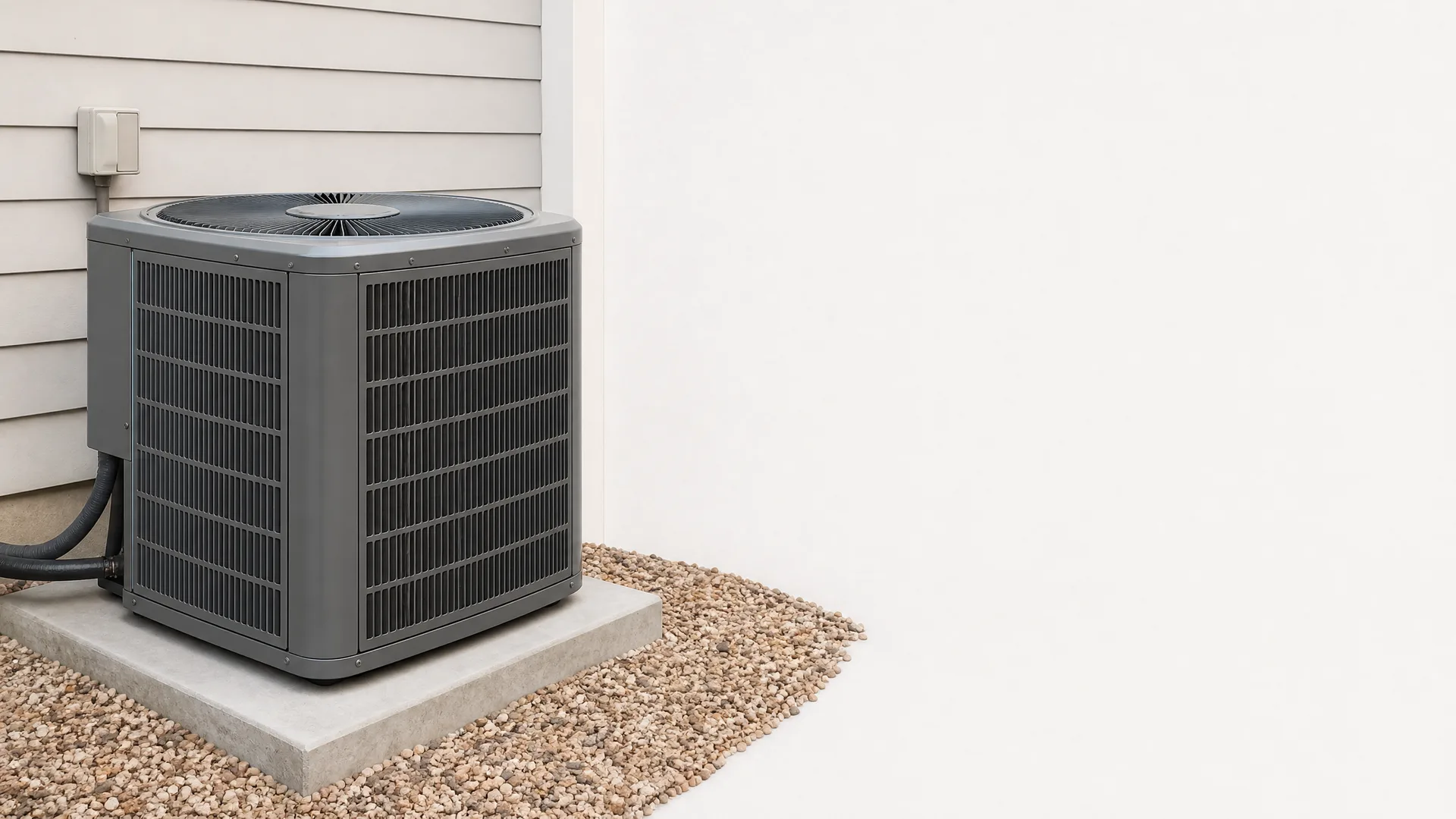
A gray outdoor air conditioner condenser unit on a concrete pad beside a house with horizontal siding, surrounded by gravel, with a plain light wall at right.

Why the breaker trips in July

The compressor pulls the most current of anything in your house when it starts. A breaker that's weak, or a unit low on refrigerant and working harder than it should, will trip under that load before the system ever gets going. If the breaker resets fine but trips again within a few minutes of the AC starting, that points to the unit itself and not the panel.

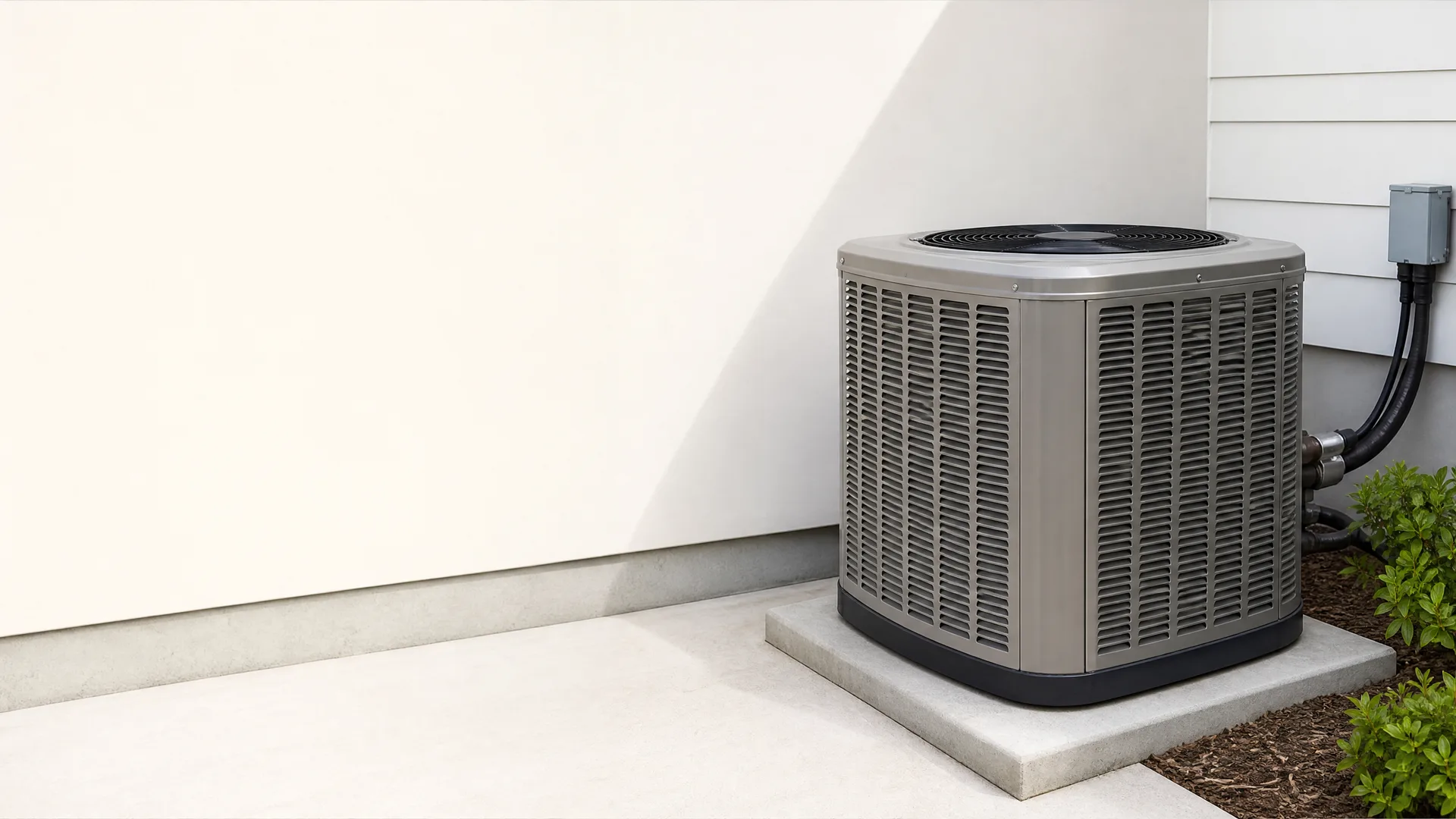
An outdoor air conditioning condenser unit on a concrete pad beside a light-colored stucco and siding wall, with a conduit disconnect box and a green shrub to the right.

What a condensate switch does

Most central air systems built in the last couple decades have a float switch on the condensate line. If that line clogs and the pan fills up, the switch shuts the whole system down so water doesn't back up into your ceiling or walls. It's a safety feature doing its job, not a sign the AC is broken. A contractor can clear the line and reset it in one visit.

Why does my outdoor unit hum but not start?

A humming sound from the outdoor unit means power is getting to it, so it's not a breaker or a thermostat problem. Something inside the unit is trying to start and can't finish the job. That's worrying because it sounds like it's about to run, then doesn't, and most people don't know what's actually happening in there or whether it's safe to just let it keep trying.

The compressor or fan motor is trying to start and failing

That hum is the compressor or the fan motor pulling power without enough torque to get moving. Usually it's a weak capacitor. The capacitor gives the motor the jolt it needs to start turning; when it's worn out, the motor sits there and draws current but stays still. A seized compressor or a failed fan motor bearing can cause the same hum. Letting it keep trying isn't a good idea. Each attempt pulls hard on the motor windings, and a part that could have been replaced on its own can take the compressor down with it. In Hendricks County summers, with the unit running long hours, a bad capacitor is one of the more common reasons a system hums instead of starting.

A two-story house with light gray horizontal siding and white-trimmed windows, set behind a mown lawn with shrubs, flanked by large green trees, with a sidewalk and wet street in the foreground.

Hendricks County air averages a 64°F dew point through June, July and August, measured from NOAA data for the area. That's heavy, sticky air, the kind that sits on your skin instead of drying off. Your AC isn't just dropping the temperature in weather like that. It's pulling moisture out of the air too, which means the compressor runs longer on a sticky July afternoon than it would on a dry 85-degree day out west. That extra runtime is also extra strain, and it's part of why a unit that's already weak on refrigerant or a worn start capacitor tends to quit in the middle of summer rather than in a milder month. If yours won't turn on at all right now, a local contractor who works on these systems all summer will know what that kind of air does to a unit like yours and what's likely behind it.

NASA POWER T2MDEW

Get matched with an air conditioner pro in Hendricks County

A unit that won't start at all is usually a quick call for someone who works on these systems, but the humming kind, the one trying and failing to start, is harder to leave alone. A capacitor or a start relay going bad in July heat doesn't wait for a convenient day, and running a compressor that's struggling to start can burn it out for good. Hendricks County summers push these systems hard enough that a marginal part fails right when you need the air most. A contractor who works on AC units in this area through the summer has likely seen your exact symptom on someone else's unit last week. Submitting your information here gets you matched with one licensed local contractor who takes on your request directly, not five companies working the same lead. Given what a stuck compressor can turn into, getting a tech looking at it today matters more than waiting to see if it sorts itself out.

A man with grey hair and stubble in a dark sweater sits on a grey sofa indoors, looking off to the side, with a potted plant and a sunlit window behind him.
A man with gray hair, a beard and glasses, wearing a dark green sweater, sits on a gray sofa in a sunlit living room with a potted plant, table lamp and wooden sideboard behind him.
A middle-aged man with graying hair and a short beard sits on a blue sofa in a living room, looking toward a window, with a bookshelf, lamp and framed picture in the background.
A man with graying curly hair and a dark green sweater sits on a gray sofa in a sunlit living room, looking off to the side, with a framed picture, shelving, an armchair and a window with sheer curtains behind him.

Quick Check or Call for Help

Call a tech

  • A licensed contractor can open the disconnect box and test the capacitor with the power safely locked out, something you shouldn't do yourself.
  • If the outdoor unit hums but won't start, a bad capacitor or start relay needs swapping before it strains the compressor further.
  • Someone local who works on these systems every summer knows whether a tripped breaker in your area usually points to the unit or the panel.
  • A contractor can check refrigerant charge and amp draw, numbers a thermostat reset or a breaker flip can't tell you.
  • Getting it matched to one qualified contractor means one visit, one diagnosis, not a string of calls to sort through.

Check it yourself

  • Replacing a dead thermostat battery or switching the setting back to cool costs nothing and takes a minute.
  • Resetting a tripped breaker is simple, though if it trips again right away the problem is bigger than the panel.
  • Looking at the outdoor unit for a humming sound tells you whether it's getting power at all before anyone comes out.
  • Clearing debris or checking that the outdoor disconnect hasn't been bumped open rules out the simplest causes first.
  • None of this fixes a failing capacitor, a weak breaker, or a system low on refrigerant, those need a trained hand.
An outdoor air conditioning condenser unit on a concrete pad beside a house with white horizontal lap siding, with an electrical disconnect box and insulated refrigerant line on the wall and a shrub over mulch to the right.

When it's working right

This is what a healthy setup looks like: the condenser sits quiet on its pad until the thermostat calls for cooling, then starts right up and runs steady. The lines stay insulated, the disconnect box stays closed, and nothing around it looks stressed.


An outdoor air conditioner condenser unit on a concrete pad beside a house with light horizontal lap siding, with an electrical disconnect box and conduit on the wall behind it.

When something's gone wrong

Weathering like this, rust on the cabinet, a disconnect box that's seen better days, points to a unit that's been fighting its job for a while. Age catches up to capacitors, contactors and wiring before it ever shows up as a total failure.

What are you noticing right now in your house

The house is warming up room by room, starting with whichever rooms sit farthest from the thermostat. You might hear the outdoor unit trying and failing, or hear nothing from it at all. The thermostat screen could be blank or unresponsive. If you've already checked the breaker and the thermostat batteries and the system still won't run, something inside the unit itself isn't working, and that's not something to keep testing on your own. Left alone through a stretch of 90-degree days, a struggling AC either trips the breaker again and again or burns out the part that's already failing, turning a repair into a bigger one.

A gray outdoor air conditioner condenser unit on a concrete pad beside a house with white horizontal siding and a brick foundation, with a wall-mounted disconnect box and conduit, and a green shrub with mulch at left.
A clean condenser like this one runs when the thermostat calls for it, with nothing blocking airflow through the grille.
An outdoor air conditioning condenser unit on a concrete pad beside a house with white horizontal vinyl siding, with a gray electrical disconnect box and refrigerant lines on the wall behind it.
Years of dirt caked into the grille and top cover make the unit work harder to pull air through, and that strain can stop it from starting at all.

Cooling runs June through August

Three months is the whole job for your AC here, June through August, and then it sits idle the rest of the year. A system that won't start now is losing you cooling in the short stretch it's actually needed, with no slack time to put off a fix.

NOAA nClimDiv 1991-2020

  1. Thermostat calls for cooling and sends power to the contactor

  2. Contactor closes and sends power to the capacitor and compressor

  3. Capacitor gives the compressor and fan motor the jolt to start

  4. Compressor and outdoor fan spin up together and keep running

A woman with shoulder-length brown hair in a gray knit cardigan sits in an upholstered armchair indoors, looking toward a window with sunlit trees outside, with a bookshelf behind her.
A woman with her hair in a bun holds a sleeping child against her chest, both wrapped in a grey knit blanket on a sofa in a dimly lit room with a lamp and houseplant behind them.

Silent or Humming, Now You Know

  • A dead system points to the thermostat or the breaker, while a humming unit points to a failing capacitor or start relay.
  • Both problems show up most in July and August, when the compressor works hardest and parts under strain are most likely to quit.
  • A local contractor who services Hendricks County systems all summer has seen which parts fail first in this heat and humidity.
  • Matching you with one licensed contractor means a single visit to sort out the actual cause instead of guessing from a list of possibilities.
  • Once you know whether the unit is silent or humming, you already know which problem you're dealing with.
  • Leaving a humming unit alone risks more damage to the compressor the longer it keeps trying and failing to start.

An AC that won't start is either dead quiet or humming without catching, and those are two different problems with two different fixes. A dead unit sends you back to the thermostat and the breaker panel first. A humming unit means power is reaching it but something inside, likely the capacitor or start relay, can't finish the job. Both tend to fail in the same stretch, July and August, when the compressor is working its hardest and anything weak gets found out.

A contractor who works on systems across Hendricks County all summer has seen this pattern enough times to know what usually gives out first in this kind of heat and humidity. That's different from a guess off a checklist. It means someone showing up already expecting to check the capacitor or the relay first if your unit is humming, rather than starting from zero.

Getting matched with one contractor, not several, means one visit and one assessment of what's actually wrong, instead of fielding calls from multiple companies and comparing guesses. That matters more on a humming unit than a dead one. A compressor that keeps trying and failing to start is under repeated strain, and the longer that goes on, the more that strain adds up. Knowing which of the two you're facing is most of the way to knowing what happens next.

An outdoor air conditioner condenser unit on a concrete pad surrounded by gravel, next to a house wall with horizontal siding, an electrical disconnect box, and conduit, with shrubs nearby.

A local pro for your air conditioner repair

RepairCentral ACHendricks County, IN
Step 1 of 2

What ZIP code is the job in?