






An overhead view of a residential air conditioning condenser unit mounted on a concrete pad next to a house with vinyl siding.

AC Installation in Indianapolis, IN

Tell us about the job

Takes about a minute. No obligation.

New system or replacementCentral ACMarion County, IN
Step 1 of 2

What ZIP code is the job in?

Marion County recorded 227 severe weather events between 2015 and 2024. That includes 140 damaging wind events, 67 hail storms, and 4 tornadoes. An outdoor AC unit sits outside through all of it. Hail dents the fins and the cabinet. Wind-driven debris does the same. Across Indiana, 17% of households went at least 24 hours without power in 2024, and a day without power means a day without cooling. Where the new unit sits, and what stands between it and the weather, is worth thinking through before installation.

4 months
June through September, your air conditioner is on duty
83°F
the average summer afternoon it cools against
67 hail events
in ten years, and hail bends the fins on outdoor coils
13.4 SEER2
the federal minimum any new unit must meet
Isometric cutaway illustration of a house showing attic ductwork, an indoor air handler, and an outdoor condenser unit connected by lines.
Your air conditioner works hardest from June through August.

NOAA nClimDiv, 1991–2020 normals

Half the homes in Marion County were built in 1973 or earlier.

An older house wasn't built around the system going in now, so the new one has to fit the house, not the other way around.

June through September is four months of work. May is when you get it installed before any of it starts.

Cooling runs June through September
Climate zone 4A
Power here costs 14.77 cents per kilowatt-hour

Marion County falls in climate zone 4A, which the energy code treats as mixed: real heat to move in summer, real cold to hold back in winter. Any split-system central air conditioner installed here, if it's under 45,000 Btu an hour and built from 2023 on, has to hit a SEER2 rating of at least 13.4. That's a federal floor, not a local one, so it limits what a contractor can legally put in regardless of brand. A system that clears it is also likely to qualify for the federal energy efficiency tax credit, worth looking into once you have a model picked out.

Pick the spot, and the system, with the next outage in mind

Installation is the one time to decide where the outdoor unit sits and what's around it. A spot with something solid to block wind-driven debris holds up better than one wide open to it. If heat or hot water matters to you during a power cut, that's also worth raising now, while the system is still being chosen, not after it's in the ground.

Find a contractor
A man in a dark shirt and tan pants, seen from behind, carries a canvas duffel bag up porch steps toward an orange front door beside a potted shrub.
A gray metal air conditioning condenser unit mounted on a concrete pad in a flat grassy field under a partly cloudy sky.

Sized for the house you have, not the one the last system was built for

Half the homes here were built in 1973 or earlier. A duct system sized for a house that age doesn't automatically match the output of a new unit, and the reverse causes its own problems: a system too big for the ductwork cycles on and off instead of running steady. Whoever installs this one should size it to your house, your ducts and your insulation, not just swap in whatever matches the old unit's rating. If your ductwork hasn't been looked at since the house was built, this is the point to have it checked.

Sizing comes from a load calculation, not a guess

A contractor works out the right size by running a load calculation on the house: square footage, window area, insulation, ceiling height, how many walls face the sun. That math gives a cooling load in Btu per hour, and the outdoor unit gets matched to it. Going by the old unit's rating or by square footage alone skips the parts of the house that actually change the number.

Wrong either direction causes real problems

A system too small runs constantly and still can't pull the house down to temperature on the hottest days. A system too big cools the air fast and shuts off before it pulls moisture out, so the house feels clammy even at the right temperature, and the compressor wears faster from cycling on and off instead of running steady.

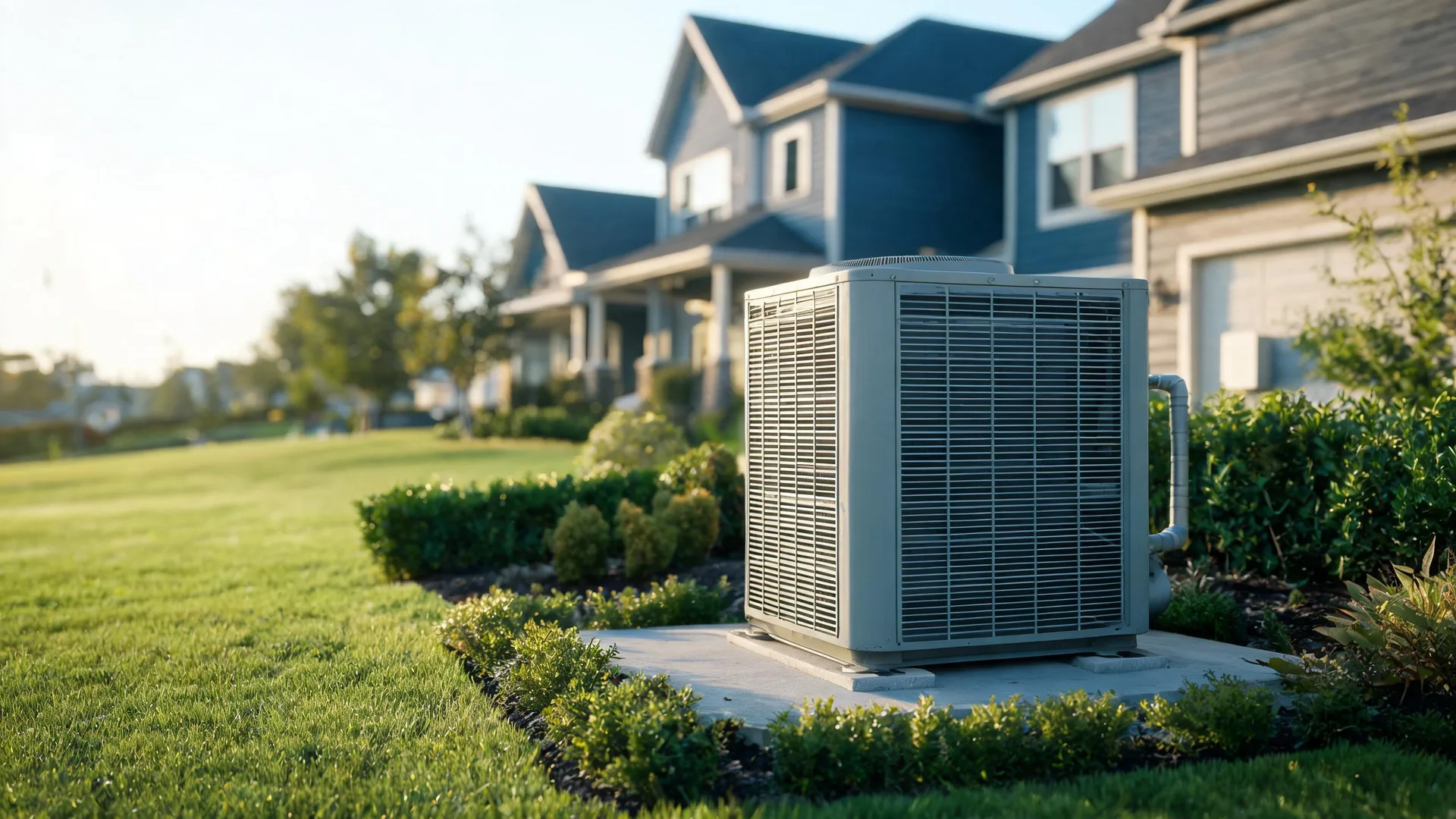
Overhead view of a gray outdoor AC condenser unit on a concrete pad beside a mulched garden bed and a house with vinyl siding.

A higher-efficiency unit would save about $30 a year to run in Marion County compared with a new unit at the federal minimum.

  • A higher-efficiency unit$220 a year
  • A new unit at the federal minimum, 13.4 SEER2$250 a year

Estimates for a typical Marion County home, from EIA household energy data, Indiana fuel prices and NOAA climate normals. Your home will differ.

Install day starts outside, with the old unit disconnected and hauled off, and the new pad or bracket set level where the unit will sit. Inside, the coil gets swapped to match the new outdoor unit, since the two are matched as a pair and sized together. A tech will braze the refrigerant lines, pull a vacuum on them to clear out air and moisture, then weigh in the exact charge the system calls for. Low voltage wiring gets run to the thermostat, and the electrical disconnect outside gets checked or replaced. Once it's all connected, the system runs through a startup check: refrigerant pressures, airflow across the coil, temperature split between the air going in and the air coming out. A unit that passes all of that is doing what it's supposed to before anyone calls the job done.