






Overhead view of a gray outdoor AC condenser unit on a concrete pad beside a mulched garden bed and a house with vinyl siding.

AC Installation in Carmel, IN

Tell us about the job

Takes about a minute. No obligation.

New system or replacementCentral ACHamilton County, IN
Step 1 of 2

What ZIP code is the job in?

Most homes in Hamilton County heat with gas, 60.8% of them. Electricity accounts for another 36.1%. If your furnace runs on gas, a new AC system sets up as a straightforward match with it, sharing the same ductwork and thermostat. The outdoor condenser and indoor coil are a separate circuit from how you heat the house, so the fuel question doesn't change what the AC installation itself involves.

3 months
June through August, your air conditioner is on duty
83°F
the average summer afternoon it cools against
53 hail events
in ten years, and hail bends the fins on outdoor coils
13.4 SEER2
the federal minimum any new unit must meet
Isometric cutaway illustration of a house interior showing ducted air handling equipment and duct runs through rooms, connected by piping to an outdoor condenser unit on a pad outside the wall.
Your air conditioner works hardest from June through August.

NOAA nClimDiv, 1991–2020 normals

Homes in Hamilton County run cooling June through August.

May is the month to get a new system in, before the first hot day puts it to work.

Three summer months, 83 degree afternoons. A standard system handles this county.

Cooling runs June through August
Summer afternoons average 83°F
69 damaging wind events from 2015 to 2024
Nothing unusual to plan aroundElectricity here runs 14.77 cents a kilowatt-hour, close to typical. A correctly sized system is what keeps that bill normal.

Hamilton County sits in climate zone 5A, a cool zone where winter is the bigger job for a home's system, but summers still get hot enough that cooling matters here too. Any split-system AC installed new has to meet a federal minimum of 13.4 SEER2, so long as it's rated below 45,000 Btu/h, which covers the size system most houses here use. That floor was set for equipment built from 2023 on, so if you're comparing quotes, every unit on the table should already clear it. The number worth asking about is how far above that floor a given system sits, since that's where the real difference between options shows up.

A standard system is the right call here

Hamilton County sees its share of damaging wind, hail and the occasional winter storm, but none of that changes what an AC installation here needs to be. A standard system, sized right and installed to code, holds up to what this county sees. There's no case for building in extra capacity or paying for a higher tier than the job calls for.

Find a contractor
A gray residential air conditioner condenser unit mounted on a concrete pad in an open grass field.

What years of daily cycling asks of a system

A condenser outside only runs when the thermostat calls for cooling, but on a hot afternoon that can mean hours at a stretch. The parts that wear are the ones that move. The compressor, the fan motor, the bearings inside it. A system sized right for the house cycles on and off at a steady pace. A system that's too small never gets that rest, it just runs flat out trying to catch up, and that shortens its life. Ask how the contractor arrived at the size they're quoting. A load calculation specific to the house is different from a guess based on the system being replaced. Ask what the warranty covers on the compressor versus the rest of the unit, since that's the part doing the hardest work year after year. Ask what maintenance the manufacturer expects too. A system that gets its coil cleaned and its airflow checked holds up to years of daily cycling a lot better than one that doesn't.

The old condenser and coil come out

Whoever installs the new system disconnects the refrigerant lines, the electrical whip and the condensate drain, then hauls off the old condenser and indoor coil when the job's done. The refrigerant gets recovered first, it can't legally be vented to the air. None of that gets left behind for the homeowner to deal with.

The old unit can't usually just stay put

A new condenser is matched to a new coil, built to work as a pair. Setting new equipment next to the old coil, or leaving the old condenser sitting there alongside it, isn't how this works. If the coil's up in the attic or tucked in a closet, expect that to come out too, not just the box outside.

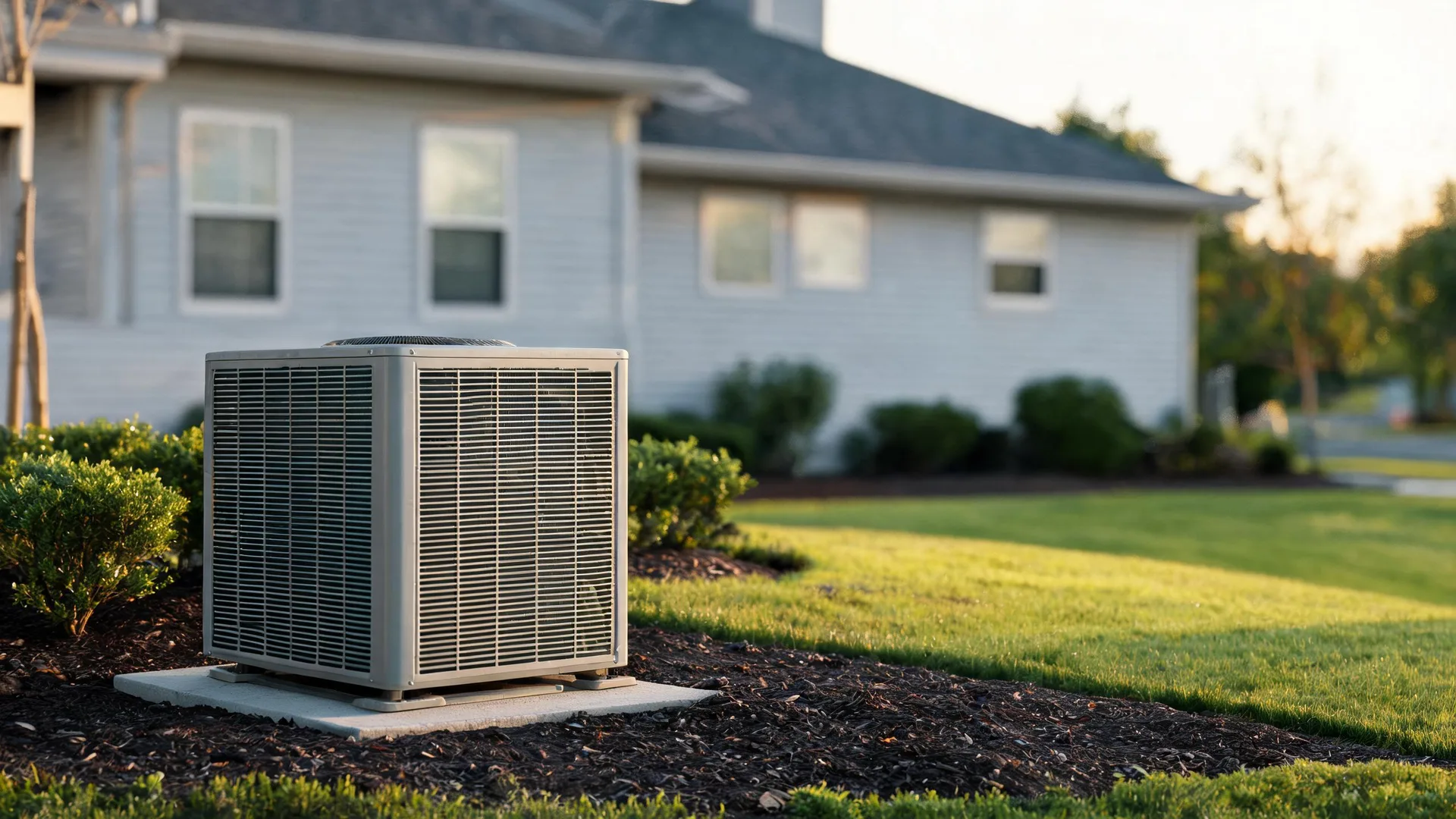
An outdoor air conditioning condenser unit installed beside the exterior wall of a blue vinyl-sided house at sunset.

Going above the federal minimum saves little here, about $20 a year.

  • A higher-efficiency unit$210 a year
  • A new unit at the federal minimum, 13.4 SEER2$230 a year

Estimates for a typical Hamilton County home, from EIA household energy data, Indiana fuel prices and NOAA climate normals. Your home will differ.

Installation day starts with the old equipment coming out, and most of the first stretch of time goes to that, not the new box going in. Once the old condenser and coil are disconnected and hauled off, the crew runs new line set if the old one doesn't suit the new system, sets the condenser on its pad outside, and gets the indoor coil fitted to the furnace or air handler. Every joint in the line set gets brazed, then the whole system gets pulled down into a vacuum before any refrigerant goes in. That vacuum step matters more than it looks like it should, since any moisture or air left in the lines will work against the compressor for as long as the system runs. After the charge goes in, a tech checks it against the manufacturer's numbers for that specific unit and that day's outdoor temperature, not a general guess. Last comes the test run, cycling the thermostat and checking that air coming out of the vents is actually cold and the system shuts off clean when it's satisfied.