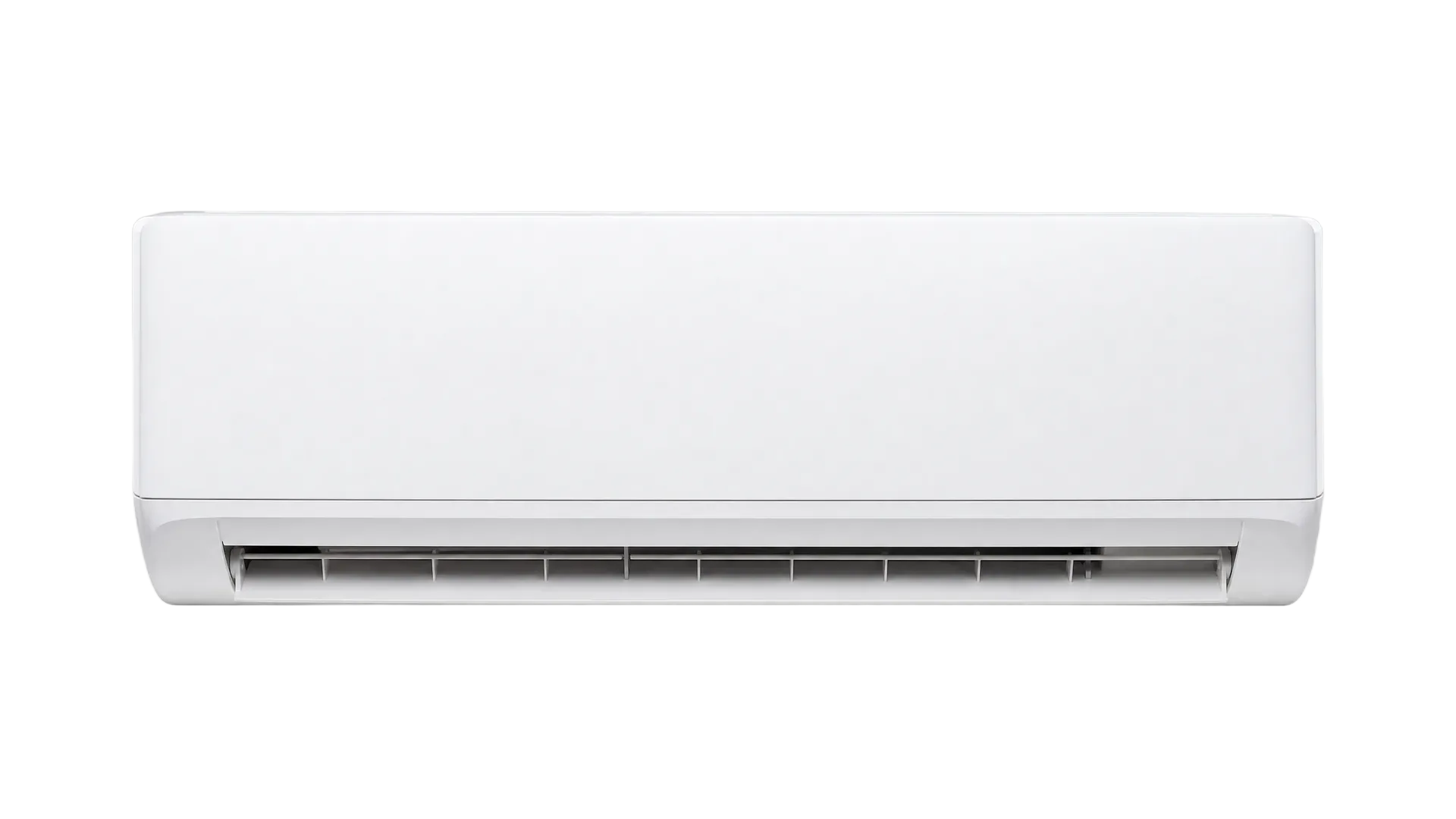

Running clean
A mini split that gets rinsed off and checked keeps its coil and wall free of buildup. Air moves through it the way it was designed to, and the white housing stays white. This is what years of steady upkeep looks like on the wall.
You had a mini split put in, or you're thinking about one, and you want to know what kind of lifespan to expect before you're looking at a replacement. Indiana summers get sticky, and a mini split that runs hard from June through September works differently than one in a milder climate. You're not asking what the brochure says. You want a straight number you can plan around, and what might shorten it.
Most mini splits last 12 to 15 years. Some go longer, especially if the outdoor unit is kept clear of leaves and the indoor filter gets cleaned on a regular schedule. The compressor is what usually limits the lifespan, and it works hardest during the stretch of humid days Indiana gets most summers. A unit that's sized right for the room and installed with a properly sealed line set tends to hold up better than one that's undersized and running flat out all season. Since most homes here heat with gas, a mini split is often doing cooling duty most of the year and maybe some shoulder-season heating, which is a lighter overall load than a unit carrying the whole winter too.
The compressor outside adjusts speed to match the heat in the room
Refrigerant carries that heat to the indoor air handler on the wall
The indoor coil and blower pull moisture out of the sticky summer air
The filter needs a rinse every few weeks or the coil starts icing up

The compressor sits outside year round, through humid summer afternoons and cold snaps in January. It's built for that, but it's still the part doing the hardest work, ramping up and down to match the load. Snow cover, ice, and leaves or grass clippings blocking the coil make it work harder than it should. Keeping the area around it clear is one of the few things that affects how long it holds up.

Indiana summers push a lot of water out of the air, and that water has to go somewhere. The indoor coil pulls it out and drains it away through a small line. If that line clogs, water backs up and can damage the unit or the wall it's mounted on. A coil that stays clean drains properly and isn't straining to pull humidity out of air that a dirty filter has already slowed down.

You'll probably notice it in August first. The bedroom that used to cool off by nine at night stays warm, and the unit runs longer to get there, if it gets there at all. Your power bill creeps up before anyone tells you why. Ice can show up on the outdoor unit even when it's eighty degrees out, which means the system is struggling, not working harder on purpose. None of this happens overnight. It shows up over a season or two, and most homeowners write it off as a bad summer before they realize the equipment is just getting old.
If your mini split is getting toward the end of what it's got, a local contractor who services this equipment every summer can tell you if what you're seeing is a fixable problem or the system winding down for good. That's worth knowing before you're stuck making a decision in the middle of a heat wave. When you request a match, you're connected with one licensed contractor near you, not a handful of companies competing for the job, and that's who reaches out to look at your specific setup.


A mini split that gets rinsed off and checked keeps its coil and wall free of buildup. Air moves through it the way it was designed to, and the white housing stays white. This is what years of steady upkeep looks like on the wall.

Dust and grime like this build up when the filter and coil go too long without attention. The staining above the unit points to moisture it isn't handling well anymore. A mini split in this shape is working harder for less cooling, and it's closer to the end than the one next to it.




One installer gets your project, so there's no bidding war over it.
Sending the form costs nothing.
A mini split doesn't work like the furnace or central AC most homes here have. There's no ductwork moving the air. The outdoor compressor and the indoor head talk to each other constantly, adjusting speed to match exactly how much cooling the room needs at that moment. That's why it can hold a room at a steady temperature through a muggy July afternoon without the on off cycling older systems do. The line set connecting the two units carries refrigerant back and forth, and because it's a sealed system, any weak point in that connection leaks slowly rather than failing all at once. You'd notice it as the unit taking longer to cool, not as a sudden breakdown. If you've got more than one indoor head on the same outdoor compressor, each one runs its own fan and coil, so trouble in the bedroom zone doesn't mean the living room zone struggles too. The compressor itself is the part under the most strain, especially if it's forced to short cycle instead of ramping smoothly, or if something's blocking airflow around the outdoor unit. Indoors, the condensate drain does quieter work, carrying away the water pulled out of the air. When that drain clogs, water backs up into the head even though the cooling still feels fine, which is why a unit can seem to be working right up until it isn't.


A mini split that gets a yearly checkup and regular filter rinses tends to run closer to the long end of its lifespan before the compressor gives out.
Skip the checkups and a clogged coil or low refrigerant charge can force a compressor to fail years before it should have.
You notice it on the muggy days first. The room takes longer to cool, or it never quite gets there, and the outdoor unit seems to run the whole afternoon without a break. Up close, the indoor head might be leaking a little water onto the wall, or you'll hear a rattle that wasn't there last summer. Your power bill for July or August comes in higher than it used to, even though you haven't changed how you use the thing. None of that means it's finished, but a unit working this hard to keep up is putting more hours on a compressor that's already aging, and that's what shortens the years you get out of it.

This is what a mini split looks like doing its job. The wall unit sits high, the air moves through an open room, and nothing about the casing hints at how many hours it's logged. A unit kept clean like this is easier to judge on sound and output alone, not on grime.

That gray film on the vents is years of dust the filter didn't catch, and discoloration like this usually means the coil behind it is just as dirty. A unit this far gone is working harder to move the same air, and that shows up on your power bill before it shows up as a breakdown.


A mini split that's losing efficiency doesn't just run longer, it costs more to run every month, since power here isn't cheap to begin with. That gap between a healthy unit and a struggling one shows up fastest on the bill, before you ever see a breakdown.
EIA-861 2025 statewide residential average



That 64°F average isn't just sticky air on your skin, it's extra work for the indoor coil, since pulling moisture out of thick summer air takes more from the system than cooling dry air to the same temperature. The source is NOAA climate data for Indiana. On a day like that, your mini split's compressor runs longer stretches to wring the water out before the room even feels cooler. You'll notice it as a unit that seems to run constantly through July and August, and over years, that extra runtime is what wears out a compressor sooner.
NASA POWER T2MDEW county cells weighted by homes
A mini split that gets looked after will cool and heat your house for years longer than one that never sees a technician, and most of what decides which path yours takes comes down to upkeep, not luck. If yours is slipping now, long runtimes, a room that won't quite cool, a bill that's crept up, that's worth having someone look at before the compressor itself is on the line. A local contractor who services this equipment all year, through muggy Indiana summers and the gas-heat winters, has seen what fails first and what's worth fixing versus replacing. You'd be matched with one contractor for your situation, not a handful competing for the job, so the person who calls you is the one who'll actually show up and look at your unit.

Get the right pro for your mini split