Side profile of a bearded man wearing a dark gray baseball cap and a gray T-shirt against a plain off-white background.

Is a heat pump worth it with typical power in Indiana

New system or replacementHeat PumpIndiana
Step 1 of 2

What ZIP code is the job in?

Is a heat pump actually worth it in Indiana with regular electric rates?

You've already got a heat pump, and now you're running the numbers in your head against Indiana winters. Most homes around you heat with gas, so you don't have a lot of neighbors to compare notes with, and electric rates here aren't cheap or especially low. You want to know if keeping it running makes sense or if you're just paying more to stay comfortable.

Yes, as long as it has backup heat for the coldest days

A heat pump moves heat instead of making it, so it uses less electricity per degree of warmth than straight electric resistance heat does. That holds true in Indiana through most of the fall and spring and a good share of winter. Where it runs into trouble is on the coldest nights, when outdoor air has little heat left to pull from and the unit has to lean on backup heat strips or a paired furnace to keep up. With typical power rates here, that combination usually comes out ahead of gas-only or electric-only heat over the full year, especially once summer arrives and the same system handles cooling through Indiana's muggy stretch without any separate equipment.

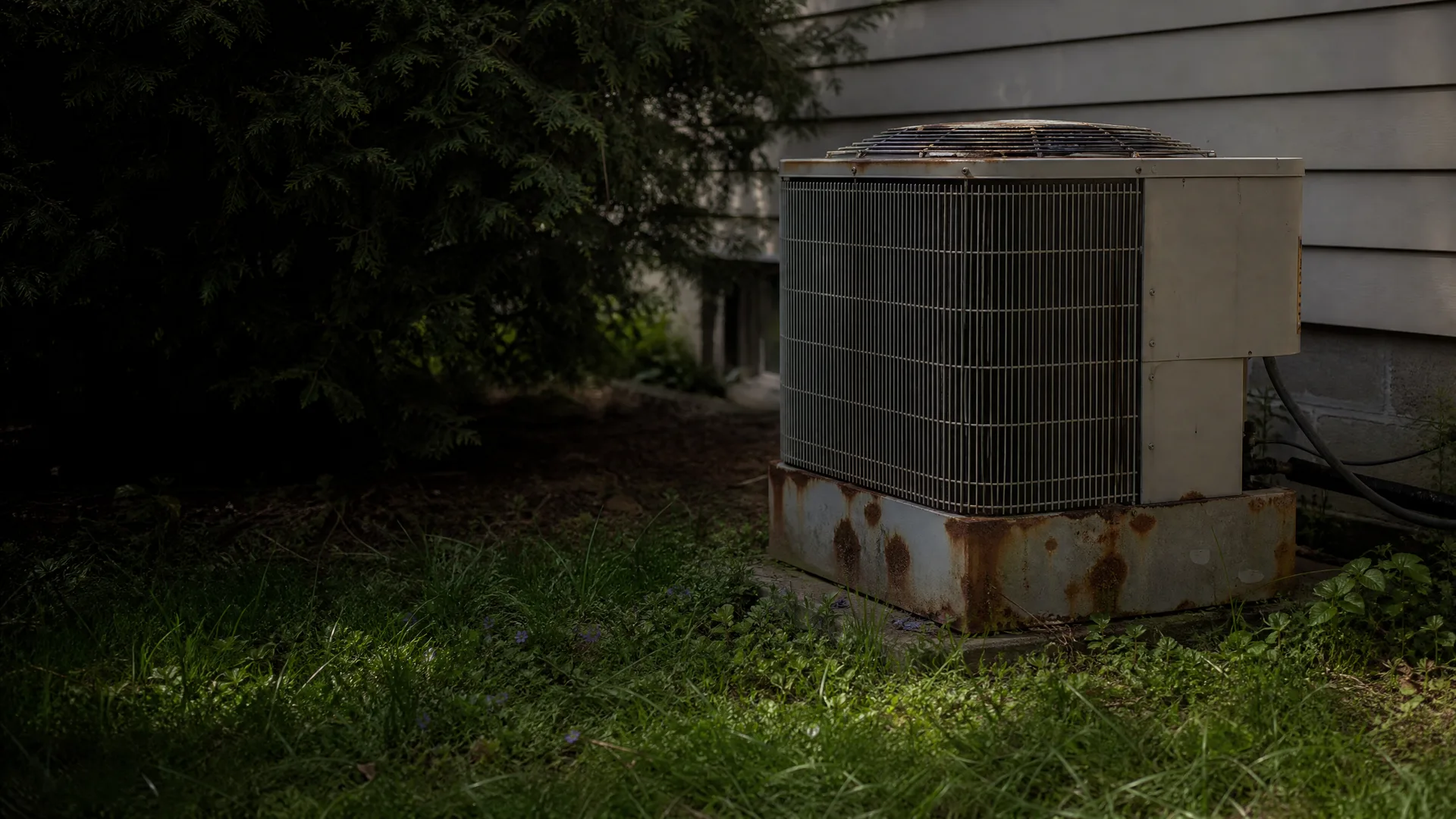
An outdoor air conditioner or heat pump condenser unit sits on a rusted concrete pad beside a house with horizontal siding, surrounded by grass and dark evergreen foliage.

You're out checking the yard in April, and the unit catches your eye. Rust along the base, right where it meets the pad. It still ran fine all winter, kept the house warm enough on the cold mornings, so you hadn't looked close. Now with the weather turning you're thinking about summer already, about the sticky stretch coming in July and August, and whether this is the year it finally gives out on you mid-July instead of just looking rough. You crouch down, run a hand along the rust, and decide it's worth having someone look at before the heat sets in.

Heat Pump Alone or Paired With Gas

Heat pump alone

  • Below freezing, a heat pump works harder and pulls more electricity to hold the house at temperature.
  • It still pulls heat out of outdoor air even on a cold Indiana morning, just at lower output than in October.
  • No gas line or furnace to maintain, so there's one system to keep an eye on instead of two.
  • On a muggy July afternoon the same unit handles the cooling side, so it's working most months of the year.
  • If the outdoor unit struggles below freezing, the house can take longer to recover heat after a cold snap.

Heat pump with gas furnace

  • The furnace takes over once outdoor temperatures drop low enough that the heat pump loses efficiency.
  • Your gas furnace handles the coldest stretch of winter while the heat pump covers the milder months and all of summer cooling.
  • Two systems means two things that can need service, though each one is doing less of the hard work overall.
  • Switching between the two happens automatically, so you aren't out there deciding which system should run.
  • This setup leans on whichever fuel is doing the job better at that outdoor temperature, electric or gas.
A gray outdoor heat pump unit on a concrete pad beside a house with horizontal lap siding, connected by conduit and a flexible line to a wall-mounted disconnect box, with low shrubs and mulch nearby.

Running right

This is a heat pump doing its job, pulling double duty on the pad without strain. Clean lines to the disconnect, nothing leaking, nothing straining the fan. In this shape, it handles Indiana summers and shoulder-season heating without much drama.

An outdoor air conditioner condenser unit on a concrete pad beside a house with beige horizontal siding, with conduit running from an electrical box on the wall.

Running down

This is what trouble looks like from the outside, quiet but not right. The unit still runs, but something inside is working harder than it should. Left alone, that shows up as a bill that climbs or a system that quits on the coldest morning of the year.

An outdoor air conditioner condenser unit on a concrete pad beside a house with horizontal vinyl siding, with refrigerant lines and an electrical disconnect box on the wall and dry leaves on the ground.
Before you get your heat pump installation
A gray outdoor heat pump unit on a concrete pad beside a house with horizontal lap siding, with a conduit running to a wall-mounted disconnect box and a green shrub to the left.
After you get your heat pump installation

Below freezing, output drops

A heat pump still pulls heat from outdoor air in an Indiana winter, but as the temperature falls below freezing, it has to work harder to hold the house at temperature.

Hand it off

Summers run on the same unit

The same outdoor unit that heats in winter handles the sticky Indiana summers, so the humidity and heat you already deal with run through one system, not two.

Hand it off
A woman and a child wrapped together in a thick knitted beige blanket on a sofa, both with eyes closed, beside a lit table lamp in a dim room.
An older woman in a cream knit sweater smiles while looking off-camera in a warmly lit kitchen, with a round loaf of bread on a wooden board in the foreground and a dark window behind her.

Let someone else find the pro

A heat pump in Indiana has to earn its keep twice, once in July humidity and once on a January morning near freezing, and that's a lot of run hours on one outdoor unit. When it's sized right and installed right, it handles both without the strain that shows up later as a bad compressor or a coil nobody caught early. When it isn't, you feel it on the electric bill every month it's below freezing outside. The install is what decides which of those two you get. Someone who works on these units all year in this climate knows where they tend to fail first here, the charge, the defrost cycle, the sizing against a gas backup if you have one, and catches it going in instead of after. You already know the unit outside your house. Send the details through and hand the rest to someone local who does this work every season, so you're not the one chasing down who's reliable while the weather does its thing.

A heat pump sized and installed right will cover an Indiana summer on its own and take a good share of the winter heating load before the backup has to step in.

One sized wrong runs long hours below freezing trying to keep up, and that shows up on the power bill every month the temperature stays low.

A woman with long gray wavy hair in a knit sweater sits on a light sofa with a striped pillow, looking toward a window in a room with wooden shelving and a potted plant.
A woman in a gray cowl-neck sweater stands in a living room with built-in shelves, a lamp, a sofa with cushions, and a bright window behind her, looking to her right.
A woman with long wavy brown hair in a dark blue sweater sits on a sofa with cushions, looking off to the side, with a wooden shelving unit, houseplant and bright window behind her.
A woman with long dark hair in a gray knit sweater sits indoors smiling and looking off to the side, with a window, houseplant, framed picture, and shelving blurred behind her.

Heat pump against the furnace

Most homes around you heat with gas, and that furnace will still beat a heat pump on the coldest nights. Below freezing, a furnace burns gas and makes heat directly, no outdoor air involved, so the cold outside doesn't change how hard it has to work. A heat pump is pulling heat from that same cold air, and the colder it gets, the less heat there is to pull. That's why a lot of heat pump setups in Indiana keep the furnace in place as backup, switching over on the coldest mornings instead of asking the heat pump to do something it isn't built to do alone.

Where the heat pump wins

Summer is where the furnace does nothing for you and the heat pump carries the whole load. Indiana summers get sticky, and a heat pump pulls humidity out of the house the same way a central air conditioner does, because it's running the same cycle in reverse. It also covers the shoulder months, March and April, September and October, on its own, without the furnace kicking on at all. So the question isn't whether the heat pump replaces the furnace. It's whether it's sized and installed to take over as much of the year as it reasonably can, with the furnace stepping in only when the air outside gets too cold to pull much from.

Power costs 15.96 cents per kilowatt-hour statewide

At that rate, every kilowatt your heat pump pulls on a cold morning shows up on the bill at the same price as the rest of your house. It's not a steep rate as rates go, but a heat pump working hard below freezing will still use more of them than it does in May.

EIA-861 2025 statewide residential average

A heat pump is worth it in Indiana when it's sized for your house and backed up well on the coldest mornings, and that comes down to the install more than the equipment. Two outdoor units running the identical model number can perform completely differently depending on who set the charge and who sized the load against your ductwork. That's the part a homeowner can't check from the yard, which is why it matters to have someone local look at it, someone who works on these units every summer and every January and knows which failures show up first in Indiana weather. You're left with one contractor, licensed to do the work, not a handful of strangers calling about a job you described once online. The equipment can be right for your house. Whether it runs right for years comes down to the hands that installed it.

Sunlit corner of a room with a wooden sideboard holding a ceramic vase of olive branches and a dark wooden bowl, beside a white-framed window, a hardwood floor and woven rug.
A wooden cabinet holding a pale ceramic vase with leafy branches stands beside a beige wall in a sunlit room with hardwood floors, a jute rug, and a window showing green foliage outside.
Sunlit room corner with a beige upholstered sofa holding a rust-brown cushion, beside floor-length linen curtains at a window, over a wood floor with a woven rug.
Corner of a room with beige walls, a framed photograph, a floor-length linen curtain beside a window, an upholstered armchair with a knit pillow, white baseboards and trim, wood flooring and a pale rug.
Sunlit living room corner with a beige upholstered armchair with a cushion, linen curtains beside a wooden-framed window, green vertical panelled wall with a framed print, and a wooden table edge over a woven rug.

One request and it's handed off

The pro who reaches out is licensed in Indiana.

Send my request

No fee to send it, and nothing to sign.