
Running the way it should
A heat pump that's keeping up looks like this: clean coil, clear airflow, nothing iced over even on a cold morning. It cycles on, moves heat, cycles off. No strain, no long runtimes that never seem to end.
You've got a heat pump, or you're thinking about one, and you want to know if it'll hold up once Indiana gets into real winter. Most houses around you heat with gas, so it's a fair thing to wonder about. You're not looking for a sales pitch, you want to know how the equipment actually performs when it's cold outside and whether you'll be stuck cold or stuck with a high bill.
A heat pump moves heat from outside air into your house, and outside air always has some heat in it, even in January. As the temperature drops, the unit has to work harder to pull that heat out, and below a certain point it can't keep up on its own. That's why most heat pumps installed here are paired with a backup heat source, usually electric resistance coils or a gas furnace, that kicks in when outdoor temperatures drop too low for the heat pump alone. With that backup in place, a heat pump can carry your home through an Indiana winter without a cold spell leaving you short. The sizing of that system and how the backup is set up to switch over matters more than the heat pump itself.

A heat pump that's keeping up looks like this: clean coil, clear airflow, nothing iced over even on a cold morning. It cycles on, moves heat, cycles off. No strain, no long runtimes that never seem to end.

Dust and grime on the coil block airflow, so the unit runs longer to move the same heat. In a hard freeze, a coil like this struggles to defrost itself, and the house falls behind on warmth before you notice why.
You'd notice it first in the rooms farthest from the thermostat, still cool while the air near it feels fine. The system running almost nonstop on the coldest days, instead of cycling off like it should. Air coming out of the vents that feels lukewarm rather than warm. Maybe a layer of frost building up on the outdoor unit that doesn't melt off between defrost cycles. If it's been like this a while, you've probably seen the power bill move too. Left alone, a heat pump that's straining in cold weather can ice over hard enough to stop working, or lean so hard on backup heat strips that you're paying for electric resistance heat without knowing it.

Air down to around minus 15 degrees still has heat in it, and a heat pump moves that heat into your house instead of burning fuel to make it. That's the whole job. It doesn't stop working in the cold, it just has less to work with, so it runs longer and moves less heat per hour the further the temperature drops.

On a cold, damp day, frost builds on the outdoor coil, and the system reverses itself for a few minutes to melt it off. You might see steam coming off the unit outside. That's normal. It's not malfunctioning and it's not blowing cold air into your house during that time, it's just clearing the coil so it can keep pulling heat from the air.
At 15.96 cents per kilowatt-hour, every degree your heat pump pulls from the cold air costs less than burning gas for the same degree once it's installed right. A unit sized wrong for your house runs longer than it should, and that's where the rate starts to show up on your bill.
EIA-861 2025 statewide residential average
On most days this works fine. The heat pump pulls heat out of the air and runs your house. But on the coldest nights, when Indiana drops well below freezing, the unit has to work harder to pull the same amount of heat, and it may not keep up on its own. Without a backup source, the thermostat can call for heat the system can't fully deliver, and the house drifts a few degrees cooler until the temperature outside climbs back up.
Most homes in Indiana already have a gas furnace, and pairing it with a heat pump covers the gap. The heat pump handles the milder days, which is most of the season, and the furnace kicks in when it gets cold enough that the heat pump alone can't keep the house at temperature. This is usually set up to switch over on its own. You get the lower running cost of the heat pump most of the time, and the furnace behind it for the nights that need more.




A heat pump sized and installed for your house, with backup heat wired in, handles an Indiana winter on its own. You set the thermostat and it runs, through the cold snaps and the mild days both.
One sized wrong, or installed without a way to bring in backup heat when it's needed, leaves you cold on the nights you can least afford it. The difference shows up in January, not on the install day.


Whoever puts it in plans for the coldest week you get, not just the average one. When the temperature drops hard, the system has something else to lean on.
It may run fine most days and then fall behind on the nights it matters most, with nothing set up to carry the load when the air outside gets that cold.


A heat pump holding up through an Indiana winter comes down to two things: the unit matched to your house, and backup heat wired in so it has something to lean on when the temperature really drops. Get both right and you don't think about it again until spring. Get either wrong and you find out on the coldest morning of the year, which is the worst time to find out. If you're still deciding whether to install one, or wondering if the one you've got was sized and set up the way it should have been, that's worth having someone actually look at. A contractor who installs these for a living can tell you in one visit whether your house is set up to make it through January without the furnace carrying more than its share. You don't have to work that out on your own.

Summer here is a different test for the same unit. A 64°F dew point across June, July and August, averaged over Indiana, is what makes the air feel heavy even when the temperature itself isn't that high. Your heat pump has to pull that moisture out as it cools, not just drop the temperature, so it runs longer on muggy days than the thermostat setting alone would suggest. If it's sized and installed right, that's normal work. If it's oversized, it cools the air fast and shuts off before it's pulled the moisture out, and the house ends up cold but still damp. Source: NOAA climate normals.
NASA POWER T2MDEW county cells weighted by homes
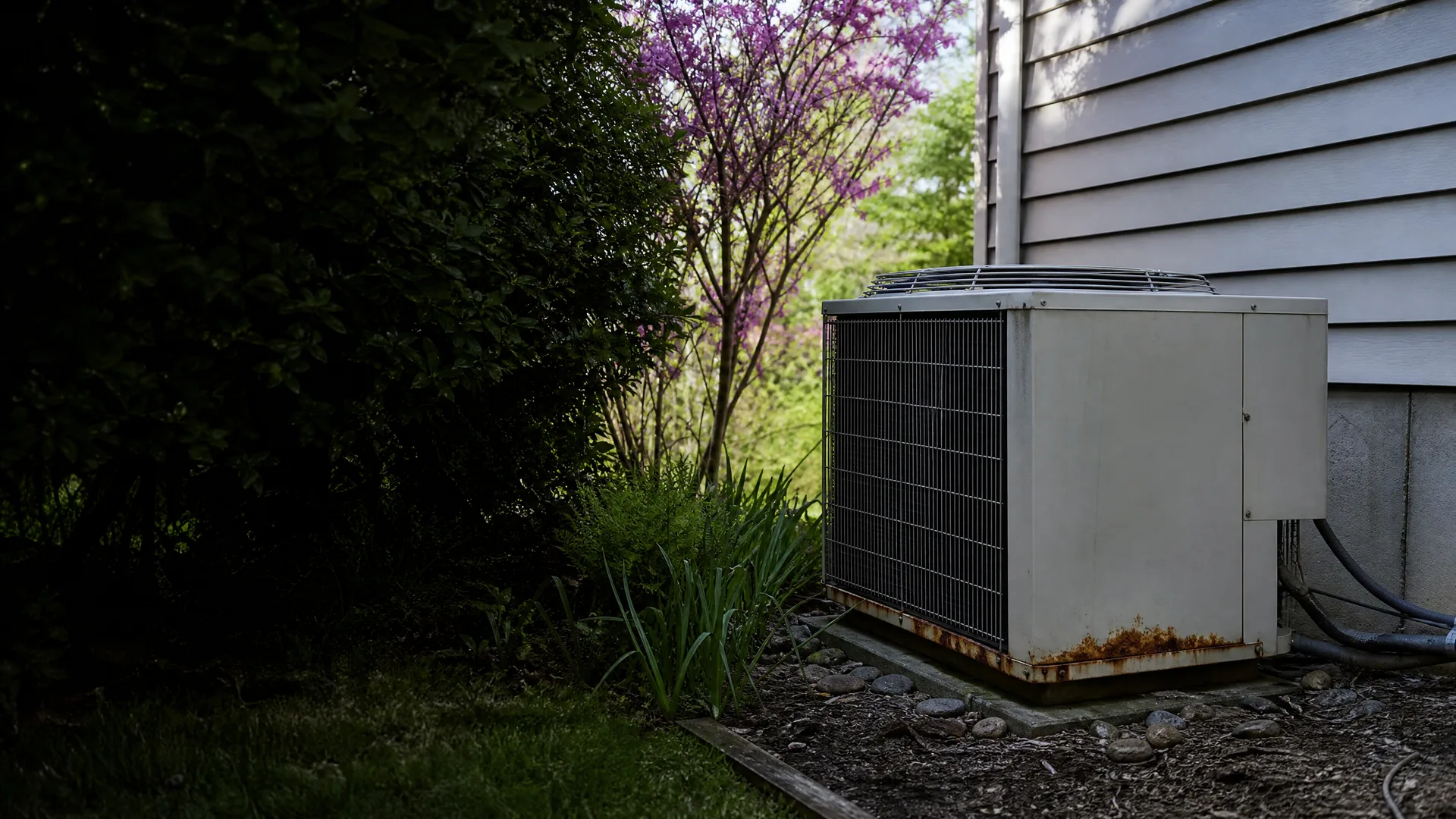
You're out in the side yard in March, coiled hose still looped on its hook from last fall, and you crouch down to check the outdoor unit before the warm weather makes you forget about it again. Rust has crept along the base, a thin orange line where the metal meets the pad. The fan isn't running. Nothing's running, it's sixty degrees out and the house doesn't need it. You run a thumb along the rust, wondering how long it's been there and whether it was there last spring too. You stand back up, leave it for now, and head back inside, already thinking about whether it'll still be doing its job come December.
A heat pump can keep up with an Indiana winter when it's sized for your house and backed up with a way to bring in extra heat on the coldest nights. That's the whole answer. The unit itself isn't the weak point, the sizing and the backup are. If what you've read here sounds like your system, or like the one you're about to buy, you don't have to work out the rest on your own. Send in what's going on and a contractor who handles heat pump installations in Indiana will take it from there, checking your house, your ductwork, and what backup makes sense before anything gets put in. You've done the part that takes thinking. The next part is just handing it off.

It costs nothing to send, and you don't have to hire anyone.
A heat pump that's never been checked against your house's actual heat loss is a guess, not a plan. Send the request and a contractor can look at what you have and tell you where it stands before the next cold snap tests it.