





A row of illuminated two-story brick houses with front porches and mature trees photographed at twilight.

Heat Pump Repair in Lafayette, IN

Tell us about the job

Takes about a minute. No obligation.

RepairHeat PumpTippecanoe County, IN
Step 1 of 2

What ZIP code is the job in?

A heat pump here switches jobs twice a year, and both switches are when trouble shows up. May is when the system shifts to cooling, and September is when it shifts back to heat. If a part was already worn, that first real demand is what makes it fail, not the weather itself. A heat pump that struggled last September often struggles again this September, because whatever was wearing on it is still there. Getting it looked at before the switch catches the weak part before it has to carry a full season.

8 months
October through May, your system heats
3 months
June through August, it cools
21°F
the average winter night it heats against
83°F
the average summer afternoon it cools against
Isometric illustration of a cutaway single-story house showing interior ductwork and an air handler connected by lines to an outdoor condenser unit on a pad beside the building.
Your system heats October through May and cools June through August.

NOAA nClimDiv, 1991–2020 normals

Tippecanoe County sits in zone 5A, a cool climate where heating does more work than cooling over the year.

A heat pump here has to handle real winter cold, but that's what it's built for, so a breakdown points to a worn part, not the climate.

A heat pump that's struggling runs longer to do the same job, and power here isn't cheap.

Power here costs 15.37 cents per kilowatt-hour
83 damaging wind events from 2015 to 2024
26 hail events from 2015 to 2024

A struggling heat pump keeps costing you until it's fixed

A unit that's running longer than it should isn't resting on the days it's mild. It's drawing power every time it cycles, and a worn part doesn't heal itself between runs. Getting the actual cause found now stops the extra draw instead of letting it ride through the rest of the season.

Find a contractor
A gray heat pump condenser unit mounted on a concrete pad against the gray lap-siding exterior wall of a house.

A Newer System Has More Life Left to Save

Half the homes in Tippecanoe County were built in 1987 or later. If yours is one of them, the heat pump itself may still be the original, or it may be a replacement, but either way a newer house usually means newer ductwork and a system sized properly for it from the start. That matters because a heat pump fighting bad ductwork wears out faster than one that isn't. Age alone doesn't tell you much about why it's acting up now, but a unit that isn't old yet is usually worth repairing rather than replacing. Whatever's wrong is likely one part doing its job poorly, not the whole system reaching the end.

What a failing heat pump sounds and feels like

Warm air blowing in winter when you expect it to feel hot, or air that never quite reaches a comfortable temperature, points to the reversing valve or a refrigerant leak. Ice building up on the outdoor unit and staying there instead of clearing during the defrost cycle means that cycle isn't working right. Short cycling, where it kicks on and off every few minutes instead of running a full cycle, usually traces back to a bad thermostat sensor or a compressor that's struggling to start. A clicking or buzzing sound when it tries to start and fails is often a failing capacitor or contactor.
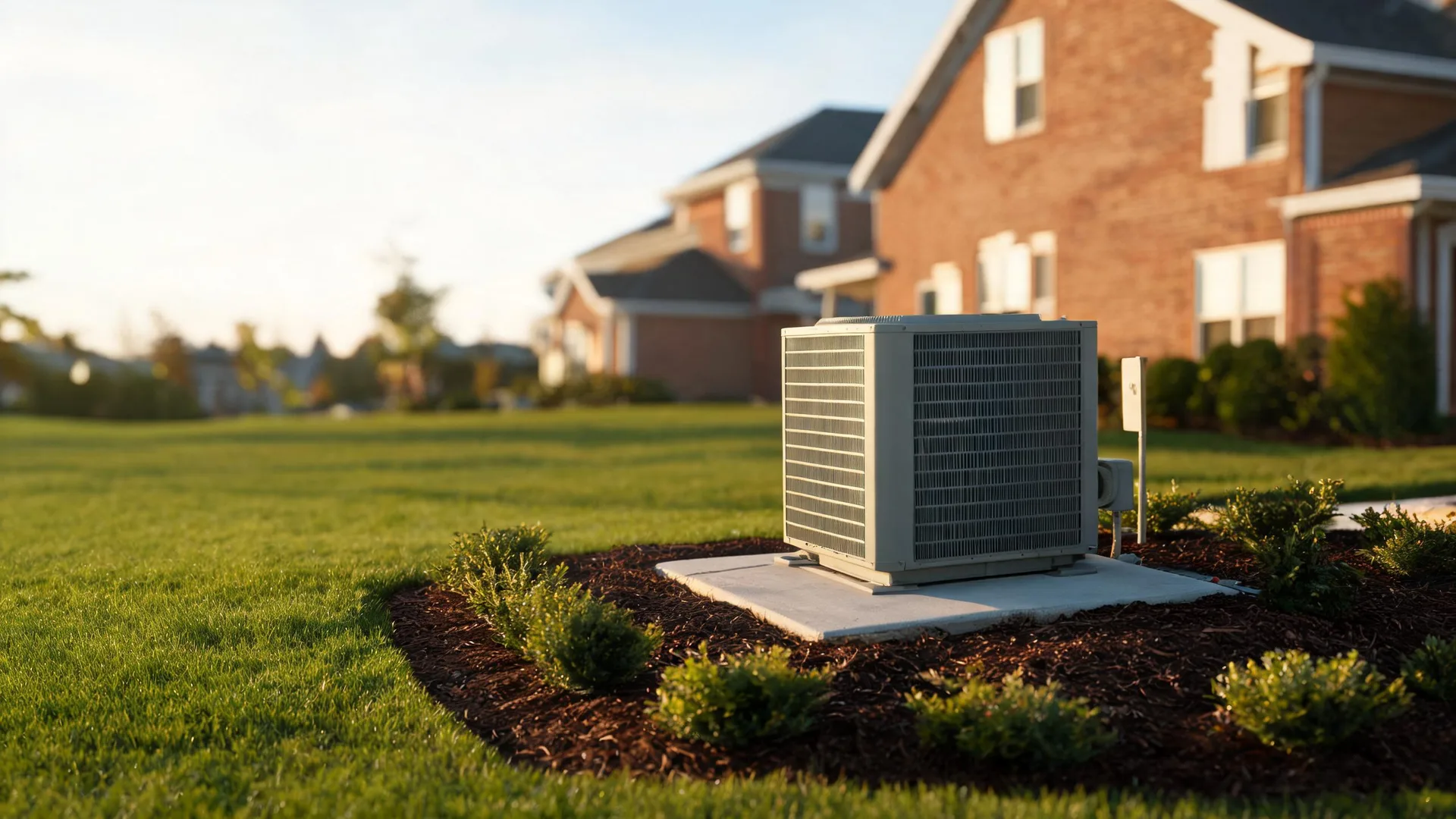
What to do once you notice it

None of these signs mean the whole system is done. Most of them are one part failing while the rest of the unit is fine. The risk is in waiting: a compressor working against a bad capacitor or a stuck reversing valve is being asked to do more than it should, and that shortens its life. Getting a technician to diagnose the actual part before it drags down the compressor is what keeps a small repair from turning into a bigger one.

Most heat pump failures trace back to a handful of parts, and the compressor is rarely the first one to go. A capacitor weakens over time and stops giving the compressor and fan motors the jolt they need to start, so the unit hums or clicks instead of running. A contactor's contacts pit and burn from years of making and breaking the circuit, until it stops closing reliably. The reversing valve, which is what lets the system switch between heating and cooling, can stick in one position, often from a solenoid that's failed or debris caught inside it. Refrigerant doesn't get used up, so a low charge almost always means a leak somewhere in the line set or coil, not normal wear. Outdoor coils get coated in dirt, leaves and ice over time, and a coil that can't transfer heat properly forces everything downstream to work harder. Each of these is a single part doing its job poorly, and replacing that one part is usually enough to put the system right.

A repair makes sense when the compressor is still good, since that's the part that costs the most and lasts the longest. Everything else in a heat pump, the capacitor, the contactor, the reversing valve, the sensors, is built to be swapped out on its own without touching the compressor at all. So the real question isn't how old the unit is, it's whether the compressor is still running the way it should. A technician can tell this by checking how it draws power and whether it's getting the refrigerant charge it needs. If the compressor is sound, fixing the failed part is usually the right call, and the system runs like new because the part that matters most still has its full life ahead of it. A compressor that's failing on its own, without some other part dragging it down, is a different conversation.