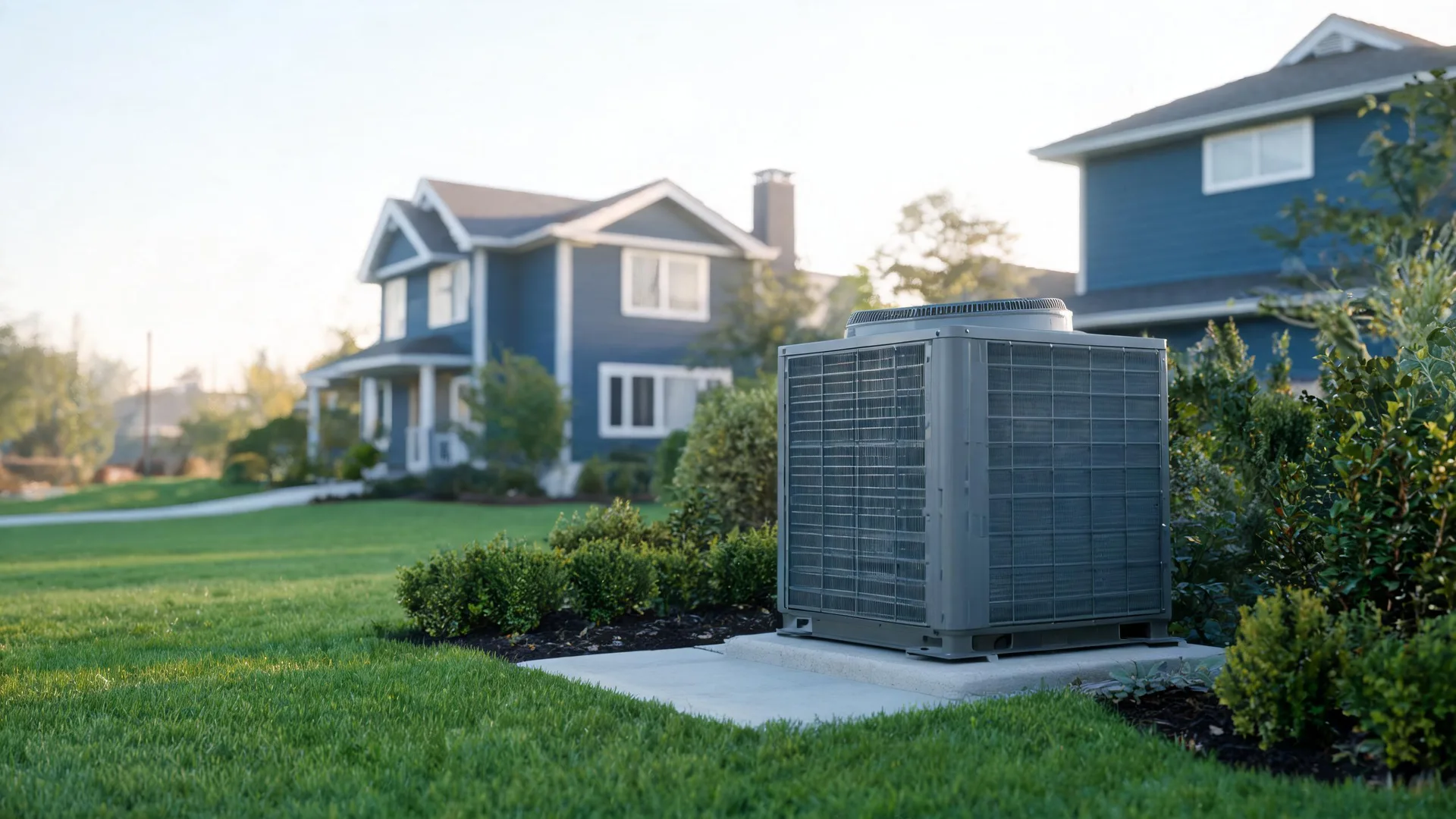
An outdoor air conditioning condenser unit mounted on a concrete pad next to a residential house at sunset.

Heat Pump Repair in Carmel, IN

Tell us about the job

Takes about a minute. No obligation.

RepairHeat PumpHamilton County, IN
Step 1 of 2

What ZIP code is the job in?

Winters here ask a lot of a heat pump

Carmel sees overnight lows averaging 22°F through December, January and February. A heat pump has to work harder to pull heat out of cold outside air, and that's the stretch when a weak system tends to show its problems.

That points to a handful of likely causes

A heat pump struggling in cold weather is usually low on refrigerant, stuck in defrost, or dealing with a failing reversing valve. Those are known problems with known fixes, and a contractor can narrow it down on the first visit.

8 months
October through May, your system heats
3 months
June through August, it cools
22°F
the average winter night it heats against
83°F
the average summer afternoon it cools against
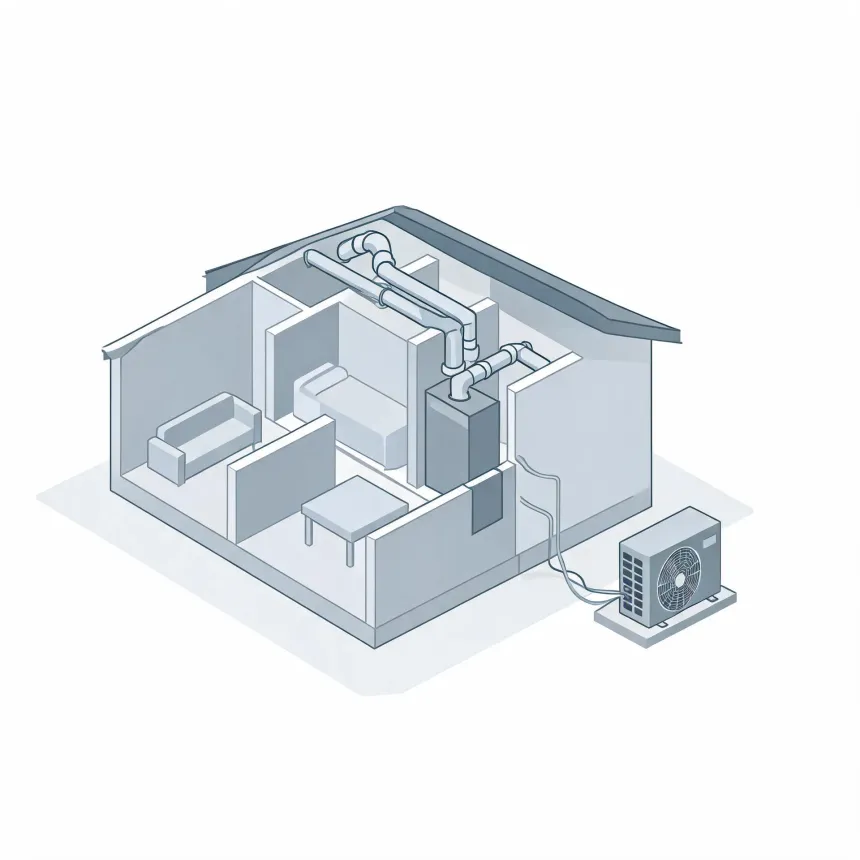
Isometric line illustration of a cutaway house showing interior rooms with furniture, ceiling ductwork connected to an indoor air handler, and a line running outside to an outdoor condenser unit.
Your system heats October through May and cools June through August.

NOAA nClimDiv, 1991–2020 normals

Heat pumps in Hamilton County run from October through May.

A heat pump that's going to fail usually does it in October, when the cold first asks something of a part that was already weak.

Half the homes in Hamilton County date to 2001 or later

Half the homes here were built by 2001
69 damaging wind events from 2015 to 2024
53 hail events from 2015 to 2024

Indiana electricity runs 14.77 cents per kilowatt-hour, higher than a lot of the country pays. A heat pump that's losing refrigerant or stuck in defrost draws more power than one running right, and it keeps drawing it every day until someone finds the actual problem. A bad reversing valve or a low charge doesn't fix itself. It just shows up on the next bill, and the one after that. Worth getting looked at soon rather than letting it run that way.

This is a problem contractors see all the time

Hamilton County sees its share of hail, wind and winter storms, but nothing here runs harder on a heat pump than normal. If yours is acting up, it's almost always the same handful of causes a contractor sees everywhere else too, and they're used to finding them fast.

Find a contractor
A man in a dark long-sleeved shirt and brown work pants carries a worn canvas tool bag up wooden porch steps toward a red-orange front door, with a potted shrub beside the entry.
A gray outdoor HVAC unit mounted on a concrete pad beside a house with gray lap siding and a stone foundation.

A system this age is still worth fixing

If your heat pump came with a newer build here, repair is the better bet before replacement. A system that age hasn't put in enough years to justify tearing it out over a bad reversing valve or a low charge. Get the actual cause found before anyone talks about putting in a new one.

The reversing valve wears from the inside

Every time a heat pump switches between heating and cooling, the reversing valve slides to redirect refrigerant flow. That sliding happens thousands of times over the unit's life, and the seals inside wear a little more each time. A valve that's stuck or leaking internally often still runs, just poorly. The system blows air that isn't as warm as it should be, or it gets stuck in one mode and won't switch.

A slow refrigerant leak looks like something else

Refrigerant doesn't get used up. If a heat pump is low, it's leaking, usually at a joint, a coil, or a fitting that's corroded or vibrated loose over time. The symptoms are easy to blame on other things, like weak heat or ice building up on the outdoor coil. A contractor checks the charge and finds the leak before adding refrigerant, because topping it off without fixing the leak just means doing it again.

Most calls start with something the homeowner can see or hear. Air blowing that is room temperature instead of warm. Ice on the outdoor unit that doesn't clear during the normal defrost cycle. A system that runs constantly without catching up, or one that short cycles on and off every few minutes. Sometimes it's a sound. A hard clunk when the system switches between heating and cooling, or a buzz from the outdoor unit that wasn't there before. Any of these is worth a call. Left alone, the system keeps running in a way that wears on the parts around whatever failed first.

Deciding whether to fix a heat pump or replace it usually comes down to what actually broke. A failed capacitor, a bad contactor, a blower motor, these are normal wear items, and replacing one doesn't say much about the health of the rest of the system. A compressor is different. It sits at the center of the refrigerant circuit, and when it fails, the labor to replace it plus the cost of the part itself starts to close in on what a new system costs. The other thing worth asking is how the system has been running overall, not just this one time. A unit that's needed a handful of unrelated repairs over the past couple years is telling you something different than one that's been solid until now and just tripped on a single part. A contractor can look at the compressor, the coils, and the refrigerant circuit and tell you which kind of situation this is.