








Heat pump not cooling in Muncie, IN

RepairHeat PumpDelaware County, IN
Step 1 of 2

What ZIP code is the job in?

A heat pump that won't cool usually comes down to one of a few things. The outdoor unit might be caked with dirt or grass clippings, which blocks airflow over the coil and stops the system from moving heat out of your house. The reversing valve, the part that switches the system between heating and cooling, can stick in heating mode, especially after a hard winter. Low refrigerant from a slow leak will also leave it blowing warm, since the system needs the right charge to carry heat at all. Thermostat settings matter too, since some models need to be set to cool rather than auto to force the switch. Muncie summers get humid enough that a heat pump working at half capacity still runs constantly and barely keeps up, so this isn't something to leave for a mild stretch of weather. A contractor can check the valve and the charge and tell you which one it is.

Why won't your heat pump keep up in Muncie?

  • Winter nights average 22°F

    Nights here average 22°F in December, January and February, and a heat pump works hardest when it's that cold outside.

  • Heat runs October through May

    Heat runs October through May here, about eight months. That's a long stretch for one system to carry alone.

  • Cooling runs June through August

    Cooling only runs June through August here. When summer finally gets sticky, you need the switch over to work right.

NOAA nClimDiv 1991-2020

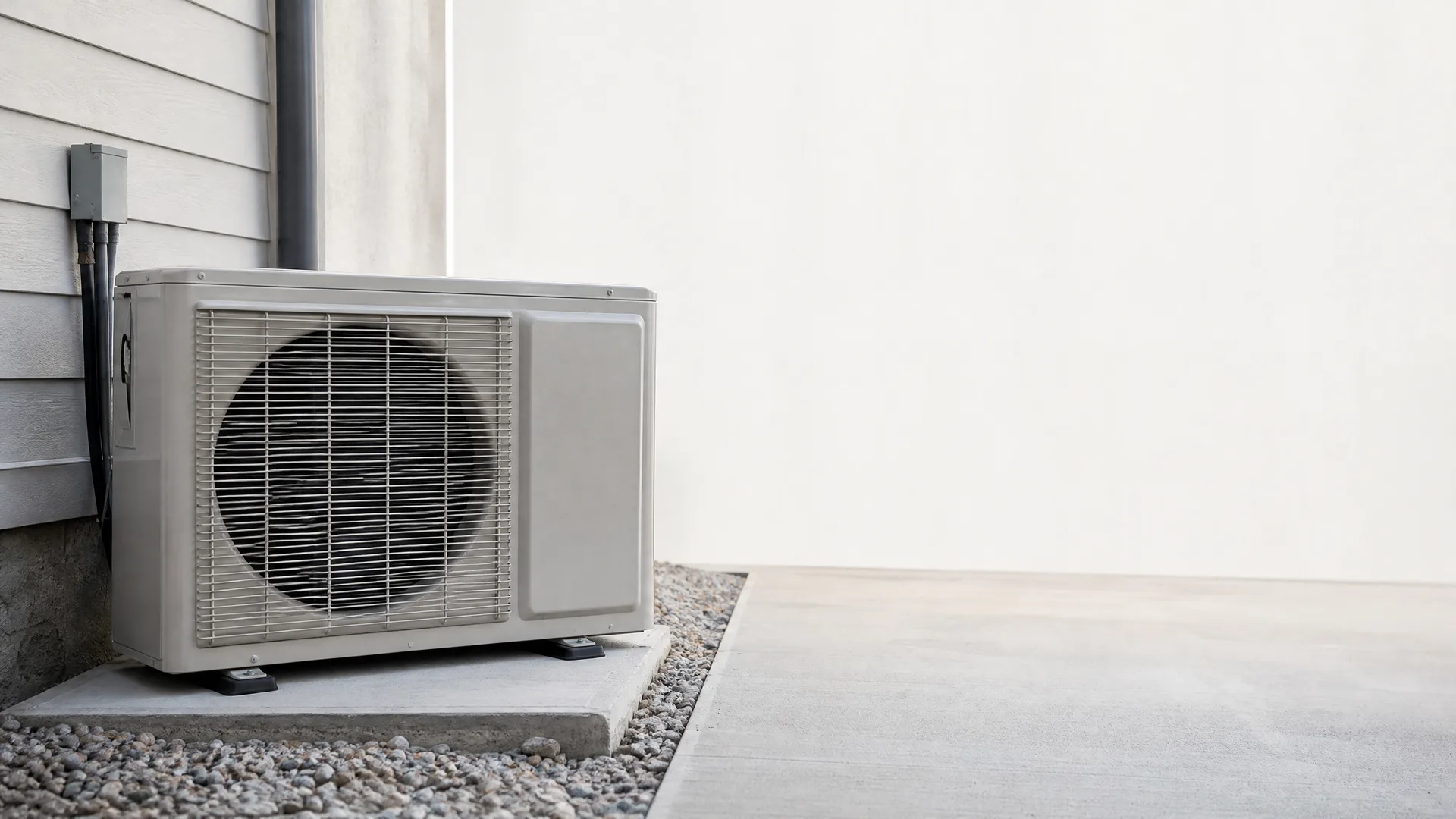
An outdoor heat pump condenser unit on a concrete pad beside a light-colored lap-sided wall, with an electrical disconnect box and conduit above it and gravel next to a concrete walkway.

The outdoor unit looks fine

You check the outdoor unit and the fan is spinning, the coil looks clean, nothing is frozen over. The breaker hasn't tripped. From outside, everything looks like it should work. But warm air is still coming through the vents instead of cool air. That points away from the easy stuff, dirt on the coil or a blocked panel, and toward something inside the system itself, like the reversing valve or a refrigerant leak.

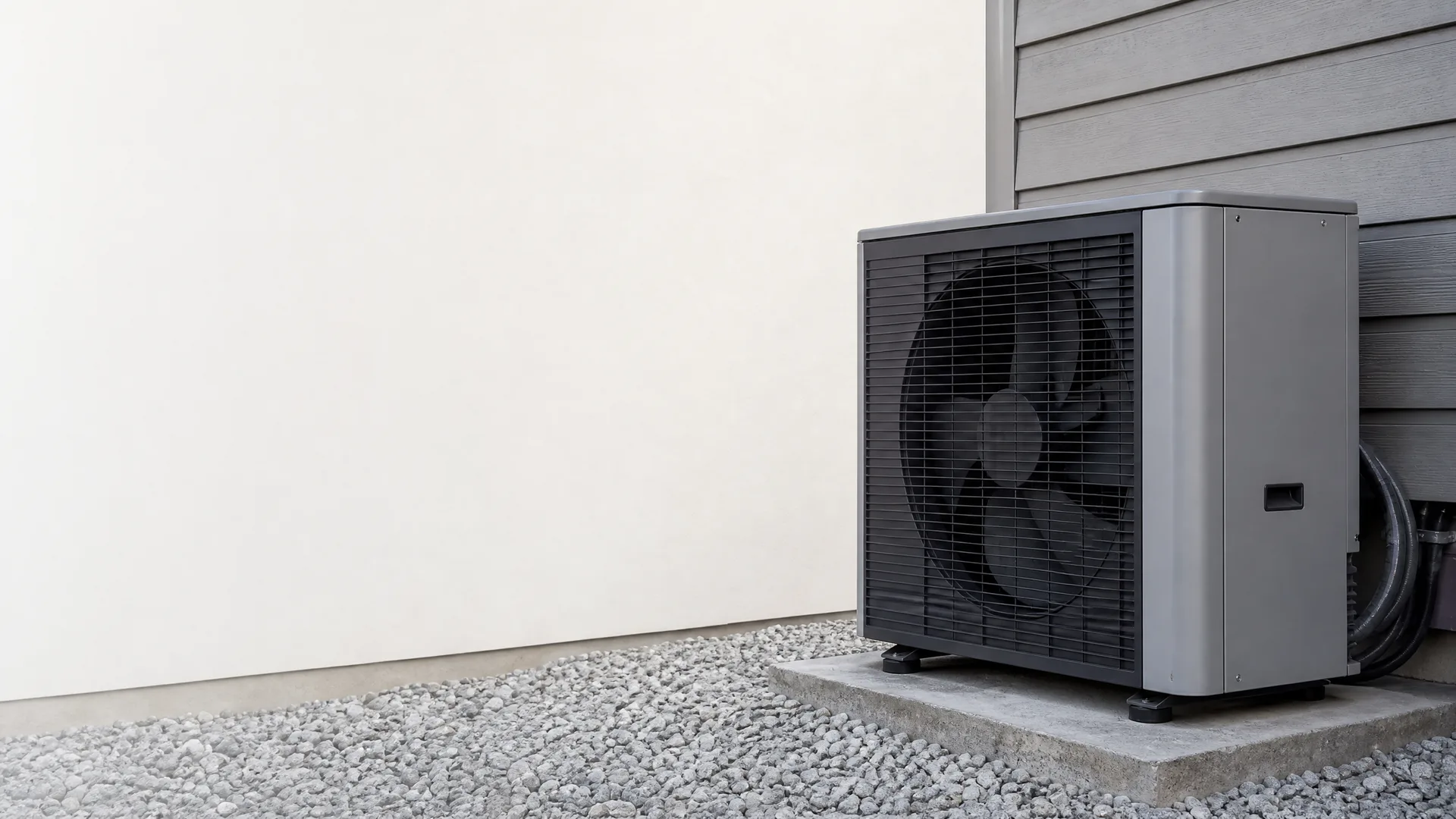
A gray outdoor heat pump unit with a large fan grille sits on a concrete pad beside a house with horizontal siding, surrounded by gravel and next to a plain light-colored wall.

The air coming out is warm

Hold your hand up to a vent and the air is room temperature or warmer, not cool. If this is happening on a hot afternoon, the system isn't just struggling, it's not cooling at all. A dirty filter or a closed vent somewhere in the house can cut down how much air moves, but it won't turn cool air into warm air. Warm air out of every vent usually means the problem is at the unit itself.

A woman stands in the open front doorway of a single-story house with stone and wood siding while a man in a dark polo shirt and cap walks toward it along a concrete path.

Your house tells you before you check the thermostat

You notice it in the rooms farthest from the unit first. The air coming out of the vents feels like it's barely moving, or it's room temperature instead of cold, and the house holds onto heat from the day before. Run it long enough in that state and the indoor coil can ice over, which makes the problem worse instead of better. Meanwhile the system keeps cycling, trying to hit a setpoint it can't reach, and your power bill reflects that effort even though your house doesn't feel any different.

A heat pump that's struggling but still running is easy to put off, since nothing's actually broken yet. But a system working that hard with Muncie summers ahead of it is worth having looked at before it quits outright on a 90 degree day. Once you send in what's going on, the rest isn't on you. A contractor who handles this equipment gets your information and reaches out to sort out what's actually wrong.

Interior corner of a living room with a sheer-curtained window, a light wood console table holding a vase of greenery and a shallow bowl, a woven basket on the lower shelf, and a blurred upholstered sofa and dark wood table in the foreground.
A bearded man in a navy long-sleeve shirt sits smiling on a gray sofa in a living room, with a bowl of popcorn on a side table in the foreground and a shelving unit, potted plant, and kitchen area behind him.
A smiling man in a navy long-sleeved shirt reclines on a gray sofa in a living room, with a wooden bowl of popcorn in the foreground and shelves and a potted plant behind him.
A smiling man in a dark green sweater sits on a tan leather sofa in a dimly lit living room, with a bowl of popcorn in the foreground and a kitchen area blurred behind him.
A smiling man in a dark navy sweater sits on a light sofa in a living room, with a glass bowl of popcorn on a wooden coffee table and bookshelves behind him.

A pro who works on heat pumps

After you send the request, you're done searching.

No charge to send it. You decide if you hire them.

Why the reversing valve sticks

The reversing valve switches the system between heating and cooling by redirecting refrigerant flow. It moves on a signal from the thermostat, and the slide inside it can stick in one position after months of sitting idle. A heat pump that spent the winter heating your house may have gone eight or nine months without that valve ever switching the other way. When summer comes and you call for cooling, the valve tries to move and doesn't, so the system stays in heating mode no matter what the thermostat says. That's why you can have a fan running, a compressor running, and still get warm air through the vents.

Refrigerant doesn't get used up

A heat pump holds a fixed charge of refrigerant that circulates in a closed loop. It doesn't burn off or wear down with use the way fuel does. If the level is low, the only way that happened is a leak somewhere in the line set, the coil, or a fitting. Low refrigerant shows up as warm air, ice on the outdoor coil even in summer heat, and a compressor that runs long stretches without the house ever catching up to the thermostat setting. A contractor checking this finds the leak first, repairs it, then brings the charge back to what the system's rating plate calls for.

An outdoor air conditioner condenser unit on a concrete pad beside a house with horizontal vinyl siding, with refrigerant lines and an electrical disconnect box on the wall and dry leaves on the ground.
Before you get your heat pump repair
A gray outdoor condenser unit sits on a concrete pad beside a house with horizontal lap siding, with a wall-mounted disconnect box and refrigerant lines, mulched beds and a shrub nearby, and a concrete walkway in the foreground.
After you get your heat pump repair

Calling now, in the heat

You call when the house is already warm and you want it fixed today. That's reasonable in a Muncie summer, when a stuck reversing valve or a dirty outdoor coil can leave a house sitting at 80 degrees for days. The tradeoff is you take whoever can come first, and if the problem turns out to be a refrigerant leak or a failed compressor, you may be back to square one with a second call. Getting matched with a contractor still means someone has to diagnose the system before anything gets fixed, same as it would have anyway.


Waiting for a cooler stretch

Some of this still shows up on a mild day, air that's barely moving or a house that holds heat longer than it should. Calling before a heat wave hits means a contractor isn't choosing between your job and three others just like it. It also gives more room to track down the actual cause, whether that's the reversing valve, a low charge, or something in the outdoor unit, instead of patching the one thing that gets the air moving again. The house stays less comfortable in the meantime, which is the real cost of waiting.

A woman in a dark teal knit sweater reclines on a sofa with eyes closed and a slight smile, covered by a gray fleece blanket, with a lit table lamp, potted plant, and framed picture behind her.
A smiling man with gray hair and a beard wearing a navy crewneck sweater sits at a dinner table with wine glasses, bowls of food, and lit candles, with a lamp, plant and window behind him.

Where this leaves you

  • A heat pump blowing warm air in a Muncie summer usually traces back to a dirty outdoor coil or a stuck reversing valve.
  • Checking the breaker, the thermostat setting and the outdoor unit for debris rules out the simplest causes before anything else.
  • A system that looks fine outside, fan spinning, coil clean, can still be stuck in heating mode or low on refrigerant.
  • Waiting it out tends to cost more the longer a house sits at 80 degrees with no cooling.
  • Submitting the form is the last step on your end; a contractor takes it from there.
  • Once you send the request, the search for who to call is no longer something you have to carry.

A heat pump that stops cooling in a Muncie summer almost always comes down to the same handful of causes. Dirt on the outdoor coil, a reversing valve stuck in heating mode, a refrigerant leak, or something simple like a tripped breaker or a thermostat set wrong. You can rule out the easy ones yourself by looking. The harder ones need a gauge set and a trained eye, because a system can look completely normal from the outside, fan turning, coil clean, breaker fine, and still be the reason your house is sitting at 80 degrees. That gap between what you can see and what's actually wrong is why this isn't a wait-and-watch problem. The longer a house holds that heat, the more uncomfortable the rooms farthest from the unit get, and the valve or the leak behind it doesn't fix itself with time. What changes once you send the request is that the search stops being yours to run. You're not the one calling around, checking who's available, explaining the problem over and over to find someone who knows heat pumps instead of just furnaces. A contractor who works on these systems gets your information and reaches out to you. The diagnosis, the explanation of what's actually stuck or leaking, the fix itself, that's their job once they're on it. Yours was just getting the house tells pointed at the right system, and that part is done once you submit.

Sunlit corner of a room with a potted leafy tree in a gray planter, a wooden bench with a cushion and knitted throw, a linen curtain beside a window, wood flooring and a woven rug.
Sunlit entryway with a dark jacket hanging on a wooden wall hook, a wooden bench with a woven pillow and fringed throw, brown leather shoes on a jute mat, and a glazed wooden front door at right.
A wooden console table with a lower shelf holds a pale ceramic vase with olive branches and a dark shallow bowl, with a woven basket containing a cream fringed throw underneath, beside a doorway and wood floor.
A small olive-like tree in a round stone-colored planter stands in a corner of a room with wood flooring, a black-framed window showing trees outside, and wood cabinetry on the right lit by warm light.
A speckled ceramic mug and a wooden bowl sit on a rustic wooden side table beside a beige sofa with a knit throw, with leafy green branches in a glass vase behind.

Get your heat pump to the right pro

Send the request today and stop worrying about who to call.

Request a pro

There's no charge for the request.