

What a heat pump tune-up covers in Indiana

Tune-up, service, or cleaningHeat PumpIndiana
Step 1 of 2

What ZIP code is the job in?

What does a heat pump tune-up include in Indiana?

Your heat pump works harder here than a furnace-only setup would, since it runs for cooling through the sticky Indiana summer and keeps pulling heat duty once fall turns cold. Before you catch a small problem yourself or skip ahead and call someone, it helps to know exactly what a technician checks during a tune-up so you can tell a thorough visit from a rushed one.

A tune-up covers both the outdoor and indoor sides of the system

A technician checks the refrigerant charge, cleans the outdoor coil, and tests the reversing valve that lets the unit switch between heating and cooling. Indoors, they check the indoor coil, the blower motor, and the thermostat settings, and they'll replace or clean the filter if it's due. They also check electrical connections and the capacitor, since a weak one shows up as a system that struggles to start. In Indiana, where the same unit runs air conditioning through summer and heat through winter, this matters more than it would for a straight AC. A part that gets checked once a year somewhere else is doing double duty here, switching modes through all four seasons instead of running one way and sitting idle the rest of the time.

A beige outdoor air conditioning condenser unit on a concrete pad beside a house with horizontal vinyl siding, with refrigerant lines and a disconnect box on the wall, surrounded by dark mulch and a green shrub at left.

Running the way it should

The outdoor unit cycles on, pulls air through the coil, and shuts off again without any fuss. The fan turns freely, the pad underneath sits level, and the disconnect box on the wall stays untouched between visits. This is what a maintained heat pump looks like most of the year.

An outdoor air conditioner condenser unit on a concrete pad beside a house with horizontal lap siding, with a shrub to the left, bare dirt in front, and conduit and a metal disconnect box on the wall.

Running into trouble

The unit short cycles, or it runs long and never quite satisfies the thermostat. Ice shows up on the coil in weather that shouldn't allow it. Left alone, a problem like this tends to show up again in the power bill before it shows up as a breakdown.

Is your heat pump telling you something right now

Walk past the outdoor unit and listen. A rattle, a hum that wasn't there before, or ice forming on the coil in weather that shouldn't allow it all mean something's off. Inside, the air from the vents might feel cooler than you'd expect from a heat pump, or the system might run long stretches without the house feeling any different. You may notice the outdoor fan struggling to turn, or the unit cycling on and off more than it used to. None of this means it's broken yet. But a heat pump that's straining through an Indiana summer or working overtime once the weather turns cold is a system headed toward a breakdown, and toward a power bill that climbs before you know why.

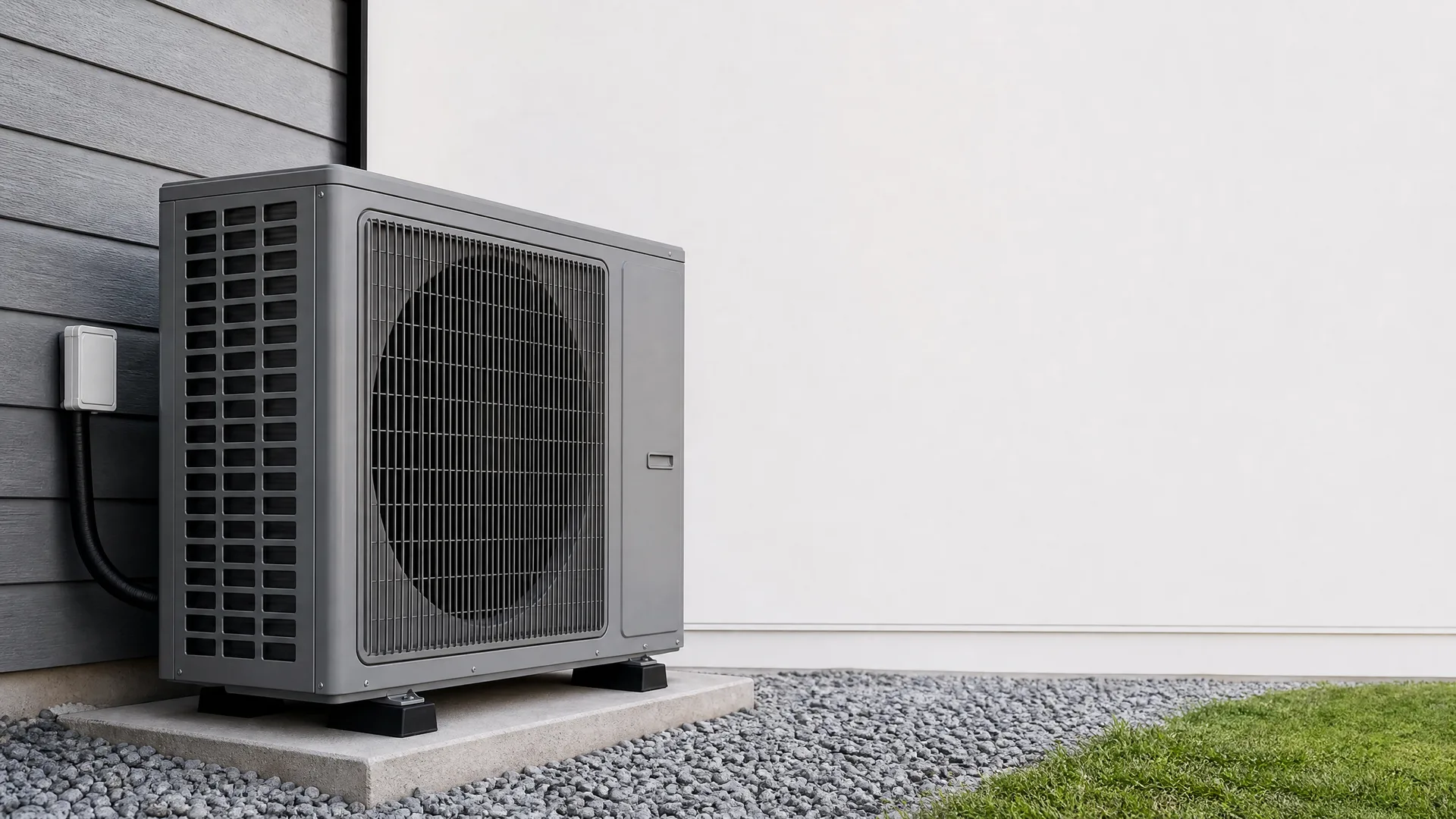
A gray outdoor heat pump unit on a concrete pad beside a house with dark horizontal siding and a plain white wall, surrounded by gray gravel next to a strip of grass.

Refrigerant charge and the coil

A heat pump moving the wrong amount of refrigerant has to run longer to hit the same temperature, and that shows up on the electric bill before it shows up as a breakdown. Checking the charge against what the manufacturer specifies, and cleaning the outdoor coil of grass clippings and leaves, is part of why a tune-up matters more here than it would on an AC that only runs through summer. Dirt on that coil blocks the heat exchange your system needs for both jobs it does.

A gray outdoor heat pump unit on a concrete pad over gravel, beside a house with horizontal siding and an adjoining light stucco wall.

The reversing valve gets checked too

Central air conditioners don't have one of these, but a heat pump does, since it's the part that switches the system between cooling your house and pulling heat from outside air in winter. If it sticks, the unit can get stuck in one mode or lose efficiency switching between them. A tune-up includes cycling it to confirm it shifts cleanly, along with a check of electrical connections and the capacitor that gets the compressor started.

Power costs 15.96 cents per kilowatt-hour statewide

At 15.96 cents a kilowatt-hour, every extra minute your heat pump runs to make up for a dirty coil or a low charge lands on your bill. A unit running the way it should keeps that cost where it belongs.

EIA-861 2025 statewide residential average

Skip the tune-up and the heat pump still runs, most days. It just runs longer to do it, pulling more power through a muggy July and losing a step on the coldest mornings before spring.

Get it looked at once and small things get caught while they're still small: a coil that's starting to cake up, a charge that's drifted low. That's cheaper to fix than what it turns into.

An outdoor air conditioning condenser unit on a concrete pad beside a house with horizontal siding above a brick foundation, with a flexible conduit running to a wall-mounted disconnect box.
Before you get your heat pump maintenance
An outdoor condenser unit on a concrete pad beside a gray lap-sided house, with an electrical disconnect box and conduit on the wall and shrubs with mulch to the right.
After you get your heat pump maintenance
A gray outdoor condenser unit of an air conditioner or heat pump sits on a concrete pad beside a house with horizontal lap siding, with a wall-mounted disconnect box and conduit above it, mulched beds, shrubs and grass nearby.

Stop chasing a heat pump pro

One form instead of hunting for a pro who does heat pump tune-ups.

Send the form and the heat pump tune-up stops being something to remember.

I'm done searching

No charge to send it. You decide if you hire them.

Spring Tune-Up or Fall Tune-Up

Spring tune-up

  • Checks the charge before the first hot stretch hits, so the coil isn't working against a shortage once the AC side has to run every day.
  • Catches a weak capacitor or worn contactor while the system is still cycling on its own schedule, not during a 90-degree week.
  • Gets the outdoor coil cleaned before pollen and cut grass have a full summer to pack into the fins.
  • Confirms the condensate drain is clear before the humidity load picks up and the unit starts pulling more water out of the air.
  • Leaves you with a unit that's already proven itself before the summer actually tests it.

Fall tune-up

  • Checks the reversing valve before the system needs to switch from cooling duty to pulling heat out of cold outside air.
  • Catches frost that's building up wrong before the first morning it has to defrost on its own in freezing weather.
  • Clears debris from the outdoor unit before fallen leaves and yard cleanup pile up against the cabinet all winter.
  • Confirms the auxiliary or backup heat kicks in correctly, since that's the part doing the work on the coldest Indiana mornings.
  • Gives the unit a check right before the stretch where it has to work hardest to keep up with the cold.
A smiling man in a dark green shirt over a white t-shirt sits at a kitchen counter with a dark mug, looking off to the side, with shelves, plants and a bright living area behind him.
A man in a gray long-sleeve waffle-knit shirt smiles and looks off to the side in a kitchen with open shelving, a refrigerator, a wooden sideboard with a potted plant, and a glass door to the right.
A man in a dark green ribbed sweater stands smiling and looking off to the side beside a stone kitchen counter with a ceramic mug, with a dining table, pendant lights, and large windows in the background.
A bearded man in a gray long-sleeve shirt stands smiling and looking off-camera beside a kitchen counter with a white mug, with a living room, fireplace and wall-mounted television behind him.
A gray outdoor condenser unit on a concrete pad beside a light-green sided house, surrounded by mulch, ornamental grasses and a shrub, with mowed lawn in the foreground.
The pad is clear, the fins are clean, and the fan spins without ticking or dragging.
A gray outdoor air conditioning condenser unit on a concrete pad beside a house with light vinyl siding, with a gray electrical disconnect box and conduit on the wall to the right.
Dirt packed into the fins makes the unit pull harder for the same degree of cooling or heat.
A smiling bearded man in a green t-shirt sits on a gray sofa, looking down toward a device at the bottom of the frame, with a bookshelf and a green plant blurred behind him.
A bearded man in a plaid flannel shirt looks out a window at snow-covered conifer trees, with a steaming ceramic mug on the sill and wooden shelves holding dishes and a plant behind him.

What a tune-up settles

  • A tune-up checks the refrigerant charge, the coil, the capacitor, and the contactor, both sides of the year.
  • Catching a weak part in spring or fall means it gets fixed on a schedule, not during a breakdown in July or January.
  • Skipping it doesn't stop the heat pump from running, it just makes the unit work harder to do the same job.
  • A unit running the way it should keeps your electric bill from carrying the cost of a dirty coil or a low charge.
  • Finding a licensed contractor, calling around, and comparing quotes is work you hand off once you send the form.
  • You explain your heat pump once, and that's the end of your part in finding who does the work.

A heat pump tune-up in Indiana comes down to this: the charge, the coil, the capacitor, and the contactor get checked before summer asks the unit to run every day and again before it carries the house through a cold snap. Whatever runs across both seasons gets looked at twice a year instead of left alone until something quits. That's the whole answer. A capacitor going weak, a coil packed with dirt, a charge running low, these get found while the system is still cycling on its own, not during a breakdown with the house at 85 degrees or the heat not keeping up on a January morning. The cost of skipping it doesn't show up as the unit stopping. It shows up as the unit running longer to do the same job, and that extra runtime lands on the electric bill before it lands as a service call. None of this requires you to know what a contactor does or how much refrigerant your unit should hold. It requires finding someone licensed to check it, which usually means calling a few companies, explaining the same thing each time, and sorting through what they quote you. Send the form once and that part stops being yours to do. You explain the heat pump a single time. Someone else takes it from there.

A dark wood cabinet with a paneled door and a ceramic pot of green foliage on top stands in a beige-walled room with white baseboard, a window at left, hardwood floor, and a patterned area rug.
A dark wood glass-front cabinet holding folded towels, woven baskets and a ceramic vase stands in a bathroom corner beside a window, with a potted fern and stacked towels on top and a freestanding tub partly visible at left.
A woven basket holding a green cushion and a cream fringed knit throw sits on a wood floor in a room corner beside a window and a dark wooden cabinet.
Corner of a room with a dark wood cabinet topped by a round vase, a linen curtain at a window, white baseboard, oak plank flooring with sunlight patches, and a woven jute rug in the foreground.
A dark wood sideboard against a pale wall holds a shallow stone bowl and a round ceramic vase with leafy branches, with sunlight from a curtained window falling across the wall, wood floor and woven rug.

Send one request and you're done looking

Fill out one form instead of calling around for a heat pump tune-up.

Hand it over

There's no charge for the request.