A nighttime street view of several illuminated two-story red brick homes with front porches, flanked by a large tree.

AC Repair in Lafayette, IN

Tell us about the job

Takes about a minute. No obligation.

RepairCentral ACTippecanoe County, IN
Step 1 of 2

What ZIP code is the job in?

The capacitor wears out first

The capacitor gives the compressor and fan motor the push they need to start. It weakens with age and heat, and when it goes the unit hums or clicks but the fan won't spin. This is one of the most common reasons an air conditioner stops cold on a hot day.


A dirty system runs itself into trouble

A clogged filter or dirty outdoor coil forces the compressor to work harder than it should. That strain is what wears out compressors and burns out fan motors before their time. Keeping air moving freely through both sides of the system is what keeps those parts alive.

3 months
June through August, your air conditioner is on duty
83°F
the average summer afternoon it cools against
26 hail events
in ten years, and hail bends the fins on outdoor coils
83 wind events
in ten years, and wind drives debris into outdoor units
Isometric illustration of a cutaway house showing interior rooms, an attic furnace with large ducts, and an outdoor condenser unit connected by a line set, on a white background.
Your air conditioner works hardest from June through August.

NOAA nClimDiv, 1991–2020 normals

Summers here run June through August with afternoon highs around 83 degrees.

Three months of real heat is enough to expose a weak capacitor or a dirty coil, nothing more unusual than that.

Half the homes here were built in 1987 or later, so a lot of these AC systems still have years left in them

Half the homes here were built by 1987
Cooling runs June through August
Summer afternoons average 83°F

Running the AC in Lafayette costs what it costs anywhere in Indiana, 14.77 cents per kilowatt-hour as of 2024. That's not a reason a system breaks down. A failing capacitor or a dirty coil will cost more to run right up until it's fixed, and that shows up on the bill before it shows up as a no-cool call. If your electric bill has crept up without a change in habits, that's worth mentioning to whoever comes out. It can point to the same problem that's about to leave you without cold air altogether.

This is a repair, not a mystery

Tippecanoe County sees its share of wind, hail and the odd winter storm, but none of that is what takes down an AC unit here. A weak capacitor or a dirty coil is the usual cause, and it only gets worse left alone. Get it looked at and get it fixed.

Find a contractor
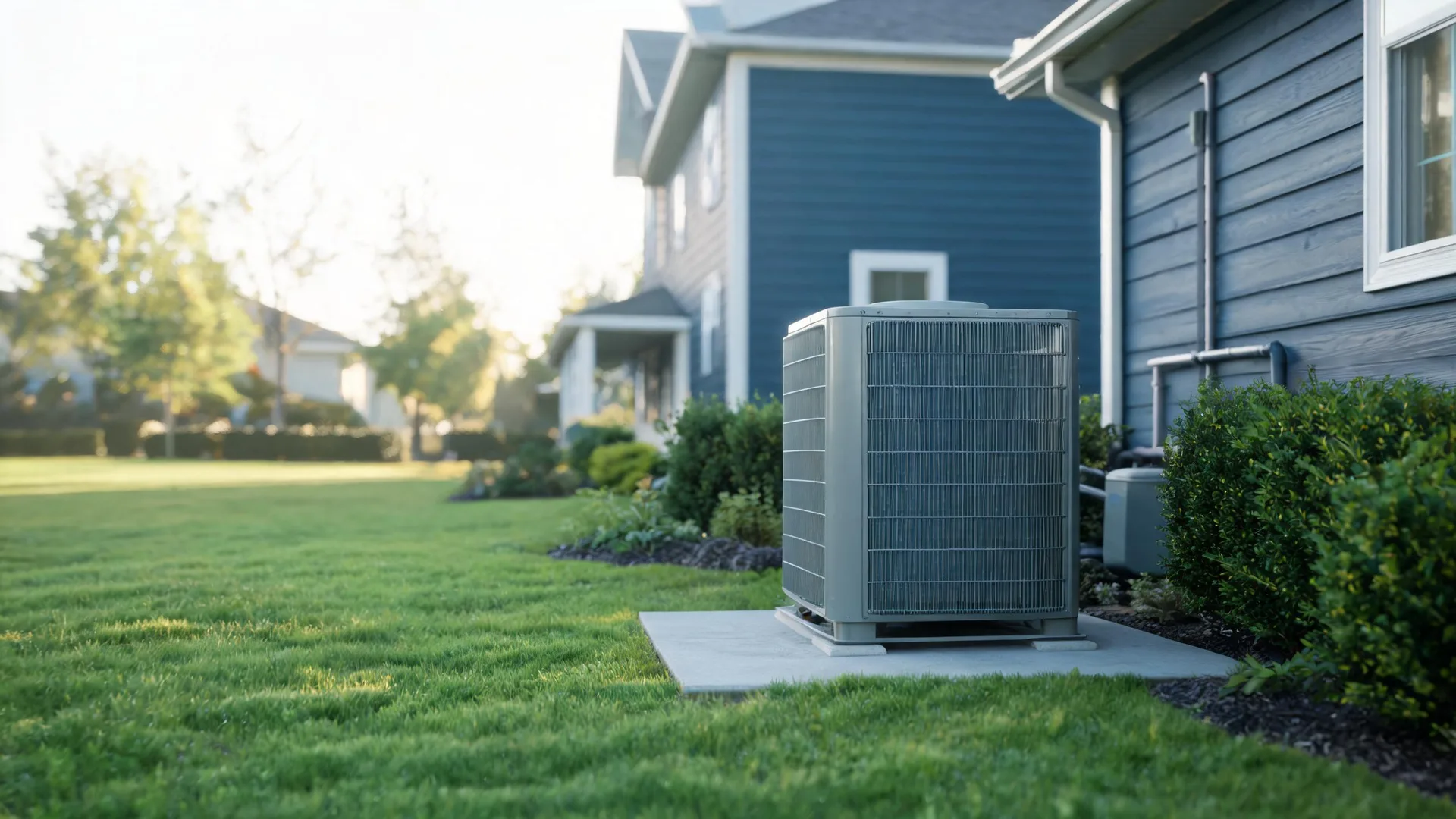
A gray residential air conditioner condenser unit mounted on a concrete pad in an open grass field.

A newer system is worth fixing

Check what year your system went in if it came with the house. A lot of homes here are new enough that the AC is too, and that changes the math on a repair call. Running from day into night all summer doesn't wear out a compressor or coil that still has years ahead of it. It just exposes whatever part was already weak, the capacitor or the coil. Fix that part and a system this age should keep running.

A struggling compressor overheats

When airflow is blocked or refrigerant charge is low, the compressor has to run longer and work harder to do the same job. It builds up heat it can't shed fast enough. Keep running it in that state and the windings can short out, which turns a repair into a full replacement.

A refrigerant leak only gets bigger

A small leak lets the system run low on charge, and running low makes the compressor pull liquid refrigerant it isn't built to handle. That can wash the lubricant out of the compressor itself. The leak doesn't fix itself by running the system more, and the damage it causes along the way doesn't reverse.

Overhead view of an outdoor AC condenser unit on a concrete pad next to a house with a dark shingle roof.

A new air conditioner would save little on running costs in Tippecanoe County, so the repair decision comes down to the unit's condition.

  • A new one at the federal minimum, 13.4 SEER2$230 a year
  • An older air conditioner$250 a year

Estimates for a typical Tippecanoe County home, compared with an older unit built to the previous federal minimum, from EIA household energy data, Indiana fuel prices and NOAA climate normals. Your home will differ.

Repair makes sense when a part like a capacitor or contactor has failed.

Replacement makes sense when the compressor has failed or the system uses R-22 refrigerant, which is no longer made.

A diagnostic visit starts outside at the condenser, checking whether the fan spins freely and the coil is clear of debris. From there it's gauges on the refrigerant lines, checking the charge against what the system is supposed to carry. Electrical readings come next. The capacitor's output, the contactor, the wiring to the compressor all get checked on their own. Inside, the evaporator coil and the airflow across it get checked too, since a problem there can look exactly like a refrigerant issue from outside. None of this takes guesswork. The readings either match what a healthy system should show or they don't, and that's what points to the part that's actually failing.