







A nighttime view of a tree-lined residential street with illuminated two-story brick houses and street lamps.

AC Installation in Zionsville, IN

Tell us about the job

Takes about a minute. No obligation.

New system or replacementCentral ACBoone County, IN
Step 1 of 2

What ZIP code is the job in?

Most houses in Zionsville run on gas heat, and new air conditioning here usually ties into that same setup, a gas furnace moving the air through the ducts while the AC coil handles the cooling. That split system is what most installers expect to find, and it's what most replacement quotes are built around. Electric heat accounts for about a third of homes in the county, and those houses often run on a heat pump or an air handler instead of a furnace, which changes what the AC installation needs to match. If your system came with the house, it's worth checking which setup you have before you start comparing quotes. Gas or electric, the ductwork still has to move the same cold air, so its condition matters as much as the unit itself.

3 months
June through August, your air conditioner is on duty
82°F
the average summer afternoon it cools against
43 hail events
in ten years, and hail bends the fins on outdoor coils
13.4 SEER2
the federal minimum any new unit must meet
Isometric line illustration of a cutaway single-story house showing interior rooms, ducted air handler, ceiling ductwork, and an outdoor condenser unit connected by refrigerant lines.
Your air conditioner works hardest from June through August.

NOAA nClimDiv, 1991–2020 normals

Zionsville only asks for cooling from June through August, with afternoon highs around 82.

A system sitting idle most of the year doesn't need to be the top-tier model to hold up.

Nothing here calls for more than a standard system

Power costs 14.77 cents a kWh statewide
Cooling runs June through August
Summer afternoons average 82°F
Get it done before JuneCooling starts in June here, so May is the month to have it in.

Boone County sits in climate zone 5A, a cool zone where heating carries more of the load than cooling does. That doesn't change what's required on the AC side. Any split-system air conditioner under 45,000 Btu/h installed here has to meet 13.4 SEER2 at minimum, the federal floor for units built from 2023 on. A contractor quoting anything new starts from that number, so the real comparison between quotes is what they're offering above it, not whether they meet it. The installation may also qualify for the federal energy efficiency tax credit, worth looking into before you sign anything.

A standard system is the right call

Pick a system that's built to last, not one built to impress. Reliable and properly sized gets the job done here.

Find a contractor
A man in a cap, dark long-sleeved shirt and brown work pants carries a worn leather duffel bag up porch steps toward an orange front door, with a potted shrub in a terracotta planter to the right.
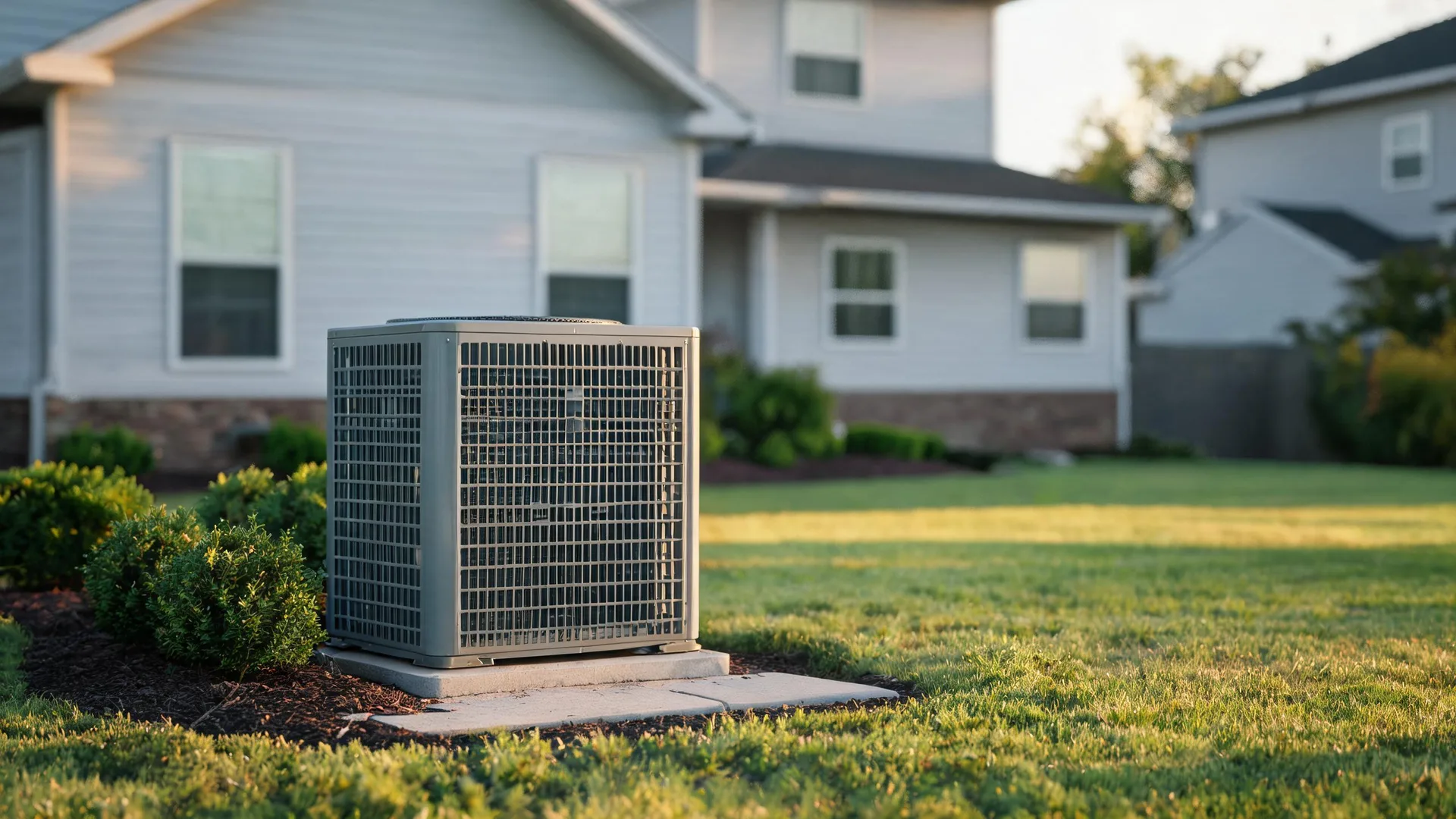
A gray metal air conditioning condenser unit mounted on a concrete pad in a flat grassy field under a partly cloudy sky.

What's actually driving the price

A straight swap costs less because the contractor is connecting a new unit to what's already there, same spot, same line set, same ductwork. Move the condenser, run a new line set, or raise the unit to a new pad, and the labor climbs before the equipment is even counted. Sizing is its own factor. The unit has to match the square footage and layout it's cooling, not just replace whatever was there before. Too big and it short-cycles, turning off before it pulls the moisture out of the air. Too small and it runs constantly without catching up. Electrical matters too. Some homes already have the right breaker and disconnect in place. Others need new wiring run before the unit can go in, and that work isn't optional if the panel can't carry the load. The ductwork gets looked at as well, since a new coil pushing air through leaky or undersized ducts won't cool the house the way the rating on the box suggests. None of this comes down to which brand is on the unit. It comes down to what the house already has and what has to be fixed or built to get the system running the way it's supposed to.

Ask what the warranty actually covers

A compressor warranty and a full parts warranty are not the same thing. Some manufacturers void coverage if the unit wasn't registered within a set window after install, or if the contractor who installed it isn't certified on that brand. Ask what's covered, for how long, and whether labor is included or just the part itself.

Ask what happens if the ductwork can't keep up

A contractor who inspects the ducts before quoting is pricing the job you actually need. One who quotes off the old unit's size without looking at the ducts or the layout is guessing. If a quote comes back lower than the others, ask what it leaves out, not just what it includes.

Aerial view of a residential air conditioning condenser unit mounted on a concrete pad next to a house with vinyl siding and a sliding glass door.

A higher-efficiency unit would save about $30 a year to run in Boone County compared with a new unit at the federal minimum.

  • A higher-efficiency unit$190 a year
  • A new unit at the federal minimum, 13.4 SEER2$220 a year

Estimates for a typical Boone County home, from EIA household energy data, Indiana fuel prices and NOAA climate normals. Your home will differ.

Install day starts with the old unit coming out, the condenser disconnected outside and the coil pulled from the plenum. Whatever's staying gets checked before anything new goes in. The line set gets inspected or replaced, the electrical gets tested, and the drain line gets traced to make sure it still pitches the right way. Setting the new condenser and coil is usually the fastest part. The rest of the day goes to brazing the line set, pulling a vacuum on it to clear out moisture and air, then charging it to the weight the manufacturer specifies. A system that's rushed through the vacuum stage tends to show problems within the first year, so that step isn't one worth skipping. Once it's running, a tech checks the airflow at the vents, the temperature split between the return and supply air, and the refrigerant pressures before calling the job done.