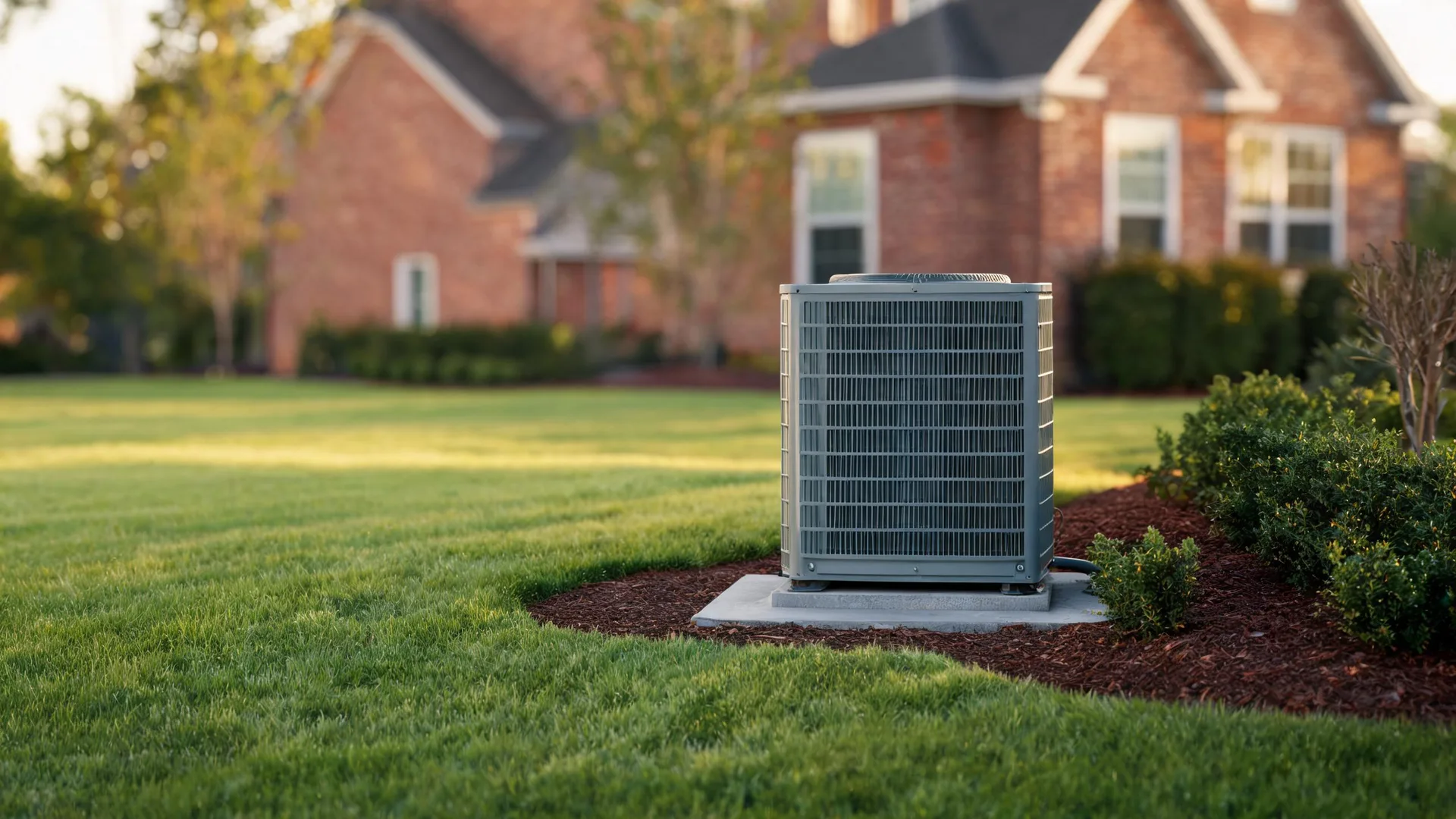
Most homes here run on gas
Utility gas heats 65.6% of occupied homes in Kosciusko County. Electricity is a distant second at 19.2%, and LP or bottled gas covers another 10.9%.
Takes about a minute. No obligation.
Utility gas heats 65.6% of occupied homes in Kosciusko County. Electricity is a distant second at 19.2%, and LP or bottled gas covers another 10.9%.
If your home heats with a gas furnace, central air installation usually means matching a new outdoor unit to the existing ductwork and indoor coil. The furnace stays as is unless you're replacing both at once.

NOAA nClimDiv, 1991–2020 normals
AC here runs June through August.
May is the month to put in a new one, before the first hot day finds a failing one.



Kosciusko County sits in climate zone 5A, a cool zone where winter heating matters more than summer cooling, but any new central air system installed here still has to meet the same federal floor as everywhere else. Split-system units under 45,000 Btu/h built from 2023 onward have to hit at least 13.4 SEER2. That rating measures efficiency, not how much cooling a system puts out, so it doesn't tell you what size unit your house needs. It does narrow the field, since anything below that number can no longer be manufactured or installed. If you're comparing quotes, every unit on the table should already meet this minimum.
Wind is the weather that shows up most here, 117 times in the last ten years, with hail and a handful of tornadoes mixed in. None of that is a reason to size up or pay for a higher tier. A standard system built to the federal minimum holds up fine against wind and hail the same as it would anywhere else. Pick the size that fits your house and get it installed before the weather that matters, the heat, arrives.
Find a contractorJune through August averages 82°F here in the afternoon. That's not a number that pushes a compressor hard. Pick a system sized to your house and let the install match the ductwork and coil you already have. There's no case here for a higher tier unit to handle heat that isn't coming.
A higher SEER2 number means the system turns more of the electricity it uses into cooling, with less lost as waste. It says nothing about your power bill by itself, because that depends on how the whole system is installed, not just the rating on the box.
A unit's SEER2 number is measured with the correct refrigerant charge, the right airflow across the coil, and ductwork sized to move that air. Skip any of those during installation and the system runs below its rating for as long as it's in the house.
Estimates for a typical Kosciusko County home, from EIA household energy data, Indiana fuel prices and NOAA climate normals. Your home will differ.
Installation day starts with taking the old equipment out, not putting the new in. The outdoor unit gets disconnected, the indoor coil comes out of its slot, and the line set that carries refrigerant between them gets replaced or flushed. Old residue left behind can contaminate a new system fast. Once the new coil is set and the outdoor unit is on its pad, the part that matters most is the part you never see. A vacuum gets pulled on the line set to clear out air and moisture before any refrigerant goes in. Skip that step or rush it and the system can run fine for a while before it starts failing. Refrigerant gets charged to the exact level that unit calls for, and airflow across the coil gets checked, because both have to be right for the system to deliver what its rating promises. A system switched on without that vacuum and charge done right will cool the house today and give trouble down the road.