A quiet suburban street at twilight featuring two-story brick homes with illuminated windows and large trees lining the sidewalk.

AC Installation in Vincennes, IN

Tell us about the job

Takes about a minute. No obligation.

New system or replacementCentral ACKnox County, IN
Step 1 of 2

What ZIP code is the job in?

Most homes here run on gas

Utility gas heats 55.1% of homes in Knox County. Electricity comes in second at 34.0%, and propane heats another 8.4%. A new central air system usually pairs with the furnace already in place, running off the same ductwork.


The furnace sets the path

If your home heats with a gas furnace, the AC installer works with the ducts and blower already there rather than starting over. The furnace and the air conditioner share that airflow, so whoever installs the new unit needs to know what's already running through the house.

5 months
May through September, your air conditioner is on duty
86°F
the average summer afternoon it cools against
27 hail events
in ten years, and hail bends the fins on outdoor coils
13.4 SEER2
the federal minimum any new unit must meet
Isometric line illustration of a cutaway house showing interior rooms with ductwork, an air handler and furnace, connected by lines to an outdoor condenser unit on the ground outside.
Your air conditioner works hardest from June through August.

NOAA nClimDiv, 1991–2020 normals

Cooling runs May through September here.

April is the month to get a new system in, before the first hot stretch puts it to work.

Weather here is rough on power lines, not on the AC unit itself

128 severe weather events from 2015 to 2024
17% of homes statewide lost power a day or more in 2024
92 damaging wind events from 2015 to 2024
Knox County homes are older than mostHalf the homes in Knox County were built in 1962 or earlier, and a new system has to fit the house it's going into.

A standard system sized correctly for the house is what this climate calls for, nothing more. June through August runs hot, with afternoon highs averaging 86°F, and the air carries real weight to it, a dew point around 67°F most summer days. That's steady, ordinary demand spread across five months, not the kind of extreme that pushes homeowners toward oversized equipment or a higher efficiency tier. An installer sizes the unit to the house: its square footage, its layout, the ductwork already in place. Get that sizing right and a standard system keeps up fine through the whole stretch from May to September.

The right size, nothing more

A standard system, sized right for the house, handles what summer here asks of it. Electricity in Knox County runs about 14.92 cents per kilowatt-hour, a typical rate, and there's no local reason to pay more for a bigger unit or a higher efficiency tier than the house needs.

Find a contractor
A man in a cap, dark long-sleeved shirt and tan work pants carries a worn duffel bag as he climbs concrete steps toward an orange front door, with a potted shrub beside the entry.
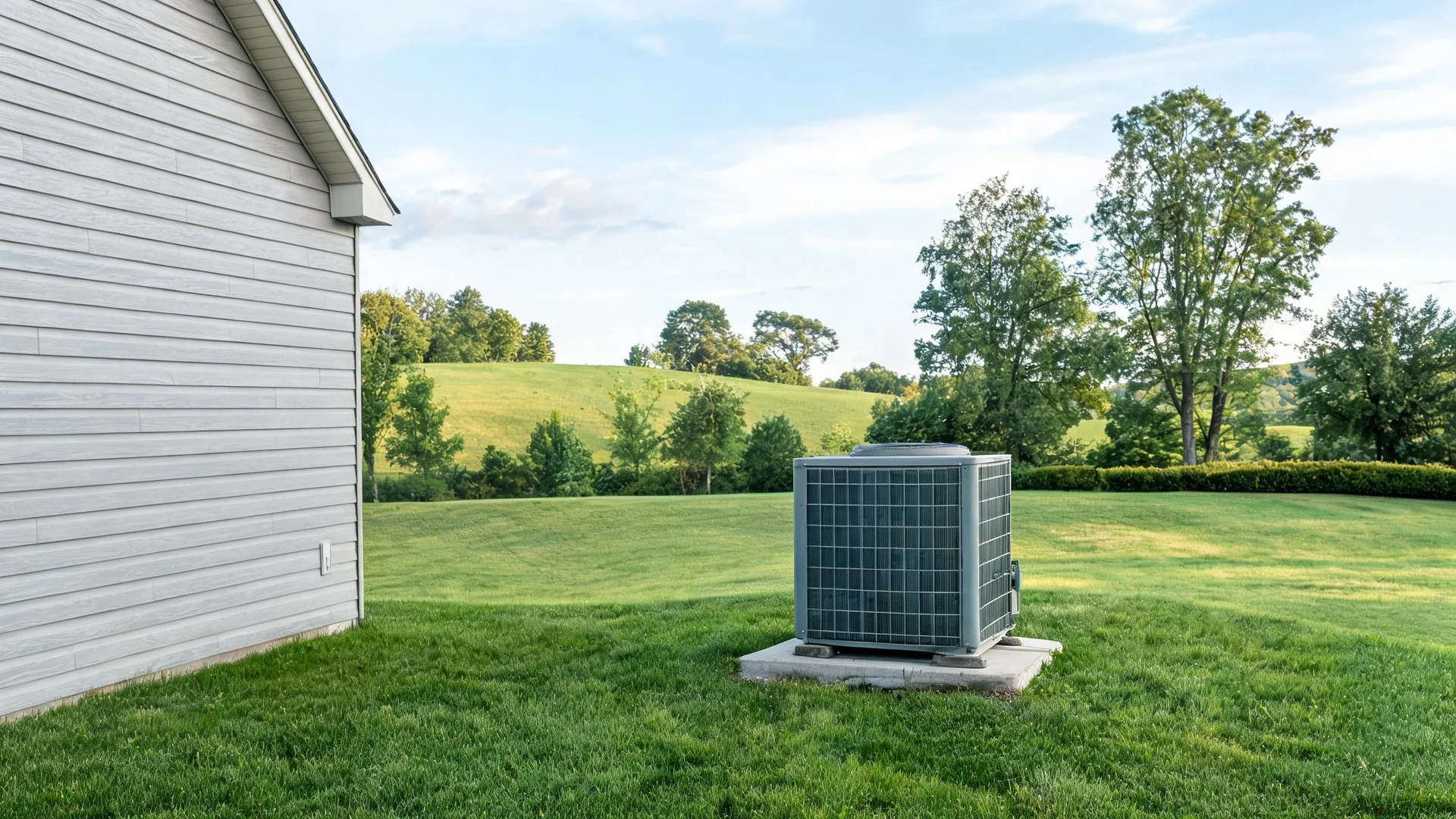
An outdoor residential air conditioning condenser unit mounted on a concrete pad, surrounded by gravel with a blue sky in the background.

The house decides the fit

A system going into a home built in 1962 or earlier is going into a house that already has its ductwork, its returns, its spot for the air handler. The installer works with that layout rather than starting fresh. That's what sizing means here: matching the new unit to the house as it stands, not picking equipment first and making the house fit it.

Ask what size they're proposing and why

A contractor should walk the house, measure room by room, and look at the ductwork before naming a size. If someone quotes a number before they've done that, they're guessing. The size has to match the house, not the other way around. Ask what measurements led to that number, and expect an answer that references your walls and your ducts, not a rule of thumb.

Ask what happens to the ductwork already there

An installer going into a house with existing ducts has to check whether those ducts can handle what the new unit pushes through them. Ducts that are too small, too leaky, or poorly laid out will hold a good unit back no matter how well it's sized. Ask whether the ducts were inspected, not just reused because they were already there.

Aerial view of a gray central air conditioning condenser unit on a concrete pad next to a house with vinyl siding.

A higher-efficiency unit would save about $40 a year to run in Knox County compared with a new unit at the federal minimum.

  • A higher-efficiency unit$290 a year
  • A new unit at the federal minimum, 13.4 SEER2$330 a year

Estimates for a typical Knox County home, from EIA household energy data, Indiana fuel prices and NOAA climate normals. Your home will differ.

Installation day starts before anyone touches the old unit. The crew sets up a recovery machine to pull the refrigerant out of the existing system, since it can't just be vented into the air. Once that's done, the old condenser comes out, and the old coil gets pulled from the air handler or furnace plenty of attention goes to the line set too, since reusing it means checking it's clean and sized right for the new unit, and often it just gets replaced. The new coil goes in, the new condenser gets set on its pad outside, and the line set connects the two. From there it's wiring the disconnect, running the new electrical connections, and charging the system with refrigerant to the manufacturer's spec. The last part is the part that matters most: airflow checks, a test run, and confirming the system actually cools the way it's supposed to before anyone calls it finished.