






A nighttime view of a tree-lined residential street with illuminated two-story brick houses and street lamps.

AC Installation in Terre Haute, IN

Tell us about the job

Takes about a minute. No obligation.

New system or replacementCentral ACVigo County, IN
Step 1 of 2

What ZIP code is the job in?

Electricity heats 48.1% of homes in Vigo County, with utility gas close behind at 44.3%. Most homes with central air already have the ductwork and electrical setup a new system needs, since the furnace side is often electric too. That makes a straight swap the simplest option for most homeowners here, matching the new unit to what the house already runs on. If your furnace burns gas, the AC install still runs on its own electrical circuit, so the fuel split doesn't change that part of the job.

5 months
May through September, your air conditioner is on duty
85°F
the average summer afternoon it cools against
22 hail events
in ten years, and hail bends the fins on outdoor coils
13.4 SEER2
the federal minimum any new unit must meet
Isometric line illustration of a cutaway house showing interior rooms with furniture, ductwork leading to an indoor air handler, and an outdoor condenser unit connected by a line set.
Your air conditioner works hardest from June through August.

NOAA nClimDiv, 1991–2020 normals

AC here runs May through September.

Install in April and the new system is already broken in before the first hot week hits.

Five months of real heat, nothing more

Cooling runs May through September
Summer afternoons average 85°F
22 hail events from 2015 to 2024
Built for the house that's already thereHalf the homes in Vigo County were built in 1968 or earlier.

A standard size and standard efficiency rating is the right call for a Terre Haute install. Nothing about this county pushes a homeowner toward a bigger unit or a higher-efficiency model than what the house actually needs. Vigo County homeowners paid 14.77 cents per kilowatthour in 2024, in line with Indiana generally, not a rate that changes the math on paying more upfront for efficiency. A contractor sizing the system will go by the square footage, the insulation and the layout of the house, not by anything unusual about this area. Get the size right for the home and a mid-range system does the job here.

Know the minimum before you pick a system

Vigo County falls under zone 4A, and any new split system has to meet the federal minimum of 13.4 SEER2. That's the baseline a contractor will build from. There's also a federal tax credit available for qualifying high-efficiency equipment, worth checking into before you settle on a unit.

Find a contractor
An outdoor residential air conditioning condenser unit mounted on a concrete pad, surrounded by gravel with a blue sky in the background.

Size it to the house, not the old system

A contractor sizing the install should measure your house, not go by what the last system was rated for. If an older system was oversized or undersized for this place, or the ductwork was patched over the years, matching the new unit to the old one's specs just repeats the mistake. Ask for a load calculation based on your square footage, your insulation and your layout as they are now.

What the rating actually measures

The rating on the label is a ratio of cooling output to the electricity it takes to produce it over a season of typical use. A higher number means the unit moves more heat out of the house for each unit of power it draws. It says nothing about how big the system is or how fast it cools a room. A small unit and a large one can carry the same rating, because size and efficiency are separate specs.

Why the rating alone won't tell you the bill

A high-efficiency unit only delivers on that rating if it's sized right and installed with a properly set charge and matched airflow. An oversized unit cycles on and off fast and never runs long enough to reach the efficiency the label promises. An undersized one runs constantly trying to keep up. The rating is a ceiling, not a guarantee, and how the contractor sizes and sets up the system decides how close the house gets to it.

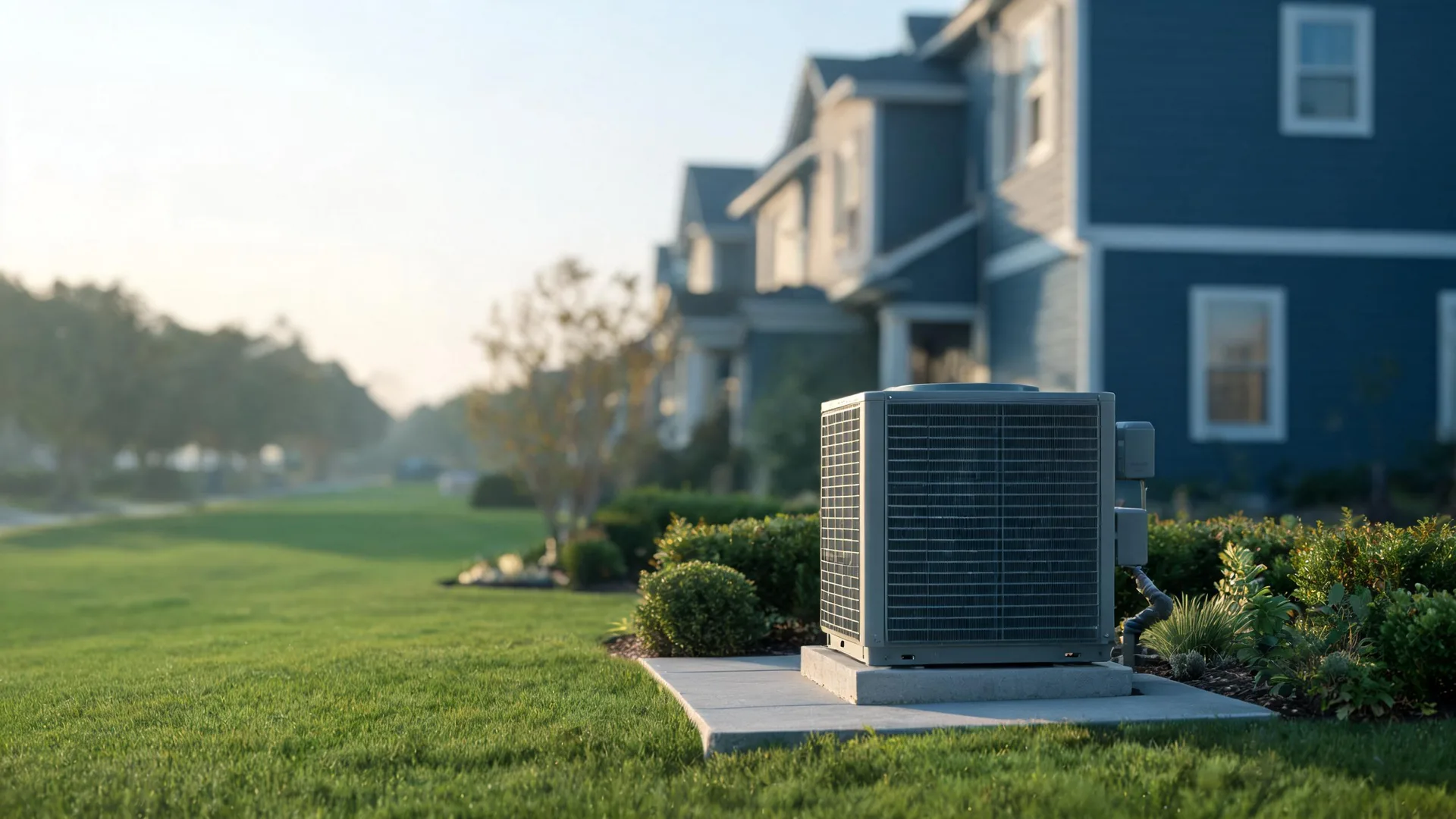
An outdoor air conditioning condenser unit mounted on a concrete pad next to a blue-sided residential house at sunset.

A higher-efficiency unit would save about $40 a year to run in Vigo County compared with a new unit at the federal minimum.

  • A higher-efficiency unit$260 a year
  • A new unit at the federal minimum, 13.4 SEER2$300 a year

Estimates for a typical Vigo County home, from EIA household energy data, Indiana fuel prices and NOAA climate normals. Your home will differ.

Installation starts with the old equipment coming out. The indoor coil, the outdoor unit, and the line set if it isn't being reused. A new outdoor pad goes down if the old one is cracked or sitting uneven. The line set gets run and connected, then pressure tested so there are no leaks before anything is charged. The system gets evacuated to pull moisture and air out of the lines. Either one left behind causes problems later. Once it holds vacuum, the refrigerant goes in to the weight the manufacturer specifies, not topped off by feel. Last comes startup. Airflow across the coil gets checked, the temperature split between the air going in and the air coming out gets measured, and the thermostat gets confirmed to be talking to the system the way it should.