






A illuminated two-story red brick house on a quiet residential street at dusk, flanked by mature trees under a deep blue evening sky.

AC Installation in Portage, IN

Tell us about the job

Takes about a minute. No obligation.

New system or replacementCentral ACPorter County, IN
Step 1 of 2

What ZIP code is the job in?

Gas heats 87.1% of homes in Porter County, almost all of them. Electricity accounts for 10.3%, and LP gas covers another 1.4%. Most homes here already pair central air with a gas furnace, sharing the same ductwork and the same indoor coil location. If your furnace runs on gas, a new AC unit usually matches up with what is already there, the line set and coil sized to the furnace's blower. Homes on electric heat are more likely to run a heat pump instead. It handles cooling the same way but also provides heat. Either way, what you have now is the starting point for sizing the new one.

3 months
June through August, your air conditioner is on duty
82°F
the average summer afternoon it cools against
26 hail events
in ten years, and hail bends the fins on outdoor coils
13.4 SEER2
the federal minimum any new unit must meet
Isometric line illustration of a cutaway house showing interior rooms, a furnace or air handler with ductwork, and an outdoor condenser unit beside the building.
Your air conditioner works hardest from June through August.

NOAA nClimDiv, 1991–2020 normals

The size of the condenser has to match the house, not the one that was there before.

A unit sized wrong runs longer, cools worse, and wears out faster than one chosen for the load.

Porter County's weather doesn't change what size or type of AC you need

145 severe weather events from 2015 to 2024
17% of homes statewide lost power a day or more in 2024
101 damaging wind events from 2015 to 2024

Porter County falls under zone 5A, a cooler, more humid climate where the furnace carries more of the year than the AC does. That doesn't lower the bar on the cooling side. Any split-system condenser under 45,000 Btu/h built from 2023 on has to meet 13.4 SEER2 no matter where it's installed, so that floor applies here the same as anywhere else. It sets what you're choosing from, not what you have to chase. Above that minimum, the decision comes down to the house and what you want to spend, not the climate.

The right size, at a standard efficiency, is the right call in Portage

Electricity in Indiana runs 14.77 cents per kilowatt-hour. That rate doesn't push the case toward a bigger unit or a higher efficiency tier than this house needs. A system sized to the load, at the efficiency standard already in place, is the right call here.

Find a contractor
A man in a dark shirt and tan work pants carries a waxed canvas bag up wooden porch steps toward an orange front door, with a potted shrub to the right.
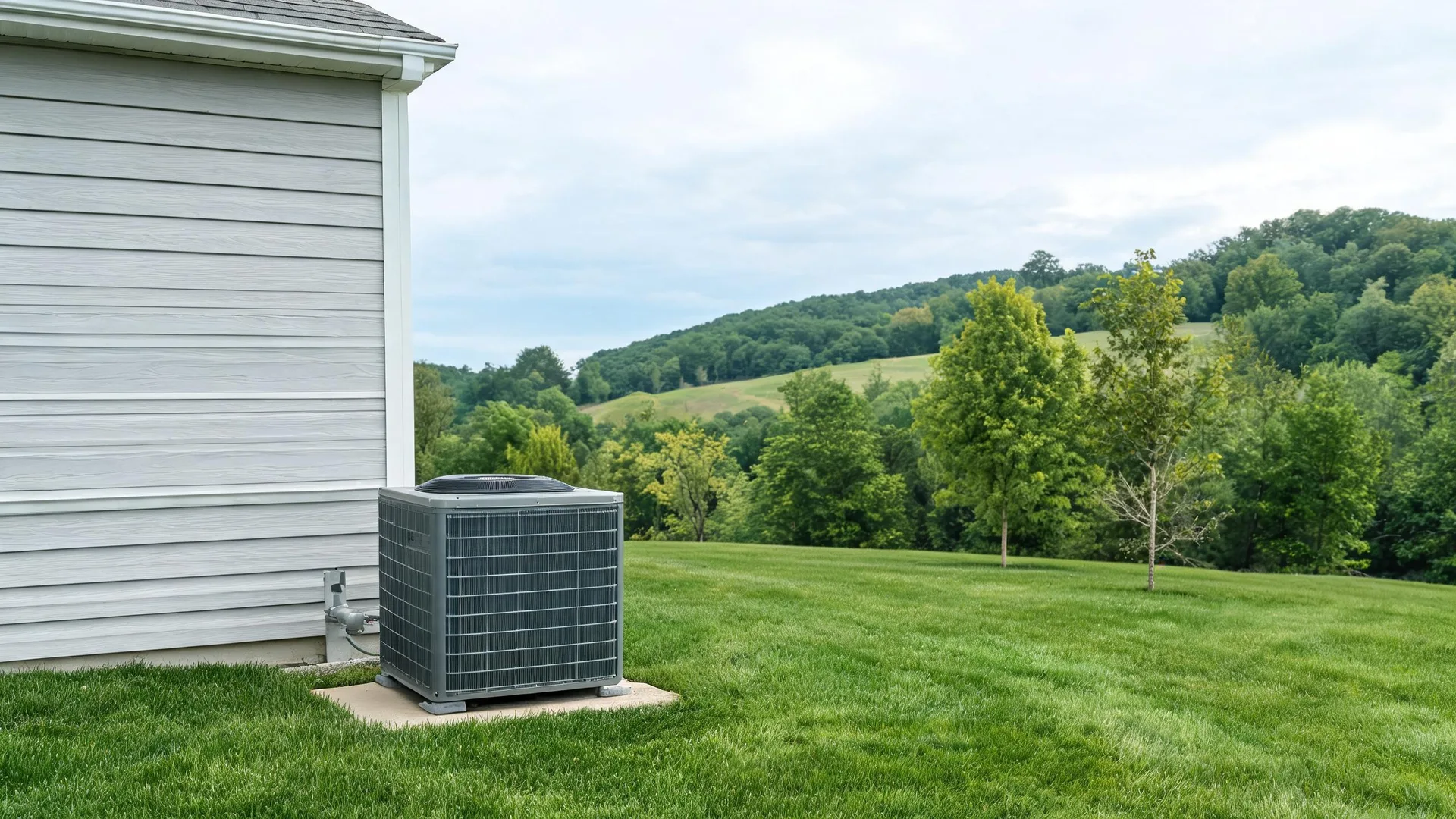
A gray cylindrical air conditioning condenser unit mounted on a concrete pad next to a light-colored vinyl-sided house exterior.

One good month to get ready

Cooling runs June through August here, three months out of the year. The rest of the time, the condenser sits outside doing nothing while the furnace carries the house. May is the month before that window opens, and it's the month to get the new unit in. Installed in May, there's time to size it to the house and have it tested before it has to run. Wait for the first hot week in June and the choice gets made in a hurry, from whatever is on the truck.

The old condenser comes out

A tech disconnects the electrical whip, recovers the refrigerant from the lines, and unbolts the unit from its pad. The refrigerant doesn't get vented. It has to be captured and handled separately, by law. Once the old condenser is off the pad, the line set gets checked, and in most installs it's replaced rather than reused, since the new system needs the right size line for its charge.

The indoor coil usually goes too

The evaporator coil sits in the plenum above or beside the furnace, and it's matched to the old condenser the same way the new one needs its own match. Leaving the old coil in place with a new condenser is how you end up with a system that never runs the way it's rated to. Swapping both at once is the standard job, not an upgrade.

An outdoor air conditioning condenser unit positioned beside a blue-sided house at sunset.

Going above the federal minimum saves little here, about $20 a year.

  • A higher-efficiency unit$180 a year
  • A new unit at the federal minimum, 13.4 SEER2$200 a year

Estimates for a typical Porter County home, from EIA household energy data, Indiana fuel prices and NOAA climate normals. Your home will differ.

Once the new condenser is set on the pad and the coil is in, the tech pulls a vacuum on the line set before any refrigerant moves. That step pulls out moisture and air, both of which ruin a system fast if left in the lines. After the vacuum holds, refrigerant gets weighed in to the charge that unit calls for, not eyeballed. Then it runs. The tech checks the temperature split across the coil, checks static pressure in the ducts, and confirms the blower speed matches the new equipment. A system can be installed correctly and still run wrong if that last check gets skipped, so a straight installation ends with the thing actually turned on and measured, not just bolted together.