






A dark two-story house with a wraparound covered porch sits behind a trimmed hedge and a mown lawn, framed by two large leafy trees.

AC Installation in Plymouth, IN

Tell us about the job

Takes about a minute. No obligation.

New system or replacementCentral ACMarshall County, IN
Step 1 of 2

What ZIP code is the job in?

Gas heats close to seven in ten homes in Marshall County, and that shapes how AC gets added here. In a house with a gas furnace, central air usually means a matching outdoor condenser paired with an indoor coil set into the existing duct and furnace system. The furnace blower moves the cold air, so installation comes down to sizing the condenser and coil to the house and making sure they work with what's already there. Electricity and propane each account for a smaller share of homes, and those setups call for different equipment. If your home came with a gas furnace, replacing or adding central air is usually a matter of fitting new outdoor and indoor units to that same system.

3 months
June through August, your air conditioner is on duty
82°F
the average summer afternoon it cools against
17 hail events
in ten years, and hail bends the fins on outdoor coils
13.4 SEER2
the federal minimum any new unit must meet
Isometric grayscale illustration of a cutaway house with the roof lifted, showing interior rooms, ductwork, an indoor air handler, and an outdoor condenser unit beside the building.
Your air conditioner works hardest from June through August.

NOAA nClimDiv, 1991–2020 normals

Summer in Marshall County runs about three months, with afternoon highs averaging 82°F.

A condenser here isn't working hard most of the year, so a well-built mid-range system holds up fine.

Cooling starts in June, so May is the month to get the new system in

Cooling runs June through August
Climate zone 5A
Power costs 14.77 cents a kWh statewide
What it costs to runIndiana electricity ran 14.77 cents per kilowatt-hour in 2024, cheap enough that a pricier high-efficiency unit takes longer to earn back.

The old condenser doesn't just get unplugged and hauled off. Refrigerant inside has to be recovered with a recovery machine before anyone disconnects the lines, since it can't be vented into the air. Once that's done, the installer disconnects the electrical whip, cuts the refrigerant lines free, and unbolts the unit from its pad. If the indoor coil is being swapped too, that comes out of the plenum above the furnace the same way, and the old line set usually gets replaced rather than reused since it's sized and cleaned for the new refrigerant charge. The outdoor pad often stays, since a new condenser can sit right back on it.

Size the new system to the house you have

Half the homes in Marshall County were built in 1973 or earlier. A furnace and duct system installed in a house that age is what the new condenser and coil have to work with, not a setup chosen from scratch. Getting the sizing right for the house you actually have is what makes the install hold up.

Find a contractor
A man in a cap, dark work shirt and tan pants, seen from behind, climbs porch steps toward an orange front door while carrying a worn leather tool bag.
An outdoor air conditioning condenser unit mounted on a concrete pad beside a house, with electrical conduit running to a wall-mounted disconnect box.

Three months a year is not a hard life

Three months of real cooling load a year is light duty for a condenser. That's the case for not overspending on the install. Put the money into getting the condenser and coil sized right for the house, and a mid-range system will run fine for years on a schedule like this.

Ask what the load calculation found

A contractor should size the condenser and coil to the house using a load calculation, not a rule of thumb based on square footage. Ask what numbers they used and what the old equipment was rated for. A unit sized too large cools the air fast but shuts off before it pulls the moisture out, leaving the house feeling clammy even when the temperature reads fine.

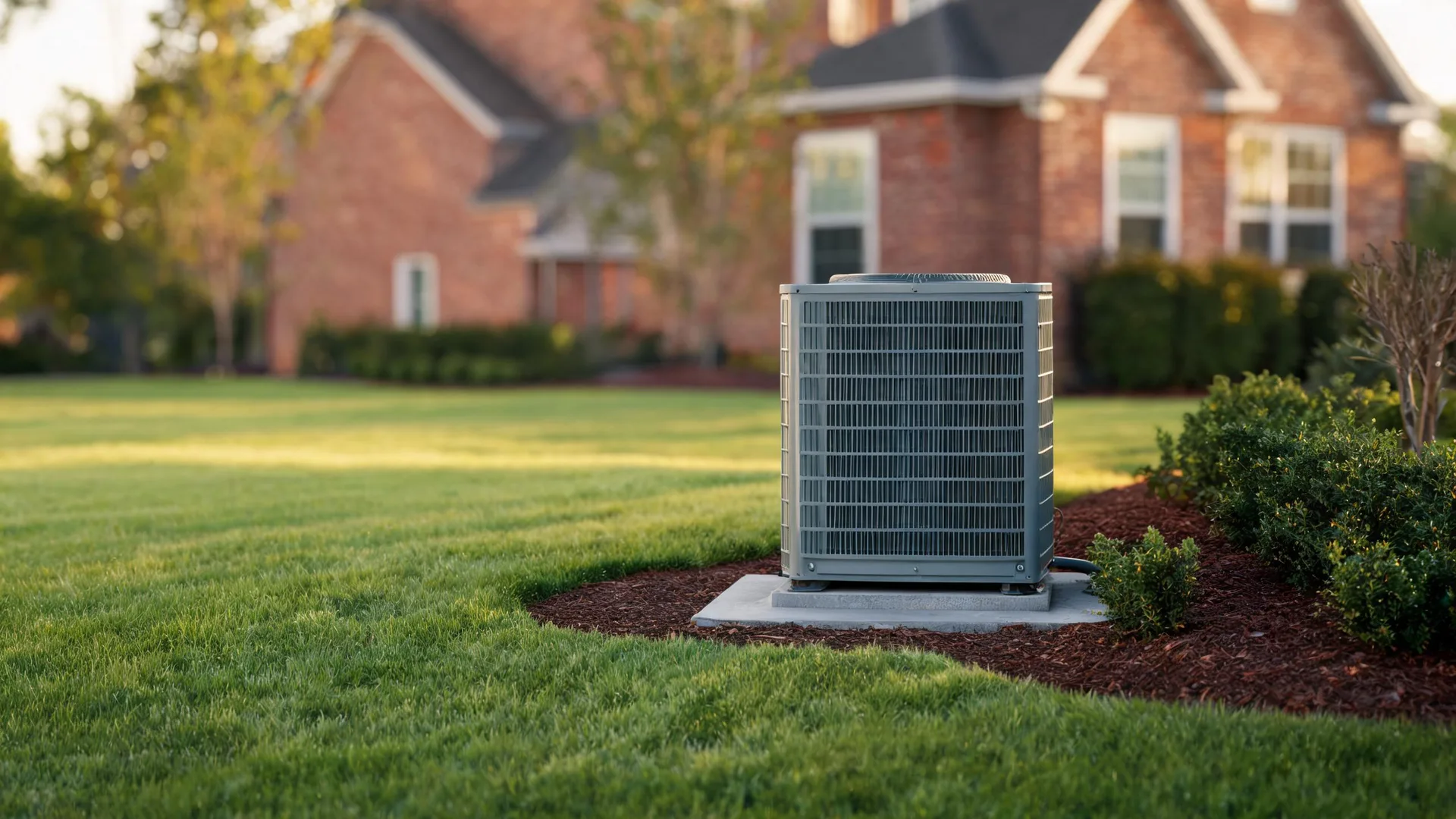
Ask how the coil and condenser get matched

The outdoor condenser and the indoor coil have to be rated to work together. Pairing a new high-efficiency condenser with an old coil can leave the system running below the efficiency it's rated for, and some manufacturers won't warranty a mismatched pair. Ask whether the coil is being replaced along with the condenser or reused, and why.

An outdoor air conditioning condenser unit installed beside the exterior wall of a blue vinyl-sided house at sunset.

Going above the federal minimum saves little here, about $20 a year.

  • A higher-efficiency unit$170 a year
  • A new unit at the federal minimum, 13.4 SEER2$190 a year

Estimates for a typical Marshall County home, from EIA household energy data, Indiana fuel prices and NOAA climate normals. Your home will differ.

Most installs run a full day, sometimes into a second if the ductwork needs work beyond swapping the coil. The crew sets the new condenser on the pad, runs the line set, and sets the coil in the plenum above the furnace before anything gets connected. Once the lines are brazed, the system gets pressure tested to check for leaks before any refrigerant goes in. Then it's pulled down to a vacuum to clear out moisture and air, since either one left in the lines will cause problems later. Only after that does the installer weigh in the refrigerant charge to the amount the system calls for. The last step is running it, checking the temperature split at the vents, and checking refrigerant pressures against what the manufacturer specs for that unit.