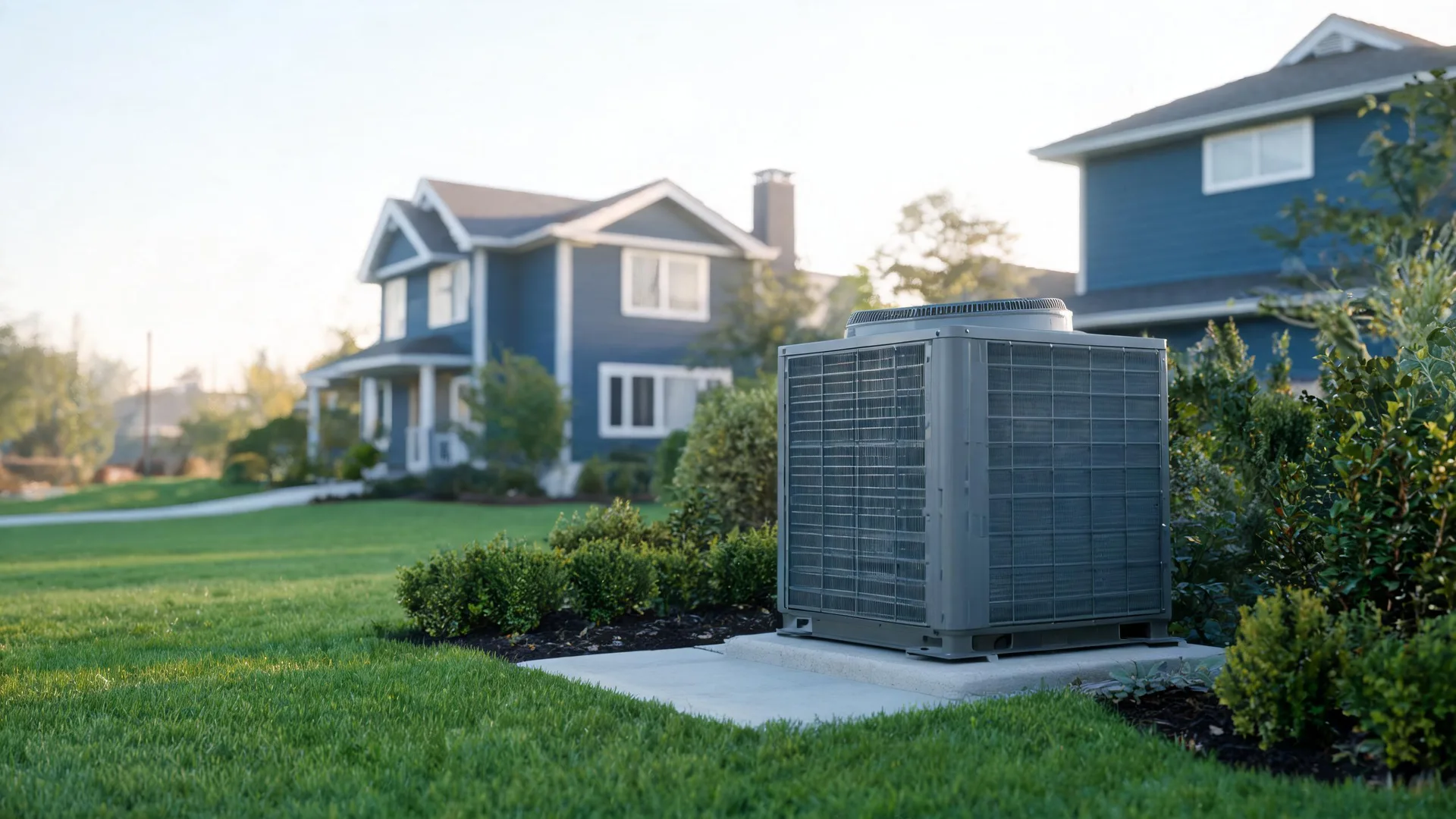
Most homes here run on gas
Gas heats 55.1 percent of homes in Hendricks County, more than electric and propane combined. Central air paired with a gas furnace is the setup most installers here see first.
Takes about a minute. No obligation.
Gas heats 55.1 percent of homes in Hendricks County, more than electric and propane combined. Central air paired with a gas furnace is the setup most installers here see first.
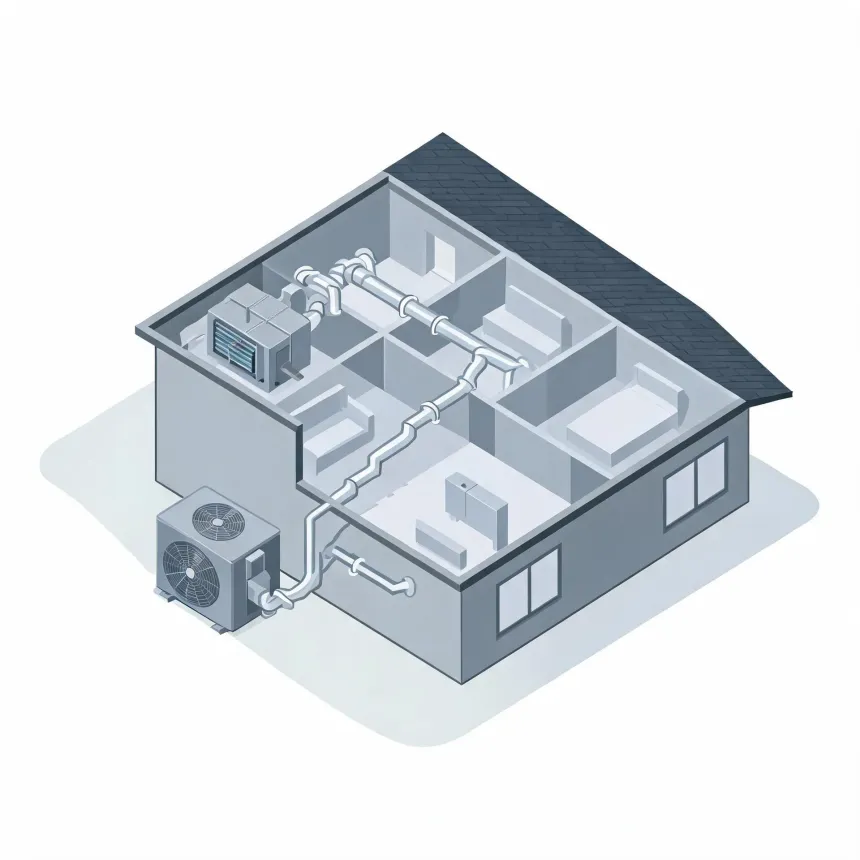
If your home heats with gas, the AC installation ties into the existing furnace, since that furnace blower moves the cooled air through the ducts. The job is matching new equipment to that setup, not building around something unusual.
NOAA nClimDiv, 1991–2020 normals
Electricity here runs 14.77 cents a kilowatt-hour.
A standard-efficiency system sized right for your home keeps that cost where it should be, no bigger unit needed.



Summers here run June through August, with afternoon highs averaging 82 degrees. That's three months of steady work for a system, not year-round strain. A unit sized to your home's actual load will handle that stretch without trouble. There's no climate reason to size up or pay for a higher efficiency tier than the house needs. Hendricks County sits in a mixed zone that asks real work of both heating and cooling, but nothing about the summer heat here is more demanding than a standard system is built for.
Hendricks County saw 115 severe weather events over the last ten years, mostly damaging wind and hail. That doesn't call for a bigger system or a higher efficiency tier. It does mean the installation matters. A unit set on a solid pad and properly secured holds up through wind better than one that isn't. Get the sizing right and the mounting right, and a standard system handles what this county sees.
Find a contractor
Equipment is one line on the invoice. The rest of the cost is what it takes to get refrigerant moving correctly through your home and air moving correctly through your ducts. A mismatched coil and condenser will run, but not the way either was designed to, so installers price the match, not just the parts. Line sets have to be the right length and the right diameter, and if the old ones aren't reusable, that's labor and material both. Ductwork gets tested against the new system's airflow needs, and if the return side is too small or a run is crushed somewhere, that gets fixed before the new unit ever starts, not after. The pad or mounting has to hold the unit level and steady for as long as it runs. None of this is optional add-on work. It's what makes the difference between a system that hits its rated efficiency and one that just runs.
A contractor should measure your home's windows, insulation and square footage and calculate the cooling load from that, not quote a size off the old unit or a quick glance. Homes that look alike from the street can need different systems depending on what's in the walls and how much glass faces the sun. If nobody asks about your attic or your windows before naming a number, that number isn't based on your house.
The outdoor condenser and the indoor coil are sold as a matched pair for a reason. Pairing a new condenser with an old coil, or quoting one without mentioning the other, means the system won't run at the efficiency it's rated for even if both pieces work fine on their own. Ask what coil comes with the quote and whether it's listed as a match for that condenser, not just whether it fits the line set.
Estimates for a typical Hendricks County home, from EIA household energy data, Indiana fuel prices and NOAA climate normals. Your home will differ.
Install day starts with the old system coming out, not the new one going in. The condenser gets disconnected, the refrigerant recovered, and the old coil pulled before anything new goes in its place. Line sets get swapped or flushed, because old oil and debris left behind will contaminate a new system fast. The new coil goes in, the new condenser gets set on its pad, and the lines get connected. Those lines get pressure tested, then pulled into a vacuum to clear out air and moisture before any refrigerant goes in. Charging comes next, weighed in to the manufacturer's spec and checked against the actual pressures once the system is running. Only after that gets confirmed does anyone turn to the thermostat and the vents to check that air is moving the way it should.