Gas furnaces are the norm here
Utility gas heats 52% of homes in Henry County, more than any other fuel. Most new AC installations pair with one of these furnaces already in place, sharing the same ductwork and the same blower.
Takes about a minute. No obligation.
Utility gas heats 52% of homes in Henry County, more than any other fuel. Most new AC installations pair with one of these furnaces already in place, sharing the same ductwork and the same blower.
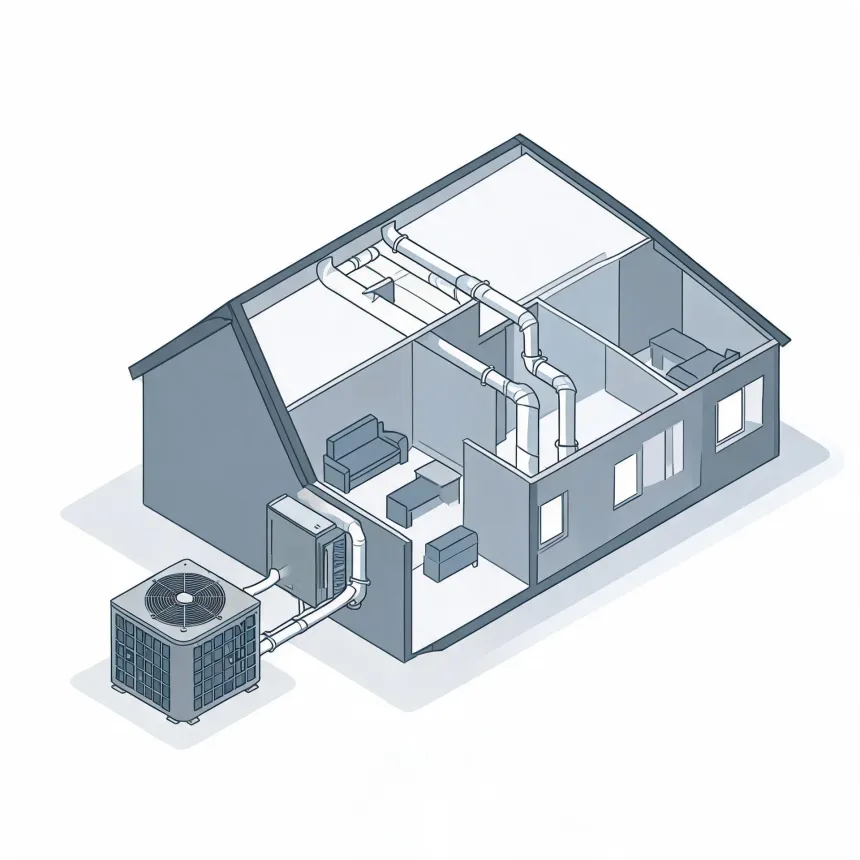
A new AC unit only cools as well as the ducts can move air. Whatever heats your home now, an installer will size the new system to your house and confirm the ductwork can handle it before swapping anything in.
NOAA nClimDiv, 1991–2020 normals
Installers can quote the same tonnage and still be pricing different jobs.
Ask what each one measured in your house before they priced it, not just what size they landed on.




New Castle doesn't need a special case made for it. Electricity here runs 14.77 cents per kilowatt-hour, so there's no local reason to chase the highest efficiency rating on the shelf. A properly sized standard unit will cool this house through the summer without trouble. What matters more than the SEER2 number is whether the installer sized it to your house and your ducts, not a bigger or pricier unit than the job calls for. Pay for the size that fits this house, not for a number on a brochure.
Henry County falls under zone 5A, and any central air conditioner installed here has to meet at least 13.4 SEER2 if it's below 45,000 Btu/h. That rules out anything older or under-rated, no matter what deal you find on it.
Find a contractorThree months of cooling, June through August, and afternoon highs sitting around 82°F. That's a mild load. The system runs hard a few hours on the hottest afternoons and coasts the rest of the time. A unit working that little isn't likely to wear out from use. When one fails early here, it's usually a bad install, a skipped service, or a part that gave out on its own, not a system run into the ground.
A licensed installer has to recover the refrigerant in the old system with a recovery machine before touching the lines. It can't legally be vented into the air, and a reputable contractor won't do it that way regardless. Once that's done the old condenser and coil are disconnected and hauled off.
The outdoor pad, the line set and the electrical whip often get reused if they're in good shape, which keeps the job from turning into more demolition than it needs to be. The old line set does need to be checked for leftover oil or debris first. Refrigerant oil from the old system can contaminate the new one if it's not flushed out or replaced before the new unit goes on.
Estimates for a typical Henry County home, from EIA household energy data, Indiana fuel prices and NOAA climate normals. Your home will differ.
The old unit gets shut down first. Refrigerant comes out through a recovery machine, not vented into the air. Then the crew disconnects the lines and hauls the condemned equipment out. Before anything new goes in, they look at what's staying. The ductwork, the line set running between indoor and outdoor units, the electrical whip, the pad outside. Old refrigerant oil sitting in a line set can contaminate a new system, so if that line needs flushing or replacing, a good installer catches it before the new unit goes on. Setting the condenser and air handler in place is the easy part. The real work is what comes after. Wiring the thermostat correctly. Confirming the charge once the lines are connected. Checking that air is actually moving at each vent once the blower kicks on. A system sized and charged correctly brings the house down steadily, without the compressor short cycling every few minutes. Before the crew packs up, they should run the system through a full cooling cycle and show you how the new thermostat works, not just leave the manual on the counter.