





A mowed lawn bordered by a tall trimmed hedge, with single-story houses and large leafy trees under an overcast sky.

AC Installation in Marion, IN

Tell us about the job

Takes about a minute. No obligation.

New system or replacementCentral ACGrant County, IN
Step 1 of 2

What ZIP code is the job in?

Gas furnace and central air is the setup in most Marion homes. Utility gas heats 55.7 percent of houses in Grant County, electricity heats another 36.2 percent, and the rest run on bottled or LP gas. If your house already has a gas furnace, the AC side usually just adds a condenser and coil that work with the ductwork you have. The furnace blower moves the cold air, same as it moves the warm air in winter. That's why most installs here aren't a redesign, just a matched replacement for what's already in place.

3 months
June through August, your air conditioner is on duty
83°F
the average summer afternoon it cools against
21 hail events
in ten years, and hail bends the fins on outdoor coils
13.4 SEER2
the federal minimum any new unit must meet
Isometric cutaway illustration of a house interior showing ducted air handling equipment, ceiling ducts, furniture in two rooms, and an outdoor condenser unit connected by lines outside the wall.
Your air conditioner works hardest from June through August.

NOAA nClimDiv, 1991–2020 normals

Summer here runs three months, June through August, with afternoon highs averaging 83°F.

A condenser that short a season doesn't need to be the top-tier model to hold up.

May is the month to put in a new AC, not June

Cooling runs June through August
Summer afternoons average 83°F
43 damaging wind events from 2015 to 2024

Grant County sits in climate zone 5A, a cool zone where furnaces carry more of the year than the AC does. Any split-system condenser installed here still has to meet 13.4 SEER2 if it's under 45,000 Btu/h, which covers nearly every house system sold. That's a federal floor, not a local add-on, so it applies whether the contractor is quoting a base unit or something higher. There's room above that minimum if you want lower summer bills, but nothing below it can legally go into your house. A federal tax credit is available on qualifying higher-efficiency equipment, worth checking before you settle on a model.

Pick reliable, not top of the line

It won't be worked hard here, so pick a reliable system that fits. You don't need the top efficiency model.

Find a contractor
A man in a dark shirt and brown pants, seen from behind, carries a waxed canvas tote bag up wooden porch steps toward an orange front door, with a potted shrub beside the entry.
An outdoor residential air conditioning condenser unit mounted on a concrete pad, surrounded by gravel with a blue sky in the background.

Older homes, same ducts

Half the houses in Grant County were built in 1963 or earlier. A furnace or coil going into a house that age is going into ductwork and a duct layout nobody designed for today's equipment. The new system has to work with what's there, not what a newer house would have. That's a sizing question for the contractor, not something to guess at from the age alone.

Sizing comes from a load calculation, not the old unit's label

A contractor works out the right size by looking at the square footage, the windows, the insulation, and the duct layout, not by matching whatever number is stamped on the equipment coming out. A system sized off the last unit just repeats whatever mistake was made the first time.

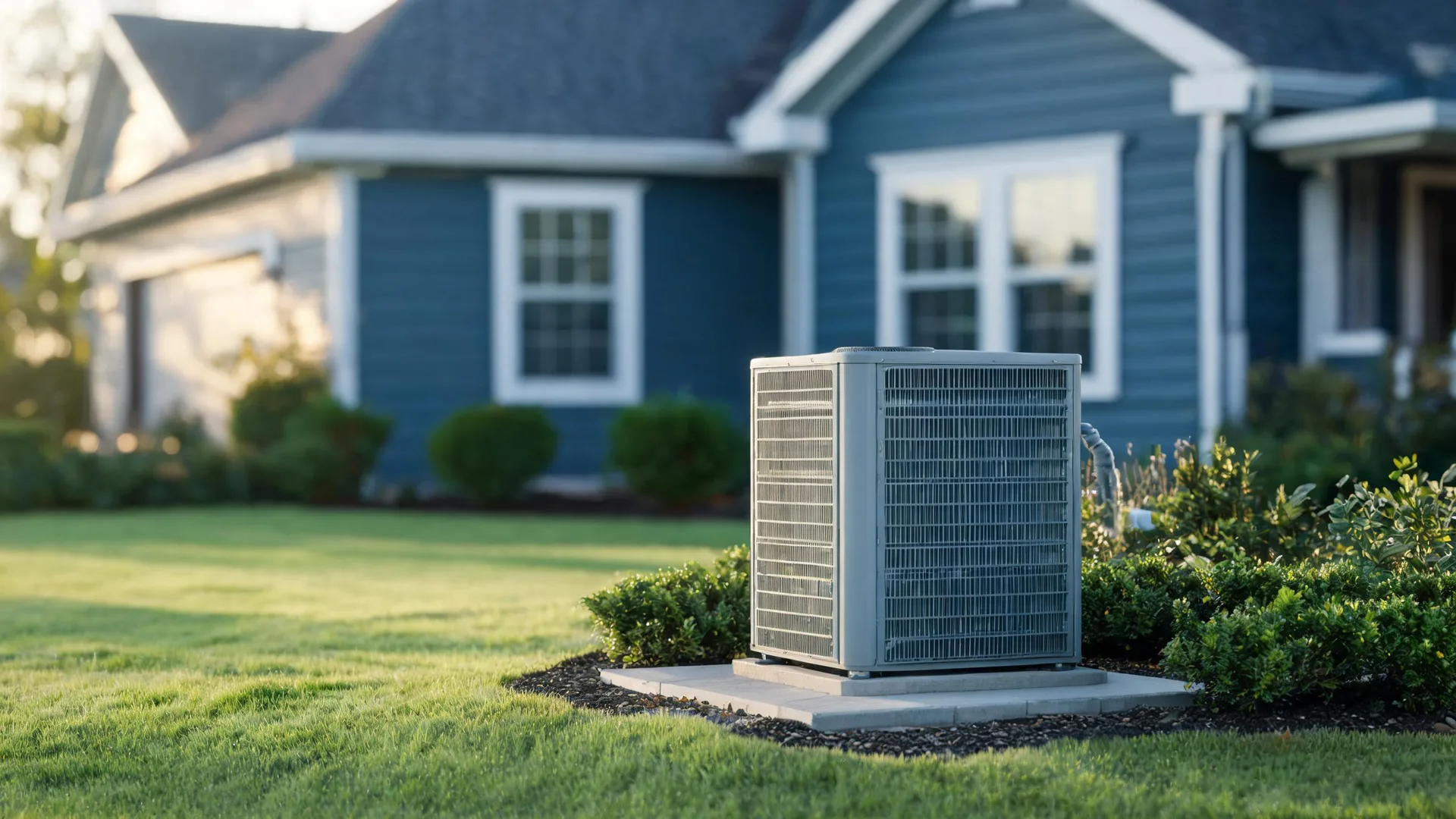
Bigger isn't safer, it's worse

An oversized condenser cools the air fast and shuts off before it pulls the moisture out, so the house feels clammy even at the right temperature. It also cycles on and off more, and that short cycling wears the compressor harder than a system that runs a full, steady cycle.

Aerial view of a residential air conditioning condenser unit mounted on a concrete pad next to a house with vinyl siding and a sliding glass door.

A higher-efficiency unit would save about $30 a year to run in Grant County compared with a new unit at the federal minimum.

  • A higher-efficiency unit$200 a year
  • A new unit at the federal minimum, 13.4 SEER2$230 a year

Estimates for a typical Grant County home, from EIA household energy data, Indiana fuel prices and NOAA climate normals. Your home will differ.

Installation day starts with the old equipment coming out, the condenser outside and the coil that sits on top of the furnace. The line set gets disconnected and the refrigerant in it recovered, never vented, that's the law and any contractor doing this right owns the equipment for it. Once the old coil is out, the installer checks the ductwork and the plenum it connects to before setting the new one in place, because a coil sized wrong for the duct run will never perform right no matter what's on the label. The new condenser goes on its pad outside, new line set gets run if the old one isn't in good shape, and the whole system gets connected to the furnace's existing blower and control board. Before anyone calls it done, the system gets charged with refrigerant to the exact weight the manufacturer specifies, then checked for proper airflow and a correct temperature split between the air going in and the air coming out. That last check is what tells you the system was installed right, not just installed.