A nighttime view of a tree-lined residential street with illuminated two-story brick houses and street lamps.

AC Installation in Logansport, IN

Tell us about the job

Takes about a minute. No obligation.

New system or replacementCentral ACCass County, IN
Step 1 of 2

What ZIP code is the job in?

Most homes here run on gas

Utility gas heats 63.9 percent of homes in Cass County, with electricity and propane splitting most of the rest. An AC installation usually pairs with whatever furnace is already there rather than replacing how the home is heated.


The furnace sets the layout

A gas furnace already has ductwork and a spot for an air handler, and a new AC unit is built to work alongside it. The contractor installing your system will check that the existing setup can handle the new unit before anything goes in.

3 months
June through August, your air conditioner is on duty
82°F
the average summer afternoon it cools against
10 hail events
in ten years, and hail bends the fins on outdoor coils
13.4 SEER2
the federal minimum any new unit must meet
Isometric cutaway illustration of a house interior showing ducted HVAC piping, an indoor air handler unit, and an outdoor condenser with fan connected by a line, rendered in grey tones on a white background.
Your air conditioner works hardest from June through August.

NOAA nClimDiv, 1991–2020 normals

AC here runs June through August.

May is the month to put in a new system, before the first hot day puts the old one to the test.

A standard system handles Logansport summers fine

Power costs 14.77 cents a kWh statewide
Cooling runs June through August
Summer afternoons average 82°F

Half the homes in Cass County were built in 1956 or earlier. A house that age was not built with central air in mind. The ductwork, the electrical panel, even the spot where an outdoor unit might sit, all of it was added later or has to be worked around now. That doesn't mean a new system won't fit. It means the contractor sizing your AC needs to look at what's actually there, not just swap in whatever the last house got. A unit sized for a new build can run wrong in an old one, short cycling or never quite catching up on the hottest days.

Three months of work a year, nothing more

AC runs here from June through August, with afternoon highs averaging 82°F. That's not a system working hard all year. A reliable unit, sized right for this house, will keep up fine without needing the highest efficiency rating on the shelf.

Find a contractor
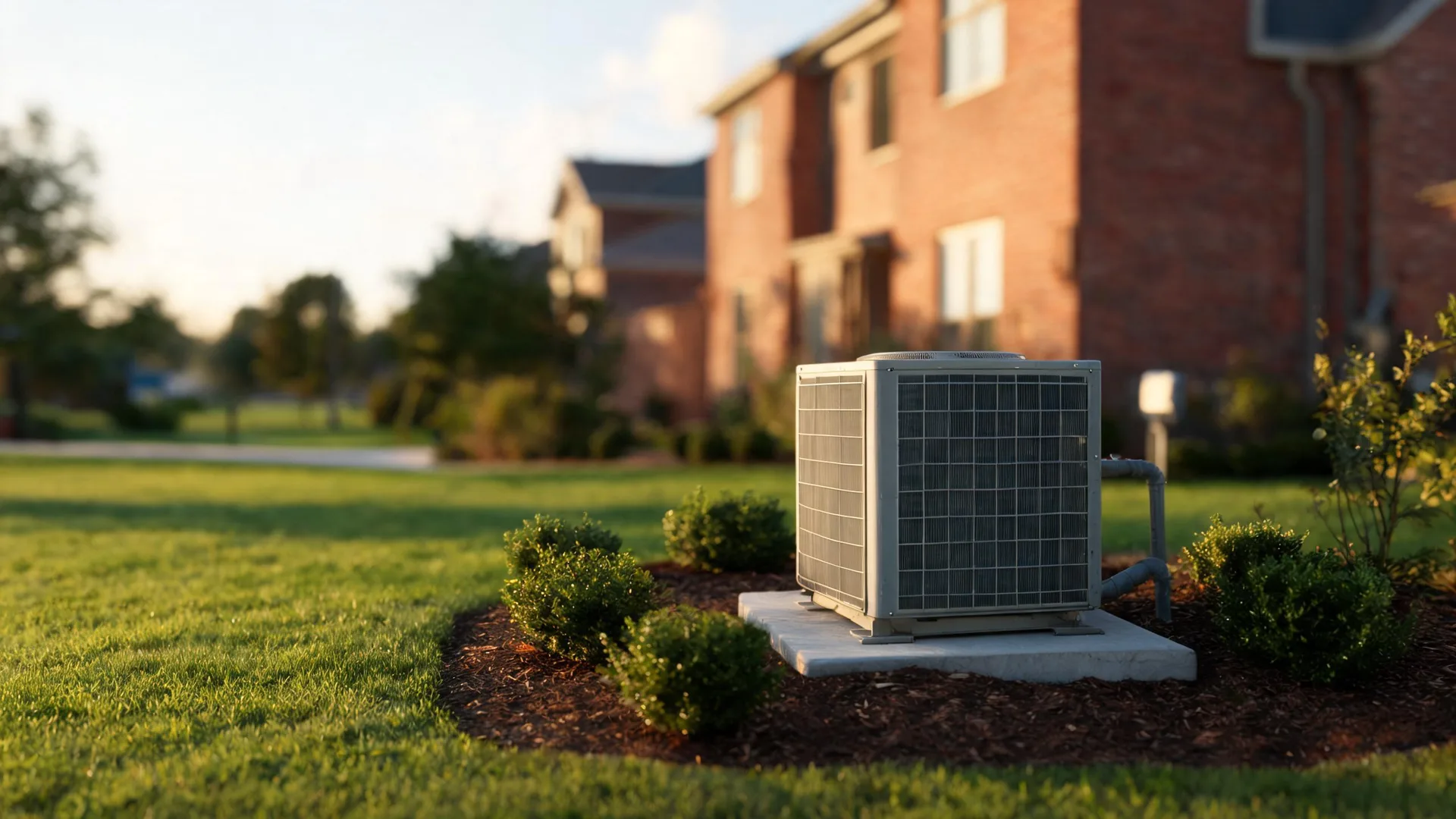
An outdoor air conditioning condenser unit mounted on a concrete pad surrounded by gravel, photographed against a partly cloudy blue sky.

Built to last, not to impress

Pick a unit on reliability, not on the efficiency number stamped on the box. With three months of real work a year, this machine won't rack up the hours a top-tier compressor is built to pay back. Put that money toward getting the size right for your house instead.

The old unit gets disconnected and hauled off

A contractor will recover the refrigerant from the old system before touching anything else. That's not optional. The refrigerant lines, the electrical connections, and the condensate drain all get disconnected, and the outdoor unit and indoor coil come out. Most contractors haul the old equipment away as part of the job, so you're not left figuring out how to get a heavy cabinet off a concrete pad.

What's left behind matters more than what's gone

The old refrigerant lines and electrical whip often get reused if they're in good shape. If the old coil or lines don't match what the new unit needs, the contractor will tell you before the install, not after. The pad or mounting spot usually stays the same unless it's cracked or too small for the new unit's footprint.

Overhead view of a gray residential air conditioning condenser unit mounted on a concrete pad beside a house with asphalt shingle roofing.

A higher-efficiency unit would save about $30 a year to run in Cass County compared with a new unit at the federal minimum.

  • A higher-efficiency unit$190 a year
  • A new unit at the federal minimum, 13.4 SEER2$220 a year

Estimates for a typical Cass County home, from EIA household energy data, Indiana fuel prices and NOAA climate normals. Your home will differ.

Once the old equipment is out, the new outdoor unit sets on the pad and the indoor coil goes in above or beside the furnace. The refrigerant lines get connected, brazed, and pressure tested before anything is charged, because a leak is much easier to fix before the system is holding refrigerant than after. The line set gets pulled into a vacuum to clear out moisture and air, which otherwise damage a compressor fast. Only after the system holds vacuum does the contractor weigh in the refrigerant charge, matched to the length of the line set and the unit's specs. Electrical gets tied in last, and the system runs through a full cycle before the contractor leaves, checking the temperature split between the air going in and the air coming out. That split tells you the system is actually cooling, not just running.