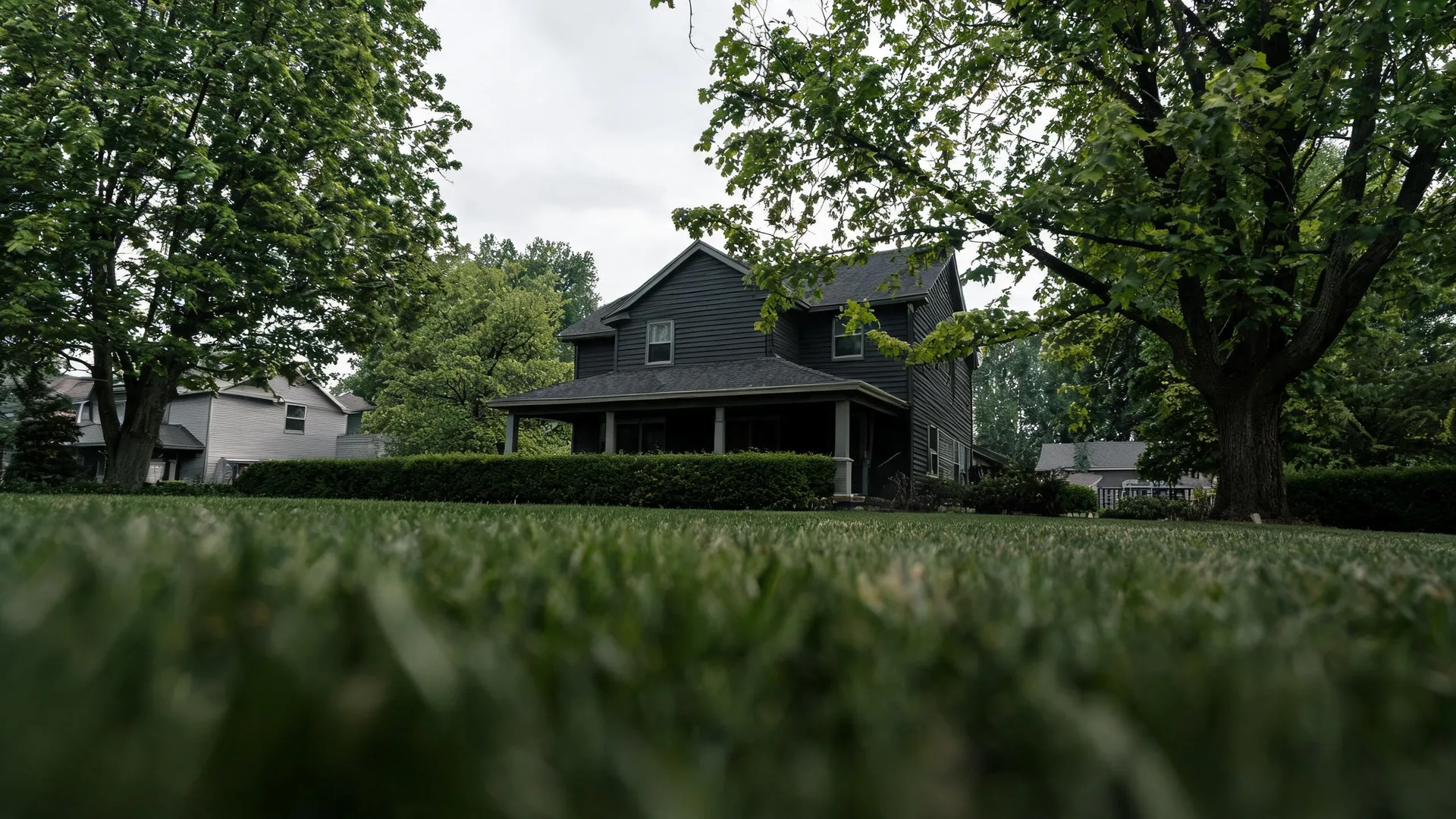






A low ground-level view across a mown lawn toward a dark two-story house with a covered front porch, flanked by large leafy trees under an overcast sky.

AC Installation in Lawrenceburg, IN

Tell us about the job

Takes about a minute. No obligation.

New system or replacementCentral ACDearborn County, IN
Step 1 of 2

What ZIP code is the job in?

Gas heats more homes in Dearborn County than anything else, at 44.7 percent. Electricity comes next at 38.6 percent. A home on gas heat usually has ductwork already in place, since the furnace needs it to move warm air. Those same ducts carry the cold air once an air conditioner is added, which is why pairing a new AC to the furnace and blower already there is often the simplest path. If your home runs on propane or oil, the same logic holds as long as you have ducts. The cooling side can be sized and installed on its own.

4 months
June through September, your air conditioner is on duty
84°F
the average summer afternoon it cools against
13 hail events
in ten years, and hail bends the fins on outdoor coils
13.4 SEER2
the federal minimum any new unit must meet
Isometric line illustration of a cutaway single-story house showing interior rooms with furniture, ceiling ductwork, an indoor air handler, and an outdoor condenser unit connected by lines along the exterior wall.
Your air conditioner works hardest from June through August.

NOAA nClimDiv, 1991–2020 normals

A standard central AC matches most homes in Lawrenceburg.

There's no reason here to pay more for extra capacity or efficiency you won't use.

Four months of summer, nothing extreme about it

Cooling runs June through September
Summer afternoons average 84°F
57 damaging wind events from 2015 to 2024

Cooling runs June through September here, about four months. May is the month to get it done. A new system installed before the first hot week gets tested and adjusted while there's no rush, so if something needs a return visit, it happens before you actually need the thing running. Wait until June and you're one of a lot of calls coming in at once, on a system that has to work right away. There's no upside to that timing for you or for the install itself.

A new system here starts at 13.4 SEER2

Any central air conditioner installed here has to meet a federal minimum of 13.4 SEER2, the standard for this size of system. That floor applies everywhere, and it's already built into the standard equipment a contractor would put in. Zone 4A asks real work of both heating and cooling, and this is the baseline a new system is built to meet.

Find a contractor
A man in a dark cap and shirt carries a worn leather tool bag up wooden porch steps toward an orange front door, with a potted shrub in a terracotta planter to the right.
A gray residential air conditioner condenser unit mounted on a concrete pad in an open grass field.

The old unit has to come out before the new one goes in

Whoever installs the new system still has to deal with the old one first. A central air conditioner that has run for years has refrigerant in the lines, and that has to be recovered properly before anything gets disconnected. It is not legal to just cut the lines and pull the unit. Once that is done, the old condenser outside comes apart from the line set and the electrical whip, and the indoor coil gets pulled from the plenum if it is being swapped too. If the old coil stays and only the outdoor unit changes, a tech has to check that the pieces actually match, since a mismatched coil and condenser lose efficiency and sometimes will not work right at all. Most of what comes out is metal, so it usually gets hauled off for scrap rather than the landfill. None of this is the hard part of a swap, but it happens before the new unit ever gets set in place.

Ask what size unit they're proposing, and why

A contractor should size the system to the house with a load calculation, not just match whatever was there before. A unit too big cools the room fast but shuts off before it pulls the humidity down, so the space feels clammy even at the right temperature. One sized right runs longer, steadier cycles and actually dries the air while it cools it.

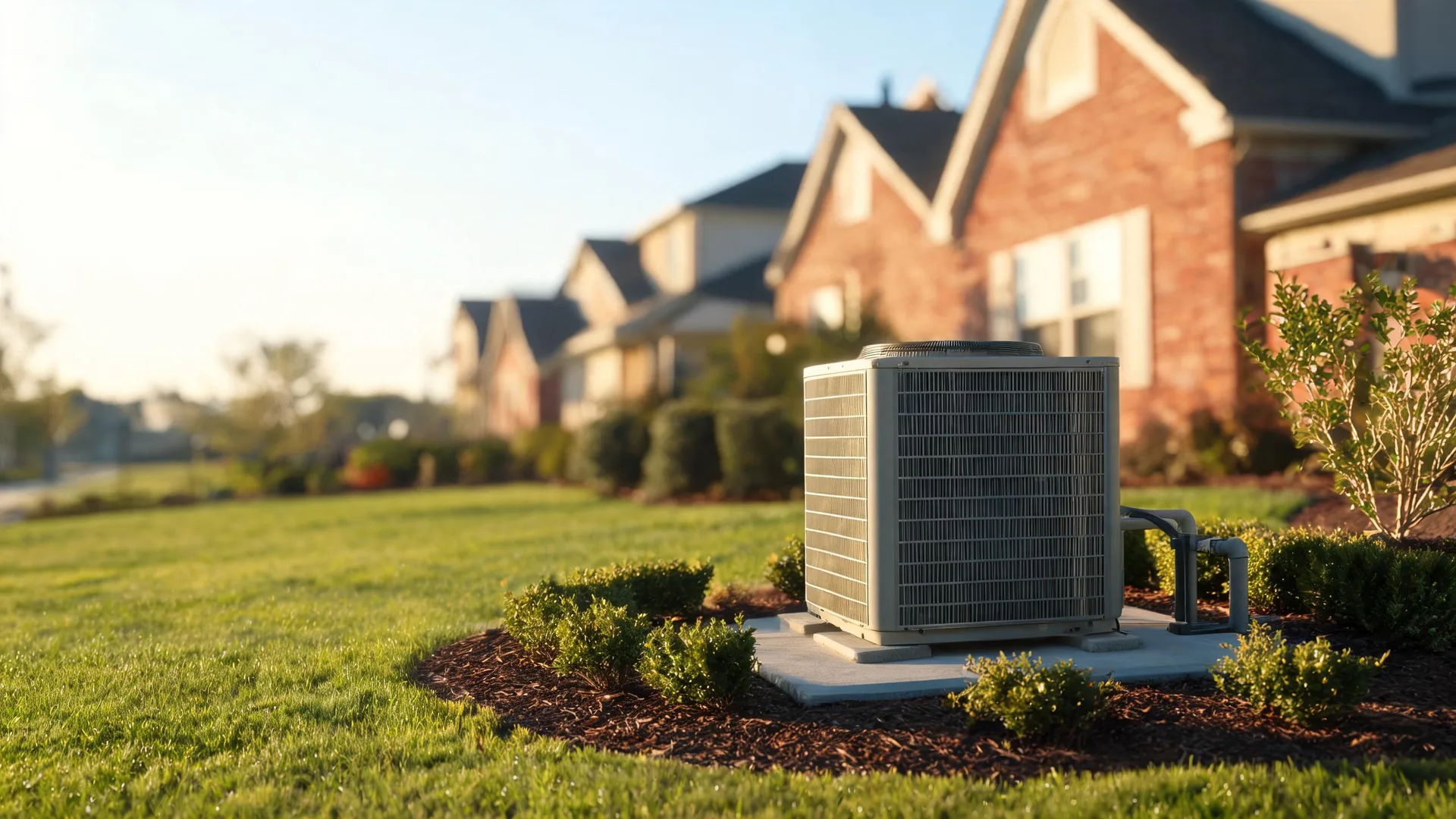
Ask what happens to the existing ductwork

Ductwork that leaks or was never sized right chokes airflow no matter how good the new condenser is. A tech should check the ducts themselves, not just quote a price on the outdoor unit, because nobody can say how the system will perform until that's been done.

Aerial view of a square outdoor air conditioning condenser unit on a concrete pad beside a house wall with a sliding glass door.

A higher-efficiency unit would save about $30 a year to run in Dearborn County compared with a new unit at the federal minimum.

  • A higher-efficiency unit$240 a year
  • A new unit at the federal minimum, 13.4 SEER2$270 a year

Estimates for a typical Dearborn County home, from EIA household energy data, Indiana fuel prices and NOAA climate normals. Your home will differ.

Once the old equipment is out, setting the new condenser is quick. The pad gets leveled and the lines get run. Then comes the part that actually determines how long the system lasts. The line set gets pulled down to a vacuum to clear out air and moisture before any refrigerant goes in. A system charged without that step will still run, but it won't last as long and it won't hit the efficiency it's rated for. The charge itself gets weighed in or adjusted against pressure readings, depending on the equipment. After that the tech fires it up and checks static pressure in the ducts, the temperature split across the coil, and amp draw on the compressor. Those numbers either match what the equipment is built to do, or something gets adjusted before the job is called finished.