





A lit brick residential street at dusk showing a row of two-story homes with covered porches and mature trees.

AC Installation in Lafayette, IN

Tell us about the job

Takes about a minute. No obligation.

New system or replacementCentral ACTippecanoe County, IN
Step 1 of 2

What ZIP code is the job in?

Gas heats a little more than half the homes in Tippecanoe County, and electricity covers most of the rest. That split matters for central air, because a gas furnace already gives the installer a blower and ductwork to pair the new coil with. If your home runs on electric heat, the air handler or heat pump setup is different, and that changes what the installer needs to check before quoting the job. Either way, a new AC has to match the furnace or air handler already in place, not just the house.

3 months
June through August, your air conditioner is on duty
83°F
the average summer afternoon it cools against
26 hail events
in ten years, and hail bends the fins on outdoor coils
13.4 SEER2
the federal minimum any new unit must meet
Isometric cutaway illustration of a house interior showing ducted air handling equipment and duct runs through rooms, connected by piping to an outdoor condenser unit on a pad outside the wall.
Your air conditioner works hardest from June through August.

NOAA nClimDiv, 1991–2020 normals

A standard AC sized right for your home runs about 14.77 cents per kilowatthour here, same as any other appliance in the house.

There's no reason to pay more for a bigger or higher-efficiency unit than this house needs.

Three months of summer, nothing this job needs to oversize for

Cooling runs June through August
Summer afternoons average 83°F
83 damaging wind events from 2015 to 2024

Tippecanoe County sits in climate zone 5A, a cool zone where winter heating is the bigger job but summer still gets humid. That zone sets the floor for what can go into your home. Any split-system central air conditioner under 45,000 Btu/h made from 2023 onward has to meet at least 13.4 SEER2, so that's the baseline a licensed installer is working from before you even talk about brands or options. You can still choose a more efficient system above that line, but nothing below it is legal to install. A federal tax credit is available on qualifying equipment, which is worth factoring in alongside the efficiency rating when you compare quotes.

Go with the standard fit

A standard size and efficiency fit fine here. There's no local reason to go bigger or pricier.

Find a contractor
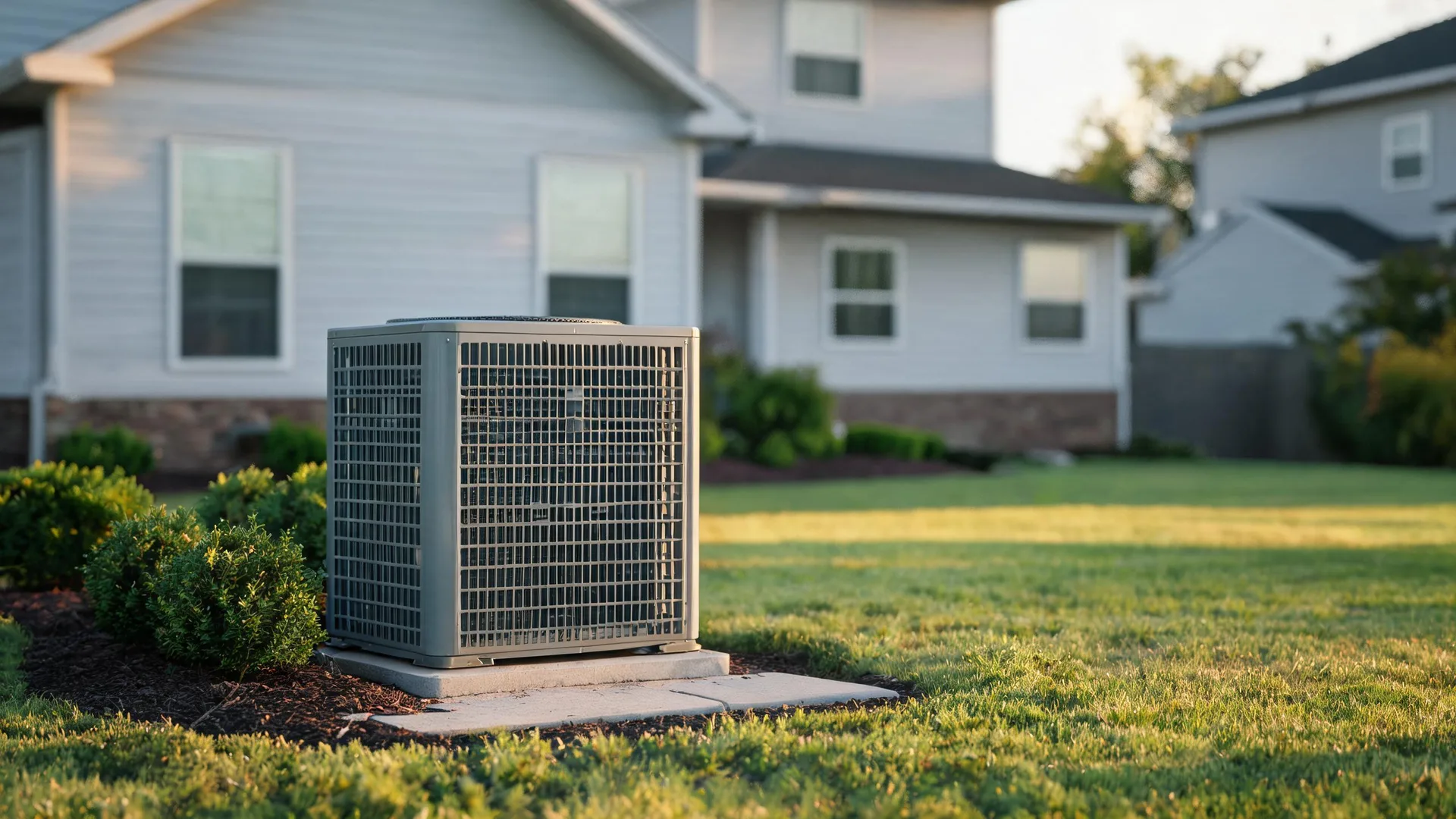
A gray residential air conditioner condenser unit mounted on a concrete pad in an open grass field.

Three months of work, and one good month to get ready for them

Cooling here runs June through August, three months of the year. That leaves May open to get a new system in before the heat shows up and before every other homeowner in the county is booking the same week. A unit put in ahead of that first warm stretch gets tested and running on its own schedule, not squeezed in while a house is already waiting on it.

Ask what size load calculation they ran

A contractor should figure the cooling load from the home itself, the square footage, the windows, the insulation, not just match whatever size is already out there. A system sized off the old unit alone can end up wrong if that one was never sized right in the first place.

Ask what happens to the existing ductwork

A new coil and condenser still have to push air through the ducts already in the walls. If those ducts are too small or leaky, even a well-matched system won't cool evenly room to room. A good quote says whether the ducts were checked, not just the equipment.

Overhead view of a gray outdoor AC condenser unit on a concrete pad beside a mulched garden bed and a house with vinyl siding.

Going above the federal minimum saves little here, about $20 a year.

  • A higher-efficiency unit$210 a year
  • A new unit at the federal minimum, 13.4 SEER2$230 a year

Estimates for a typical Tippecanoe County home, from EIA household energy data, Indiana fuel prices and NOAA climate normals. Your home will differ.

Install day starts with the old system coming out, the condenser outside and the coil that sits on top of the furnace or air handler. Lines get cut, the pad gets cleared, and the installer checks the refrigerant lines for the new unit before anything goes in. A new coil goes in first, matched to the new condenser, then the lines get run and connected, and the whole system gets pressure tested for leaks before it's charged with refrigerant. That charge has to be set to the exact amount the manufacturer specifies, not just topped off by feel. Once it's running, a good installer checks the airflow at the registers and the temperature split between the air going in and the air coming out, because that split is what tells you the system is actually cooling the way it should. Only after that gets signed off should the crew call the job done.