




A row of dark gray single-story houses with asphalt shingle roofs behind trimmed hedges and a mown lawn, framed by overhanging tree branches under an overcast sky.

AC Installation in Kokomo, IN

Tell us about the job

Takes about a minute. No obligation.

New system or replacementCentral ACHoward County, IN
Step 1 of 2

What ZIP code is the job in?

Gas heats 68.6 percent of homes in Howard County, and that matters even for an AC install. Central air almost always shares ductwork with a gas furnace, and the two get installed as a matched system. If your furnace runs on gas, the contractor sizing your new AC will look at that furnace and the ducts it already uses rather than starting from scratch. Electricity heats most of the rest of the county's homes, and those setups often mean a heat pump or an air handler instead of a furnace, which changes how the cooling side gets matched to it. Either way, what is already in your house decides more about the install than anything else.

3 months
June through August, your air conditioner is on duty
82°F
the average summer afternoon it cools against
6 hail events
in ten years, and hail bends the fins on outdoor coils
13.4 SEER2
the federal minimum any new unit must meet
Isometric cutaway illustration of a single-story house showing interior rooms with furniture, overhead ductwork, an indoor air handler unit, and an outdoor condenser unit connected by lines at the side of the building.
Your air conditioner works hardest from June through August.

NOAA nClimDiv, 1991–2020 normals

Summer here runs June through August, with afternoon highs averaging 82.

A system built to run hard all summer is more than this job needs.

Get a new system in before June, not after it quits

Cooling runs June through August
Summer afternoons average 82°F
51 damaging wind events from 2015 to 2024

Howard County falls under climate zone 5A, a cool zone where heating carries more of the load than cooling does. That still shapes what can go into an AC install. Any split-system air conditioner under 45,000 Btu/h has to meet a federal minimum of 13.4 SEER2 if it's a newer unit, and that floor applies no matter how mild the summers run here. A contractor sizing your system starts from that number, not from what the weather alone would call for. Ask what SEER2 rating a quoted system carries, and check it against that minimum.

Go with the standard fit

A standard size and efficiency fit fine here. There's no local reason to go bigger or pricier.

Find a contractor
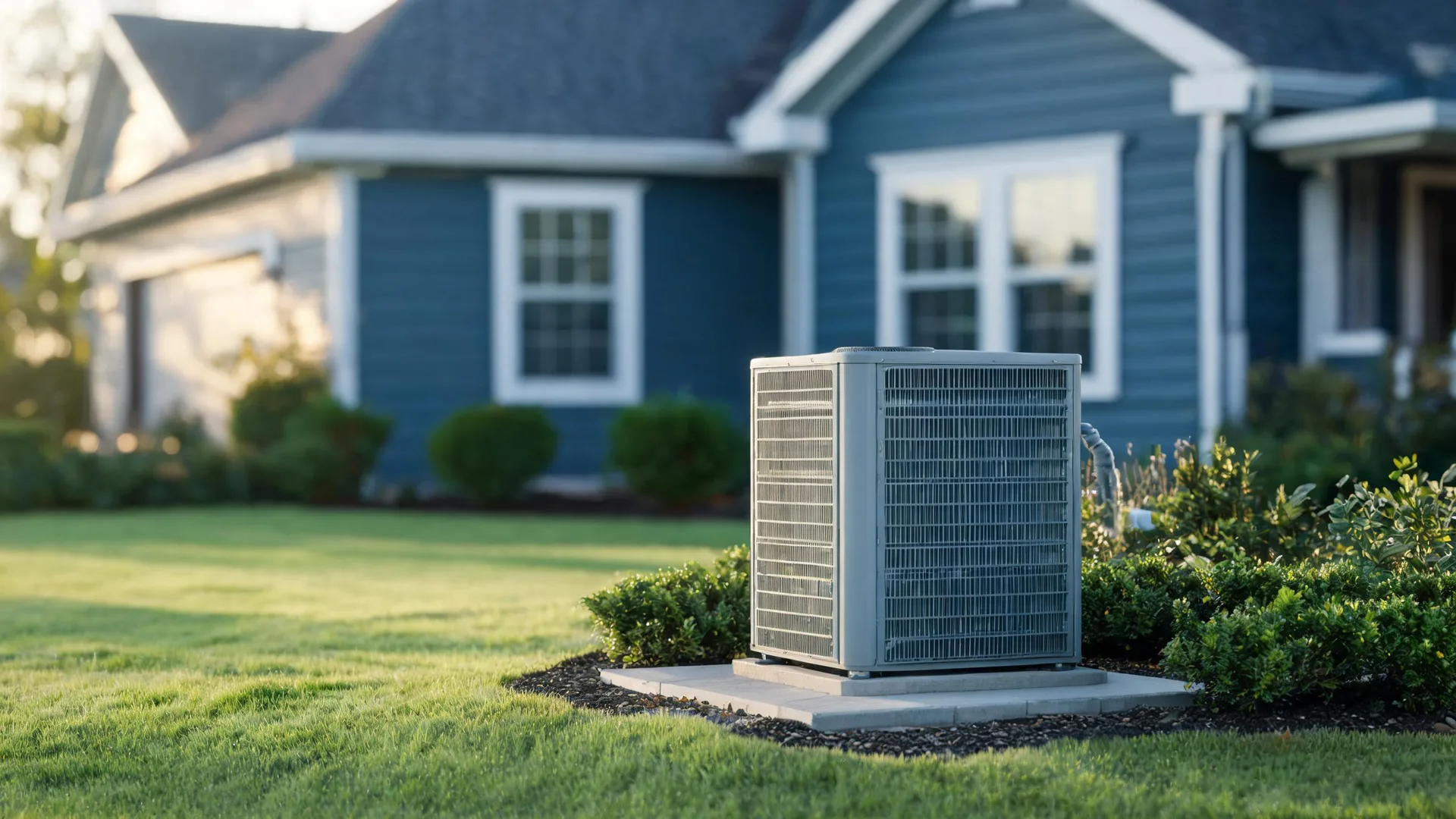
A gray cylindrical air conditioning condenser unit mounted on a concrete pad next to a light-colored vinyl-sided house exterior.

This county's homes were mostly built before the systems going into them

Half the homes in Howard County were built in 1969 or earlier. A new system going into a house that age is going into ductwork and a layout it didn't design. Sizing has to start from what's already there, not from a blank sheet. A contractor measures the house you have before quoting anything.

The rating measures efficiency, not cooling power

SEER2 tells you how much cooling a system delivers for the electricity it draws over a season. It says nothing about how big the system is or how cold it can get a room. Systems with the same rating can still come in different sizes, built for different houses. Don't judge a quote by the rating alone. Ask what size system carries that number.

A higher number only pays off if the system runs enough to use it

The savings from a higher rated system come from hours run against power drawn while running. A system that sits idle most of the year has fewer hours to earn back that difference. That's a question about how the system gets used, separate from whether it fits the house. Worth asking a contractor to walk through rather than assuming higher is always better.

Aerial view of a gray central air conditioning condenser unit on a concrete pad next to a house with vinyl siding.

A higher-efficiency unit would save about $30 a year to run in Howard County compared with a new unit at the federal minimum.

  • A higher-efficiency unit$190 a year
  • A new unit at the federal minimum, 13.4 SEER2$220 a year

Estimates for a typical Howard County home, from EIA household energy data, Indiana fuel prices and NOAA climate normals. Your home will differ.

Installation day starts with the old equipment coming out, not the new one going in. The contractor disconnects the refrigerant lines, pulls the old condenser, and checks the indoor coil before anything new gets set. If that coil is original to the house, it often gets replaced along with the outdoor unit, since the condenser and coil are matched to work together. The line set gets checked too, reused only if it's the right diameter and free of damage, otherwise new copper gets run. Once the new condenser is set on its pad and the coil is in, the system gets evacuated to pull moisture and air out of the lines before refrigerant goes in. Last comes the startup check, where the contractor verifies refrigerant charge, confirms airflow across the coil, and makes sure the thermostat is talking to the system before calling the job done.