





A nighttime view of a tree-lined residential street with illuminated two-story brick houses and street lamps.

AC Installation in Kendallville, IN

Tell us about the job

Takes about a minute. No obligation.

New system or replacementCentral ACNoble County, IN
Step 1 of 2

What ZIP code is the job in?

Gas heats more homes in Noble County than anything else, 41.8 percent, with another 26.2 percent on bottled or LP gas. If that's your setup, an AC installation usually means adding a central air conditioner alongside the furnace you already have, tied into the same ductwork and the same thermostat. The furnace still handles winter. The new AC only has to handle summer. If your home runs on LP instead of utility gas, that doesn't change anything about how the cooling side goes in. The tank and the furnace stay separate from whatever system gets added for cooling.

3 months
June through August, your air conditioner is on duty
81°F
the average summer afternoon it cools against
16 hail events
in ten years, and hail bends the fins on outdoor coils
13.4 SEER2
the federal minimum any new unit must meet
Isometric grayscale illustration of a cutaway house showing interior rooms, ceiling ductwork connected to an indoor air handler, and an outdoor condenser unit linked by lines along the exterior wall.
Your air conditioner works hardest from June through August.

NOAA nClimDiv, 1991–2020 normals

Half the homes in Noble County were built in 1976 or earlier, half later.

A standard-size central air conditioner fits either one.

Three months of cooling, with mild afternoons, is not a hard job for a system here

Cooling runs June through August
Summer afternoons average 81°F
54 damaging wind events from 2015 to 2024

Cooling in Noble County only runs June through August. If your current system is on its way out, May is the month to get the new one in, not after it fails on a hot day. Wait too long and you're choosing from whatever's in stock, on whoever's schedule has an opening. A planned replacement means the installer has time to size the system properly for your house and your ductwork, instead of swapping in something close enough to get by. Three months a year is all this system has to answer for. Getting it in before June means it's ready for all three.

Electricity here runs 14.77 cents a kilowatt-hour, below the national average

Electricity in Indiana ran 14.77 cents a kilowatt-hour in 2024, below the national average. At that rate, paying extra for the highest-efficiency unit takes longer to earn back than it would somewhere with pricier power. That makes sizing and installation the bigger decision. A system matched to your ductwork and in place before summer will serve you better than a higher efficiency tier chosen instead.

Find a contractor
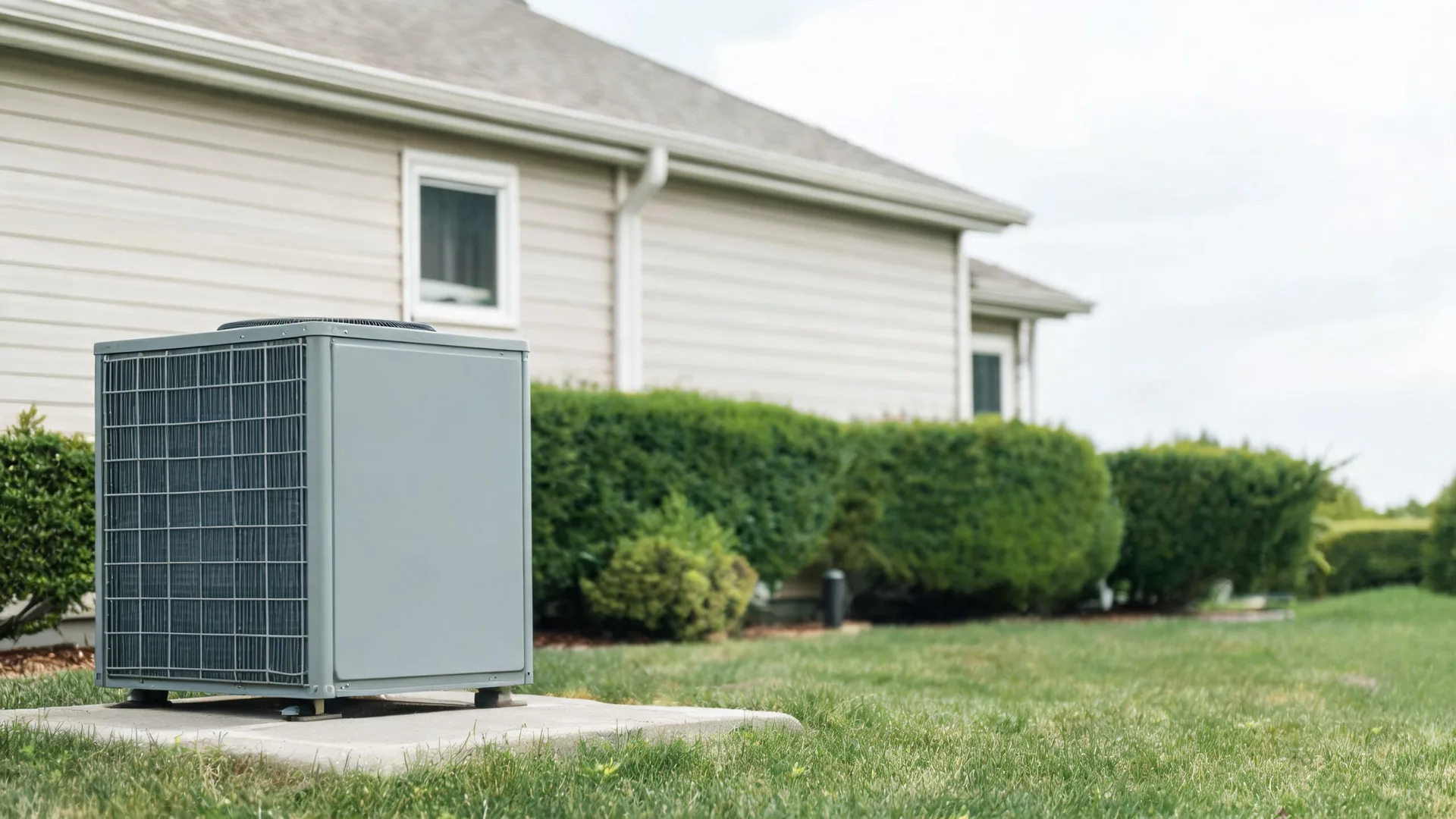
An outdoor residential air conditioning condenser unit mounted on a concrete pad, surrounded by gravel with a blue sky in the background.

The box costs less than the work around it

What drives the cost of an installation is mostly the work the installer can't skip. Sizing the system means calculating the actual cooling load for your house, not picking a box off the shelf. Too big and it cools the air fast but shuts off before it pulls the moisture out, so the house feels clammy. Too small and it runs constantly trying to catch up. Either way you paid for the wrong thing. Beyond the unit itself, there's the line set connecting the outdoor condenser to the indoor coil, the condensate drain that has to be run and sloped correctly, and in a lot of homes, modifications to the ductwork so the new system can actually move the air it's rated for. A new thermostat, an electrical disconnect, a pad for the condenser to sit on, all of that is part of the job even though none of it is the machine itself. The installers who charge less are sometimes skipping one of these steps, not finding a cheaper way to do all of them.

The old unit gets disconnected and hauled off

The installer disconnects the refrigerant lines, pulls the old condenser off its pad, and takes it with them. The indoor coil comes out too if it's being replaced, which it usually is since matching an old coil to a new condenser rarely works well. None of this gets left behind for the homeowner to deal with.

The refrigerant has to come out first, not just the unit

Old systems still hold refrigerant, and that can't just be vented into the air. A licensed installer recovers it into a tank before touching the lines. This is a legal requirement, not an optional step, and it's one more reason this isn't a job for whoever's cheapest or fastest.

An outdoor central air conditioning unit mounted on a concrete pad beside a blue-sided house at sunset.

A higher-efficiency unit would save about $30 a year to run in Noble County compared with a new unit at the federal minimum.

  • A higher-efficiency unit$160 a year
  • A new unit at the federal minimum, 13.4 SEER2$190 a year

Estimates for a typical Noble County home, from EIA household energy data, Indiana fuel prices and NOAA climate normals. Your home will differ.

Installation day starts with the parts of the job that happen before anyone touches the old equipment. The crew lays down drop cloths and runs a path to wherever the condenser sits outside, because the work moves through the house, not around it. Once the old refrigerant is recovered and the unit's disconnected, the new line set gets run and the indoor coil goes in above the furnace. The condenser sets on its pad outside, the lines get connected and brazed, then pulled down to a vacuum to clear out any moisture or air before refrigerant goes in. That vacuum step matters more than it looks. Skip it and moisture left in the lines can freeze or corrode things from the inside, long after the crew's gone. Once everything's connected, the system gets charged, the thermostat gets wired in or swapped, and the installer runs it through a full cycle to check the temperature split and make sure it's pulling moisture out of the air the way it should.