





A row of dark-clad single-story cottages with gabled roofs behind trimmed hedges, with a mown lawn in the foreground and large leafy trees under an overcast sky.

AC Installation in Jeffersonville, IN

Tell us about the job

Takes about a minute. No obligation.

New system or replacementCentral ACClark County, IN
Step 1 of 2

What ZIP code is the job in?

Gas furnace and a separate AC unit is the setup in about half the homes in Clark County, and electricity heats most of the rest. If your house already has gas heat, a new central air system just adds the outdoor condenser and matches it to the coil above your furnace. Homes on electric heat usually have that same ducted setup already in place, since electric furnaces and heat pumps use the same ducts central air needs. Either way, the ductwork already in your house does most of the work of deciding what fits. A contractor sizing your new AC will size it to your home, not to what the neighbors have, but knowing which fuel runs your heat tells them what they're connecting to before they ever see the house.

5 months
May through September, your air conditioner is on duty
86°F
the average summer afternoon it cools against
38 hail events
in ten years, and hail bends the fins on outdoor coils
13.4 SEER2
the federal minimum any new unit must meet
Isometric line illustration of a cutaway single-story building showing interior rooms, ceiling ductwork, an indoor air handler, and an outdoor condenser unit connected by a line set.
Your air conditioner works hardest from June through August.

NOAA nClimDiv, 1991–2020 normals

AC in Clark County runs May through September.

April is the month to put in a new system, before the first warm week puts it to the test.

A standard system handles this climate fine

Cooling runs May through September
Summer afternoons average 86°F
79 damaging wind events from 2015 to 2024
A standard system handles this climate fineIndiana electricity runs 14.77 cents a kilowatt-hour, nothing here calls for oversizing it.

Clark County sits in zone 4A, a mixed climate that asks real work of both sides of the system, heating and cooling. Any split-system air conditioner installed here, if it's under 45,000 Btu/h and built from 2023 on, has to meet a federal minimum of 13.4 SEER2. That floor applies whether you're matching a new condenser to an existing gas furnace or replacing the whole setup. It's a minimum, not a target, so contractors have room to quote higher-efficiency equipment if you want lower bills over the system's life. A homeowner comparing quotes should expect every legitimate bid to clear that number already.

Replace it before the season

Replace it before the season starts, so it happens on your schedule, not in a hurry.

Find a contractor
An outdoor air conditioning condenser unit mounted on a concrete pad beside a house, with electrical conduit running to a wall-mounted disconnect box.

What to ask before you sign

A new condenser will run every cooling day for as long as you own it, so the question worth asking isn't just the price on the quote. Ask what the warranty covers on the compressor versus the rest of the unit, since those terms are often different. Ask whether the coil matches the condenser, a mismatched pair runs harder and wears faster than one sized as a set. Ask what refrigerant it uses, since that affects what service and parts look like years out. And ask how the contractor is sizing it to your house, not just the square footage but the ductwork and the windows, because a unit that's too big will short cycle and one that's too small will run constantly without ever quite catching up.

The old refrigerant gets recovered, not vented

A contractor has to reclaim whatever refrigerant is left in the old condenser before it comes apart. It's against the law to just let it out, and a lot of older systems still hold the refrigerant that's been phased out, so recovery is the only way to deal with it.

The pad and the line set usually stay

The concrete pad under the old condenser is almost always reused, and the copper line set running to the coil often is too, if it's in good shape and sized right for the new system. What goes is the condenser itself and anything corroded or crimped from years outside.

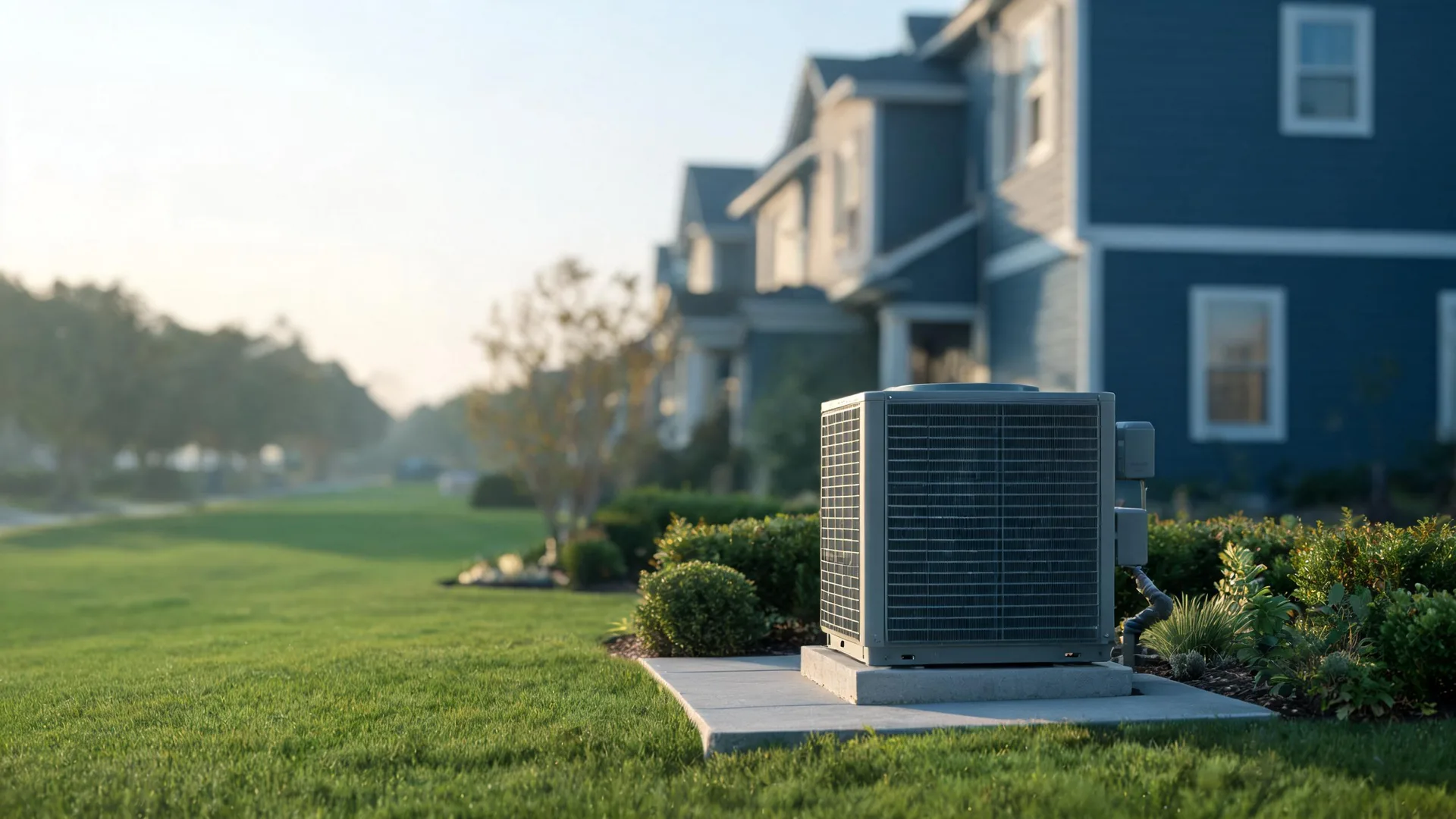
An outdoor central air conditioning unit mounted on a concrete pad beside a blue-sided house at sunset.

A higher-efficiency unit would save about $30 a year to run in Clark County compared with a new unit at the federal minimum.

  • A higher-efficiency unit$290 a year
  • A new unit at the federal minimum, 13.4 SEER2$320 a year

Estimates for a typical Clark County home, from EIA household energy data, Indiana fuel prices and NOAA climate normals. Your home will differ.

Install day starts with the old system coming out, not the new one going in. The line set gets disconnected, the refrigerant recovered, and the old condenser and coil come off their pad and out of the cabinet before anything new goes in. Setting the new condenser and bolting in the coil is usually the fast part. Most of the day goes to the connections. A contractor brazes the line set joints, pulls a vacuum on the lines to clear out air and moisture, then checks for leaks before any refrigerant goes in. Once it's charged, the system runs and a contractor checks the temperature split between the air going into the return and the air coming out of the supply, which is how they confirm it's actually cooling the way it should. The thermostat gets wired last, and the whole system runs through a full cycle before anyone calls it done.