





A illuminated two-story red brick house on a quiet residential street at dusk, flanked by mature trees under a deep blue evening sky.

AC Installation in Jasper, IN

Tell us about the job

Takes about a minute. No obligation.

New system or replacementCentral ACDubois County, IN
Step 1 of 2

What ZIP code is the job in?

Gas heats close to half the homes in Dubois County, electric heats about a third, and propane covers most of the rest. An AC installation usually works with whatever furnace is already there, since the air conditioner shares the ductwork and the blower but not the heat source. If your home has a gas furnace, the AC install is really about matching the right coil and condenser to that furnace and the ducts you already have. A home that heats with electricity may already have a heat pump, which changes what an installer needs to check before adding or replacing cooling. Either way, the existing system tells the installer what will fit without tearing into the ductwork.

5 months
May through September, your air conditioner is on duty
86°F
the average summer afternoon it cools against
12 hail events
in ten years, and hail bends the fins on outdoor coils
13.4 SEER2
the federal minimum any new unit must meet
Isometric cutaway illustration of a single-story house showing interior rooms with ductwork and an air handler, connected by refrigerant lines to an outdoor condenser unit on the left.
Your air conditioner works hardest from June through August.

NOAA nClimDiv, 1991–2020 normals

The old condenser and coil come out once the new system is in place, not before.

Swapping them in that order keeps the house cooled right up until the new unit takes over.

Jasper doesn't need an oversized system to handle its summers

Power costs 14.77 cents a kWh statewide
Cooling runs May through September
Summer afternoons average 86°F

Dubois County sits in climate zone 4A, which asks real work of both sides of a system, heating and cooling alike. Any split-system air conditioner installed here has to meet a federal minimum of 13.4 SEER2, so long as it was built after January 1, 2023. That's a federal floor, not a local one, so it applies no matter which installer you call. It narrows the field some, since older, lower-efficiency units simply aren't made anymore. A system that clears this bar also tends to qualify for the federal tax credit on efficient equipment, which is worth asking about when you're comparing quotes.

Get the new system in before May

Cooling in Dubois County runs May through September. Putting in a new system during April, before that first hot stretch, means the old one isn't struggling through a changeover in the middle of summer. It also gives an installer room to get the sizing and the coil match right, instead of rushing a swap while the house needs cooling right now.

Find a contractor
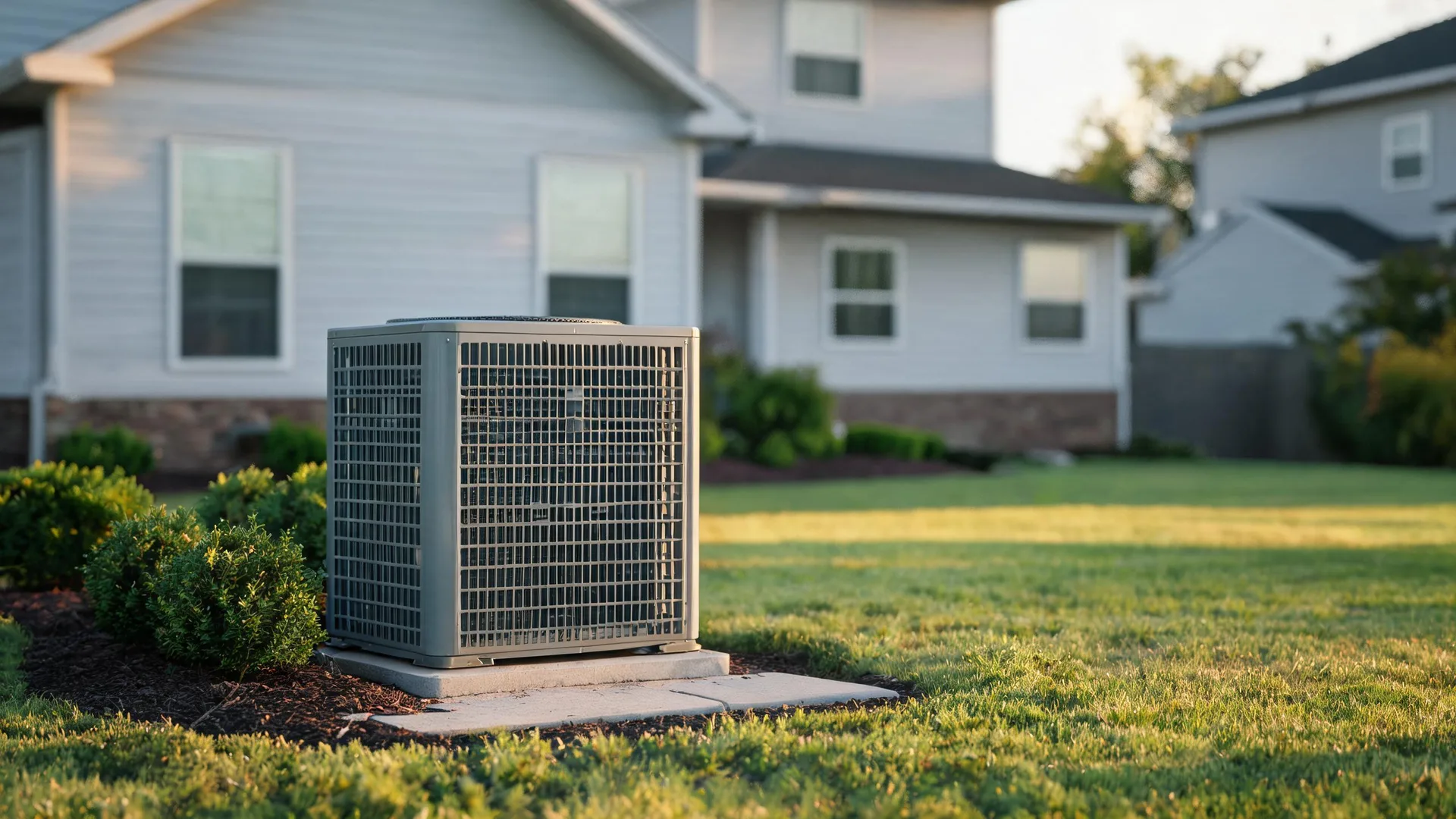
A gray metal air conditioning condenser unit mounted on a concrete pad in a flat grassy field under a partly cloudy sky.

A normal summer, start to finish

Five months of cooling a year, with afternoons averaging 86°F through June, July and August. That's a normal summer workload for a split system, not a hard one. A correctly sized unit, matched to your ductwork and your home's square footage, will cover it without running flat out all day. There's no case here for going bigger than the load calls for. Oversizing an AC doesn't cool a house faster. It just cycles on and off more, which leaves the air more humid than a properly sized system running longer, steadier stretches.

The rating is a season average, not a guarantee

SEER2 tells you how much cooling a system delivers for the energy it uses, averaged over a typical season. It's measured under set conditions in a lab. Your actual result depends on duct condition, the coil match, and whether the system is sized right for the house. A high rating on the label doesn't make up for a leaky duct run or a coil that doesn't match the condenser.

A higher number costs more up front

Equipment above the minimum rating generally costs more to buy, and the gain shows up slowly, over years of lower electric bills rather than right away. Whether that trade pays off depends on how many months a year the system runs and what power costs where you live. It's worth asking an installer to walk through a couple of rating tiers side by side rather than picking on the number alone.

Aerial view of a residential air conditioning condenser unit mounted on a concrete pad next to a house with vinyl siding and a sliding glass door.

A higher-efficiency unit would save about $40 a year to run in Dubois County compared with a new unit at the federal minimum.

  • A higher-efficiency unit$270 a year
  • A new unit at the federal minimum, 13.4 SEER2$310 a year

Estimates for a typical Dubois County home, from EIA household energy data, Indiana fuel prices and NOAA climate normals. Your home will differ.

The new condenser and coil go in before the old ones come out, so the crew sets the new unit in place and runs new line set alongside what's there. Once the new coil is seated in the plenum and connected, the system gets evacuated to pull out air and moisture before any refrigerant goes in. A technician checks the charge against what the manufacturer specifies, not by feel. That's also when a mismatched plenum or a line set that won't reach shows up, and it gets handled before the old equipment is disconnected. Only after the new system is running does the old condenser and coil come out. Before anyone leaves, the system runs a full cycle and gets checked for airflow and temperature drop across the coil, so it's doing what it's supposed to before the first hot day.