






Three illuminated two-story brick houses on a tree-lined residential street photographed at twilight, with warm window light and landscape uplighting visible against a deep blue evening sky.

AC Installation in Hammond, IN

Tell us about the job

Takes about a minute. No obligation.

New system or replacementCentral ACLake County, IN
Step 1 of 2

What ZIP code is the job in?

Gas heats 86.3 percent of homes in Lake County, which tells you something about AC installation too. A home already set up with gas heat usually has a furnace in the basement or a closet, and central air pairs with that furnace through the same ductwork and the same air handler. If your furnace came with the house, the new AC unit typically matches up with it rather than replacing it. The coil goes in above or beside the furnace, the condenser sits outside, and the existing ducts carry the cold air. Homes on electric heat, about 10.5 percent here, are more likely to run on a heat pump or air handler setup already built for cooling, so the install looks a little different.

3 months
June through August, your air conditioner is on duty
82°F
the average summer afternoon it cools against
32 hail events
in ten years, and hail bends the fins on outdoor coils
13.4 SEER2
the federal minimum any new unit must meet
Isometric line illustration of a cutaway single-story building showing interior rooms, ceiling ductwork, an indoor air handler, and an outdoor condenser unit connected by a line set.
Your air conditioner works hardest from June through August.

NOAA nClimDiv, 1991–2020 normals

A bigger condenser doesn't cool the house faster, it just cycles on and off more.

The right size runs longer, pulls more moisture out of the air, and wears less doing it.

Lake County gets rough weather, but your AC itself can be standard size

175 severe weather events from 2015 to 2024
17% of homes statewide lost power a day or more in 2024
121 damaging wind events from 2015 to 2024
Get it done before JuneCooling runs June through August here, so May is the month to get it in.

Lake County falls under zone 5A, and any new split-system air conditioner installed here has to meet a federal minimum of 13.4 SEER2 if it's rated under 45,000 Btu/h, which covers most homes. That rule applies whether you're matching a system to an existing furnace or setting up a heat pump from scratch. It also narrows the field some, since older low-efficiency units no longer get made. A federal tax credit is available for qualifying high-efficiency equipment, which is worth asking about when you're comparing options.

Go with the standard fit

A standard size and efficiency fit fine here. There's no local reason to go bigger or pricier.

Find a contractor
A gray cylindrical air conditioning condenser unit mounted on a concrete pad next to a light-colored vinyl-sided house exterior.

Older homes, same ducts

Half the homes in Lake County were built in 1968 or earlier. A house that old was built for the AC it has now, not for whatever gets installed next, and the ductwork is the part that doesn't change when the equipment does. New equipment has to work with the ducts already in the walls and floor. If a system gets sized off the house alone without checking what the ducts can actually move, it ends up short on airflow no matter how good the condenser is.

The coil and condenser are sold as a pair

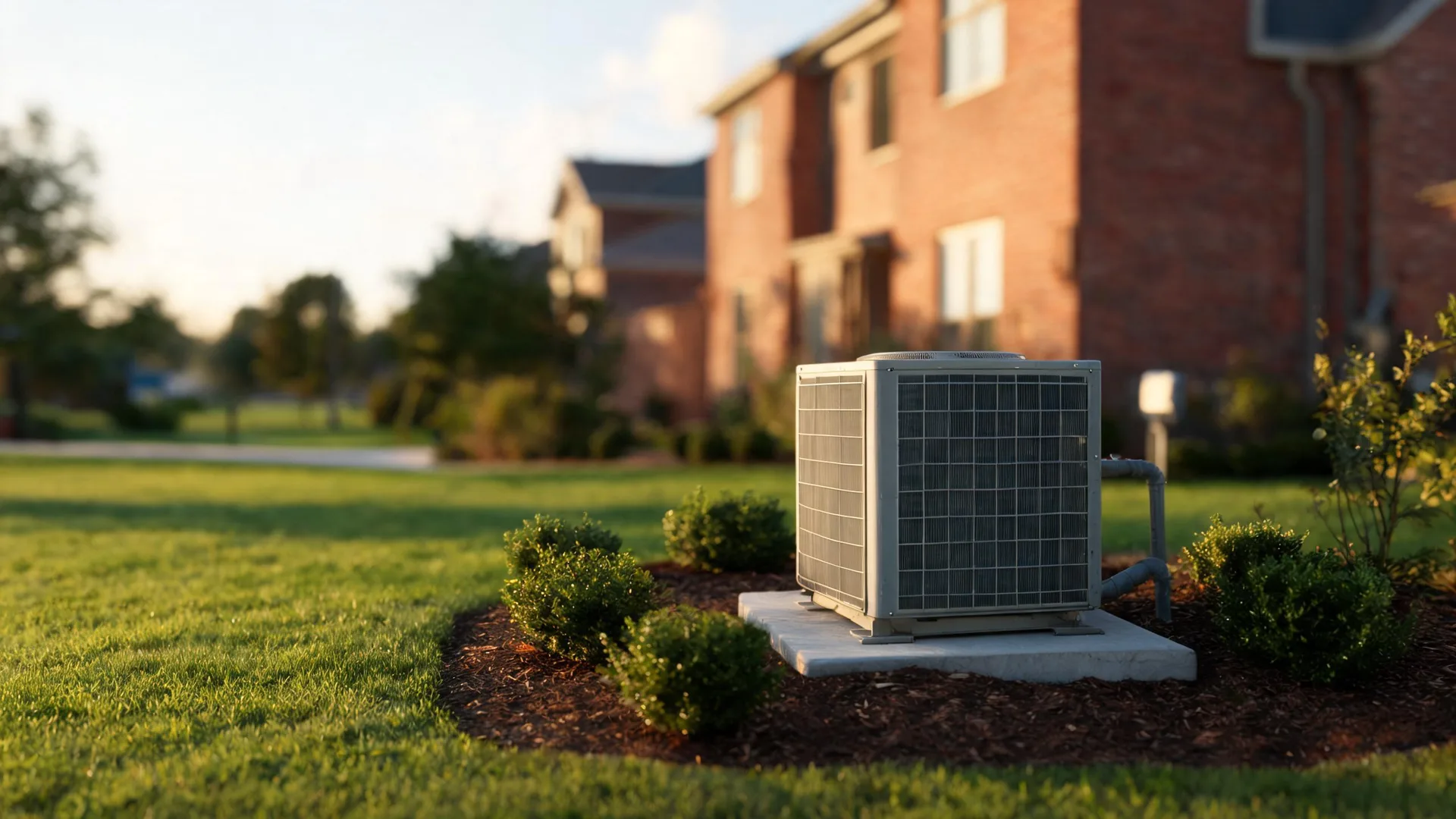
The condenser outside is the part everyone pictures, but the coil inside the furnace cabinet has to match it. A contractor can set a new condenser onto an old coil and the system will run, but it won't cool the way it's rated to. Matching the coil, the lines and the condenser is what the install is actually pricing.

The ducts decide what the equipment can do

Before anyone settles on a unit, the ducts get checked for whether they can move the air that unit needs. A leaky run, a missing return, a section that's too narrow, any of that is work beyond hanging the condenser and coil. None of it shows up in the equipment itself, but all of it decides whether the system delivers what it's rated for.

Aerial view of a square outdoor air conditioning condenser unit on a concrete pad beside a house wall with a sliding glass door.

Going above the federal minimum saves little here, about $20 a year.

  • A higher-efficiency unit$190 a year
  • A new unit at the federal minimum, 13.4 SEER2$210 a year

Estimates for a typical Lake County home, from EIA household energy data, Indiana fuel prices and NOAA climate normals. Your home will differ.

Install day starts outside, well before the condenser goes in. The old unit comes out, the pad gets checked or replaced, and the line set gets inspected or run new depending on what's there. Inside, the coil goes in above or beside the furnace, and that joint has to be sealed right or the system loses its charge slowly over time. The lines get connected, then the whole system gets evacuated to pull out moisture and air before any refrigerant goes in. That step matters more than it looks like it should. Skip it or rush it, and the system runs on a charge it was never supposed to have, and the compressor wears for it. Once it's charged, the contractor checks the pressures against what the equipment calls for and tests the airflow coming through the vents.