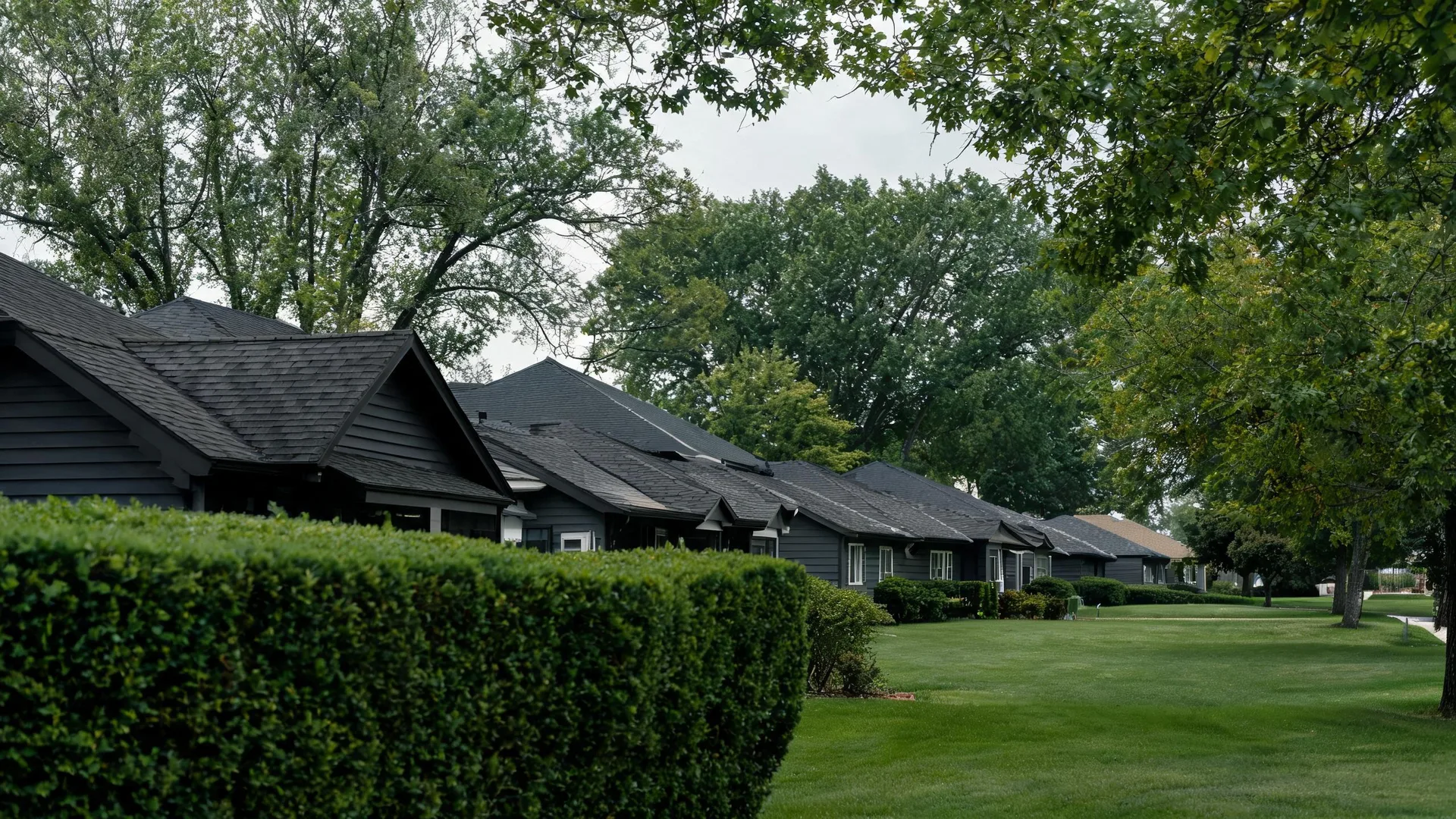




A row of dark-sided single-story houses with gray shingled roofs behind a trimmed hedge, with mown lawn and large deciduous trees under an overcast sky.

AC Installation in Greenfield, IN

Tell us about the job

Takes about a minute. No obligation.

New system or replacementCentral ACHancock County, IN
Step 1 of 2

What ZIP code is the job in?

Gas heats 60.6% of homes in Hancock County, more than any other fuel. A central air system here is almost always paired with a gas furnace, sharing the same ductwork and sometimes the same control board. That is the setup most installers will expect to see. Electricity heats 30.8% of homes in the county, and there the air handler takes the furnace's place instead. Either way, telling the installer what heats your home now is the first step toward sizing the new system right.

3 months
June through August, your air conditioner is on duty
83°F
the average summer afternoon it cools against
24 hail events
in ten years, and hail bends the fins on outdoor coils
13.4 SEER2
the federal minimum any new unit must meet
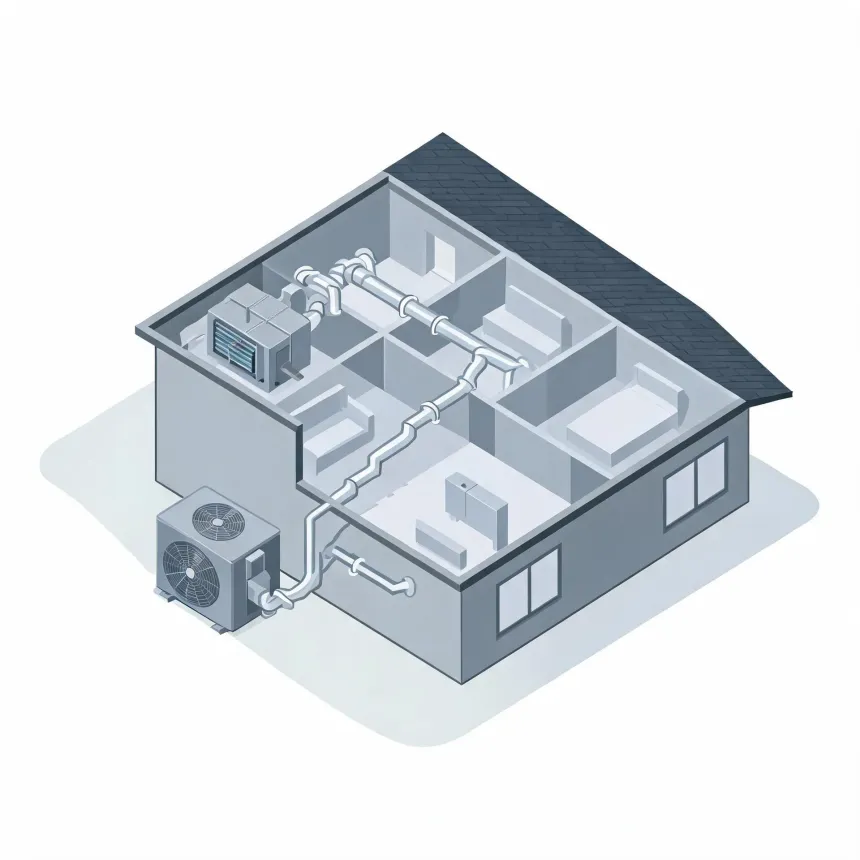
Isometric grey illustration of a cutaway single-story house showing interior rooms, ceiling ductwork connected to an indoor air handler, and an outdoor condenser unit linked by lines outside the wall.
Your air conditioner works hardest from June through August.

NOAA nClimDiv, 1991–2020 normals

Summer here runs June through August, with afternoon highs averaging 83 degrees.

Three months of moderate heat does not ask much of a condenser, so a dependable mid-range system is enough.

May is the month to put in a new AC, before June asks it to work

Cooling runs June through August
Summer afternoons average 83°F
53 damaging wind events from 2015 to 2024

Hancock County falls under zone 5A, a cool climate where the furnace carries more of the year's work than the air conditioner does. Even so, any split-system AC put in here has to clear the same federal floor as everywhere else. That floor is 13.4 SEER2 for systems under 45,000 Btu/h, and it rules out older, lower-efficiency units some installers may still have sitting on a shelf. It does not mean you need to go past that minimum. With a mild summer behind the cooling load here, a unit at or near 13.4 SEER2 will do the job without charging you for capacity this climate never asks for.

A standard system is the right size for Greenfield summers

Electricity in Indiana ran 14.77 cents per kilowatthour in 2024. A system sized to the load here, instead of padded past it, is what keeps that rate from adding up to more than it needs to. Nothing about summers in Hancock County calls for a bigger or pricier unit than the standard size.

Find a contractor
A gray metal air conditioning condenser unit mounted on a concrete pad in a flat grassy field under a partly cloudy sky.

Three months of running time a year is light work

Three months of 83 degree afternoons is a short season for a condenser to run. Summers here will not rack up the hours that wear a compressor down early, so age and upkeep matter more than load for how long this system lasts. That is worth knowing when a bid pushes extra capacity or features this climate will not call on. A unit kept clean and serviced on schedule has little working against it here.

Ask for the load calculation, not just a quote

A contractor should size your system by running a load calculation on your house, counting windows, insulation, and square footage, not by matching the unit you already have. Homes that look alike from the street can need different tonnage once someone actually checks. If an installer quotes a number before looking at the house, ask what it's based on.

Ask what happens to the ductwork

The new condenser only works as well as the ducts moving air through the house. If the ducts are undersized, leaky, or sized for a different unit, the new system can run fine on the outside and still leave rooms uneven. A good installer checks the duct system before quoting, not after it's installed.

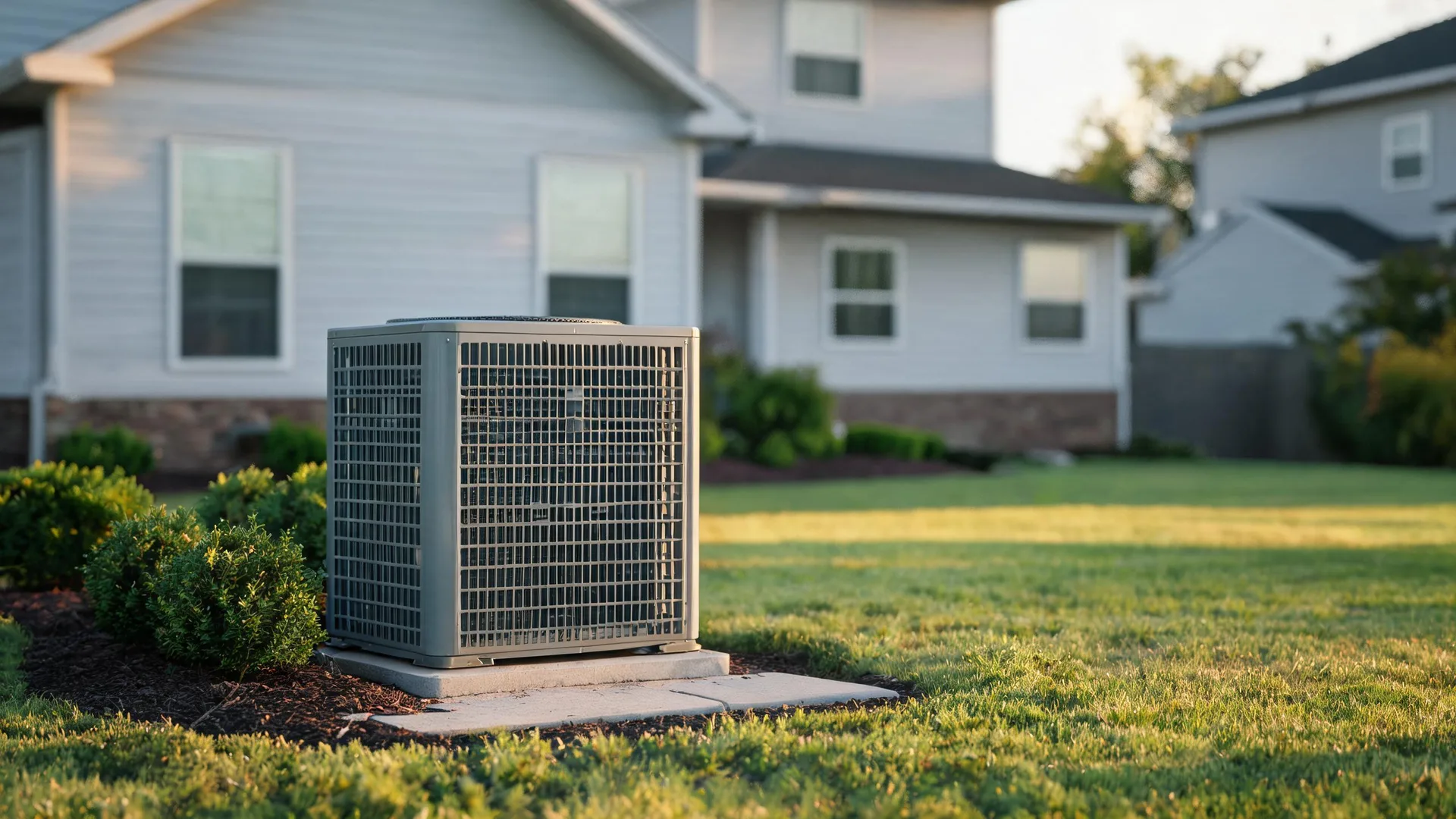
Aerial view of a residential air conditioning condenser unit mounted on a concrete pad next to a house with vinyl siding and a sliding glass door.

A higher-efficiency unit would save about $30 a year to run in Hancock County compared with a new unit at the federal minimum.

  • A higher-efficiency unit$210 a year
  • A new unit at the federal minimum, 13.4 SEER2$240 a year

Estimates for a typical Hancock County home, from EIA household energy data, Indiana fuel prices and NOAA climate normals. Your home will differ.

Installation day starts with the old system coming out, condenser, coil, and in a lot of cases the line set too, since matching new refrigerant lines to old ones is asking for trouble. The condenser pad outside has to be level and clear of the coil's airflow before the new unit ever gets set on it. Inside, the evaporator coil goes in above or beside the furnace, and that's where a mismatch between coil and furnace cabinet can slow the whole job down if nobody checked sizes ahead of time. Once everything is in place, the line set gets connected, the system is pressure tested for leaks, and only then does it get charged with refrigerant. A tech will also check airflow across the coil and confirm the thermostat is talking to the right equipment before calling it done. None of that takes long when the parts match what was quoted. It takes a lot longer when they don't.