







A quiet suburban street at twilight featuring two-story brick homes with illuminated windows and large trees lining the sidewalk.

AC Installation in Greencastle, IN

Tell us about the job

Takes about a minute. No obligation.

New system or replacementCentral ACPutnam County, IN
Step 1 of 2

What ZIP code is the job in?

Electricity heats 41.5% of the homes in Putnam County, more than any other fuel, with gas and propane close behind. That matters when you're installing new AC, because a lot of homes here already run electric heat strip or heat pump systems alongside central air, and the outdoor unit you choose has to work with what's already in place. If your home heats with electricity now, a straight AC swap usually lines up fine with the existing ductwork and electrical setup. Worth checking what your current system runs on before you assume the new one needs anything different.

3 months
June through August, your air conditioner is on duty
83°F
the average summer afternoon it cools against
15 hail events
in ten years, and hail bends the fins on outdoor coils
13.4 SEER2
the federal minimum any new unit must meet
Isometric grayscale illustration of a cutaway house showing interior rooms, ceiling ductwork connected to an indoor air handler, and an outdoor condenser unit linked by lines along the exterior wall.
Your air conditioner works hardest from June through August.

NOAA nClimDiv, 1991–2020 normals

AC runs June through August here, about three months a year.

May is the month to get a new system in, before the first hot stretch hits.

A normal-size system handles summer here, nothing more

Power costs 14.77 cents a kWh statewide
Cooling runs June through August
Summer afternoons average 83°F
Summer here doesn't push an AC hardJune, July and August average 83°F here, three months of real cooling work a year.

Putnam County sits in climate zone 4A, a mixed zone that asks real work of both sides of the system, heating and cooling. Any split-system central air conditioner installed here now has to meet 13.4 SEER2 at minimum. That's a federal floor, not a local add-on, so it applies no matter who installs it or what brand you pick. It limits what a contractor can legally put in, which narrows the field some when you're comparing options. Worth asking any unit you're quoted whether it clears that number.

A mid-tier system holds up fine here

Three months of real heat a year is not a hard life for an air conditioner. Reliable beats top-of-the-line when the unit only works June through August. Put the money into a system that is sized and installed right, not the highest efficiency number on the sheet.

Find a contractor
A man in a dark cap and shirt carries a worn leather tool bag up wooden porch steps toward an orange front door, with a potted shrub in a terracotta planter to the right.
An outdoor air conditioning condenser unit mounted on a concrete pad beside a house, with electrical conduit running to a wall-mounted disconnect box.

Bigger isn't safer, it's just a different way to wear out a compressor

Sizing an air conditioner is not a matter of picking bigger and calling it safe. A unit that's too big cools the room fast, shuts off, and starts again a few minutes later. That short cycle never gives the system time to pull moisture out of the air, so the house feels clammy even though the thermostat reads satisfied. It also means the compressor is starting and stopping far more than it should over its life, and starting is the hardest thing a compressor does. A unit that's too small runs long enough to manage the temperature, but it runs constantly on the hottest days and still can't keep up, so it wears out chasing a load it was never built to handle. The right size comes from a load calculation, not a swap of the old number for a new one. That calculation looks at the square footage, the windows and which way they face, the insulation, the ceiling height, and how much air leaks in and out. A house with a lot of west-facing glass or a leaky attic can need more cooling than a similar house without those things. A contractor doing this right measures the house rather than matching the nameplate on the unit coming out.

The old unit gets hauled away, not left behind

A contractor doing the install disconnects the old outdoor unit, recovers the refrigerant left in the lines, and takes the equipment off the property. Refrigerant can't legally be vented into the air, so it gets captured and taken with the unit. You shouldn't be left with an old condenser sitting on a slab wondering who's responsible for it.

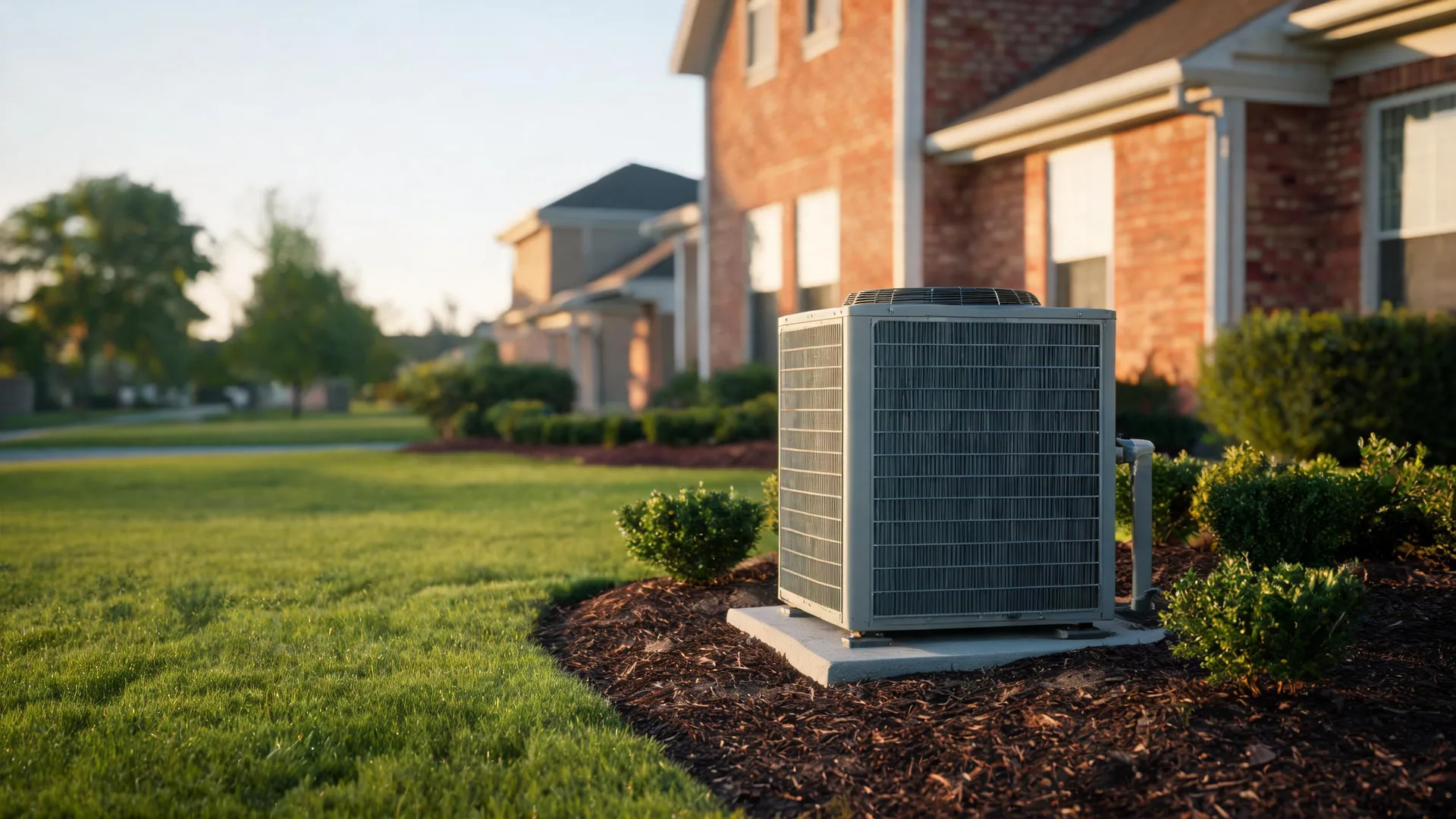
The indoor coil usually goes with it

The evaporator coil inside the air handler or furnace is matched to the old outdoor unit's refrigerant type and capacity. When the outdoor unit is replaced, that coil typically comes out too, since pairing a new condenser with an old coil can mean the system never charges or performs the way it's supposed to. Ask whether the quote includes the coil swap, not just the unit outside.

An outdoor central air conditioning unit mounted on a concrete pad beside a blue-sided house at sunset.

A higher-efficiency unit would save about $30 a year to run in Putnam County compared with a new unit at the federal minimum.

  • A higher-efficiency unit$200 a year
  • A new unit at the federal minimum, 13.4 SEER2$230 a year

Estimates for a typical Putnam County home, from EIA household energy data, Indiana fuel prices and NOAA climate normals. Your home will differ.

Install starts outside with the old equipment, then moves in. The crew recovers the refrigerant, disconnects the lines, and pulls the outdoor unit and coil together since they're matched sets. A new line set or new flare fittings go in if the old ones don't suit the replacement equipment. Setting the outdoor unit is its own step. It needs a level pad, clearance from the wall, and a condensate drain sloped the right way. Once the new coil and condenser are in place, the lines get evacuated to pull out moisture and air before any refrigerant goes in. Trapped air or moisture left in the line set will wreck a compressor fast. Charge gets weighed in to the manufacturer's spec, not eyeballed. Last comes the test, checking airflow across the coil, static pressure in the ducts, and the temperature split between the air going in and the air coming out. That last check is what tells the installer the system is actually doing what the label says it should.