A illuminated two-story red brick house on a quiet residential street at dusk, flanked by mature trees under a deep blue evening sky.

AC Installation in Evansville, IN

Tell us about the job

Takes about a minute. No obligation.

New system or replacementCentral ACVanderburgh County, IN
Step 1 of 2

What ZIP code is the job in?

Electricity here costs more

Homes in Vanderburgh County paid an average of 19.78 cents per kilowatt-hour in 2025. That is higher than in most US counties. An air conditioner that runs inefficiently costs more to run here than the same unit would somewhere with cheaper power.


That cost shows up on the install

The dew point in this county averages 67°F through June, July and August, heavy enough that your air conditioner works to pull moisture out of the air as well as cool it. A system sized and installed to handle that load runs less to do the same job, and with power priced the way it is here, that difference lands on your bill.

5 months
May through September, your air conditioner is on duty
87°F
the average summer afternoon it cools against
19 hail events
in ten years, and hail bends the fins on outdoor coils
13.4 SEER2
the federal minimum any new unit must meet
Isometric line illustration of a cutaway house showing interior rooms, a furnace or air handler with ductwork, and an outdoor condenser unit beside the building.
Your air conditioner works hardest from June through August.

NOAA nClimDiv, 1991–2020 normals

Cooling runs May through September here.

Have the new system in before May and the install happens on your schedule, not during the first hot week.

Half the homes here were built before central air was standard

Half the homes here were built by 1970
Cooling runs May through September
Summer afternoons average 87°F

Vanderburgh County falls under zone 4A in the 2021 energy code, a mixed climate that asks real work of both your furnace and your air conditioner. Any split-system air conditioner installed here, under 45,000 Btu an hour, has to clear 13.4 SEER2, the federal minimum for units built from 2023 on. That floor narrows what a contractor can legally put in. It still leaves room above it, and a system built to do more than the minimum runs less to hold the same temperature in a county where the power to run it costs what it does here.

Pick the system based on what it costs to run, not just what it costs to install

The SEER2 floor is a legal minimum, not a target. A system built to run above it uses less power to hold the same temperature, and with what power costs here, that difference shows up on every bill for as long as you own it.

Find a contractor
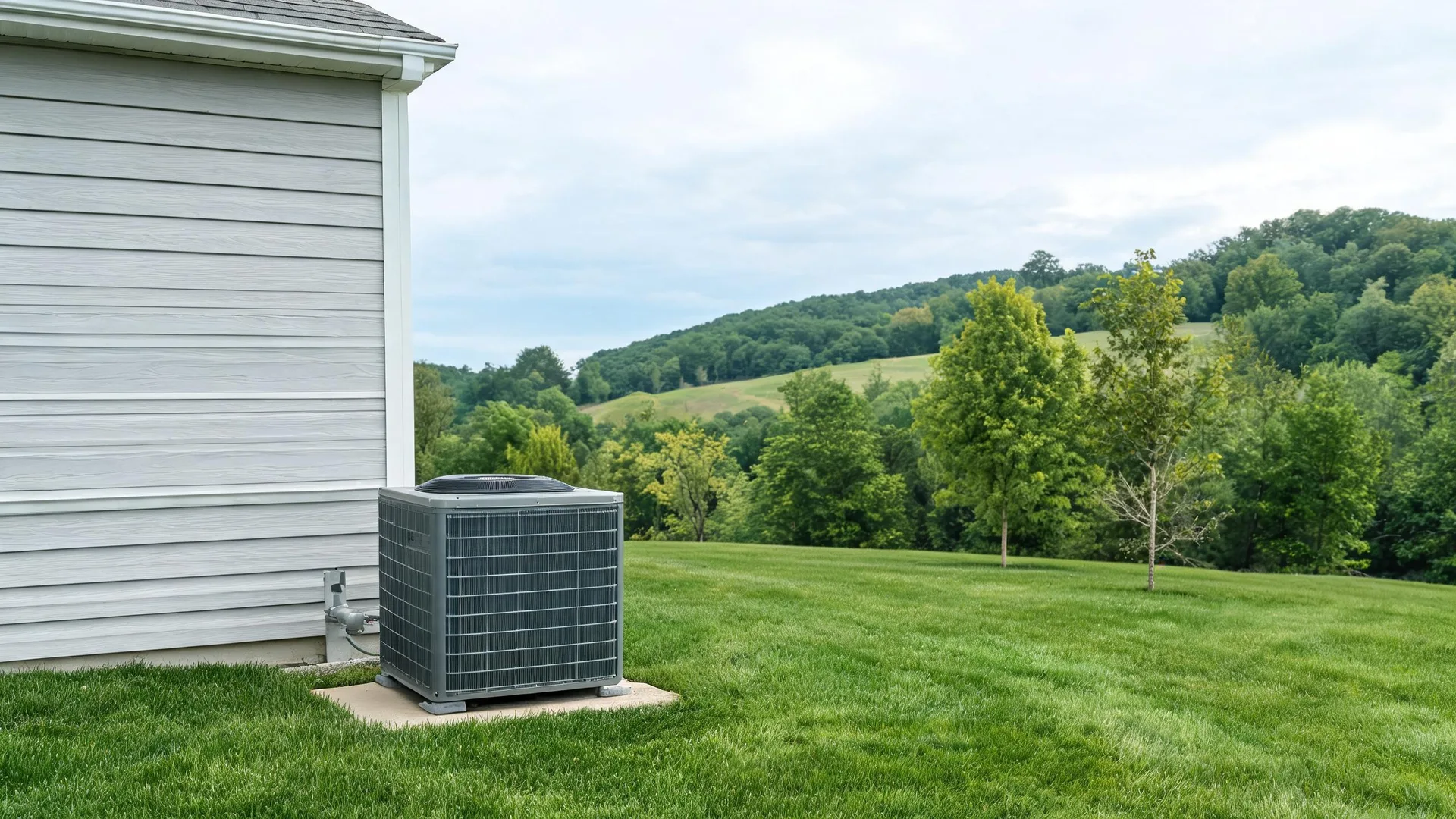
A gray cylindrical air conditioning condenser unit mounted on a concrete pad next to a light-colored vinyl-sided house exterior.

This system will run for years in a house built for a different one

If the system you're replacing came with the house, chances are it was sized for the house as it was then, not for whatever's been added or changed since. A contractor sizing the new one should measure your place as it stands now, not go by what the old unit was rated for. That matters more here than in a newer neighborhood, since so many houses in this county were built before central air came standard. Get the load calculated for your home specifically before anything gets installed.

The SEER2 number is a ratio, not a size

It compares the cooling a system delivers over a season against the power it draws to do it. A higher number means the compressor and coil are doing more work per watt, not that the unit cools a bigger house or cools it faster. Two systems rated to cool the same space can carry different SEER2 numbers and different running costs for the life of the equipment.

The rating only holds if the install matches it

That number is measured in a lab with the refrigerant charge correct and airflow set the way the system was designed for. A unit installed with the wrong charge, a duct system that restricts airflow, or a coil mismatched to the condenser will run below its rating no matter what the label says. The equipment earns that efficiency only when it's installed to the specs it was tested under.

An outdoor air conditioning condenser unit positioned beside a blue-sided house at sunset.

A higher-efficiency unit would save about $50 a year to run in Vanderburgh County compared with a new unit at the federal minimum.

  • A higher-efficiency unit$330 a year
  • A new unit at the federal minimum, 13.4 SEER2$380 a year

Estimates for a typical Vanderburgh County home, from EIA household energy data, Indiana fuel prices and NOAA climate normals. Your home will differ.

Installation starts with the load calculation, not with carrying boxes in. A contractor measures the house, checks the ductwork, and confirms the line set and electrical before the old unit comes out. Once the new condenser and coil are set, the real work is in the details: the refrigerant charge gets weighed in, not eyeballed, and the airflow across the coil gets checked against what the system needs. The line set gets evacuated to pull out moisture and air before refrigerant goes in, since either one left behind will cost you efficiency and can damage the compressor over time. Once it's running, a tech checks the temperature split between the air going into the system and the air coming out, which tells them whether it's cooling the way it should. None of that shows up on the label, but it decides whether the system runs the way it was built to.